
Vandaag of morgen in huis

Kwaliteit gegarandeerd

Welkomstaanbiedingen ontgrendelen: GRATIS bezorging | Tot 80% korting | Gratis 30 dagen JoyPlus-proefperiode
Download de app
A dead battery, just when you need to catch a train or are expecting an important message. A power bank seems like a simple solution, but the market is flooded with models that promise more than they deliver. Before you invest in a new portable charger, it's wise to understand the three most common pitfalls that can lead to unnecessary expense.
To avoid buyer's remorse, focus on the specifications that truly matter. Don't be distracted by marketing jargon; instead, look at the following three points.
Capacity, expressed in milliampere-hours (mAh), indicates how much energy the battery can store. For daily use, to charge your smartphone one to one-and-a-half times, a powerbank 10000mah is often the ideal balance between size and power. Remember the rule of thumb: the actual output is always lower than the advertised capacity. An efficient power bank gets more out of its capacity than an inefficient model.
The speed at which a power bank charges your device is expressed in Watts (W). A standard USB port delivers 5W. For powerbank snelladen (fast charging), look for models with at least 18W and support for Power Delivery (PD), especially via a powerbank usb c port. This is crucial for modern devices like a recent powerbank iphone or Samsung. For a draadloze powerbank (wireless power bank), the Qi standard is important. iPhone users can specifically look for a magnetische powerbank (magnetic power bank) that is compatible with MagSafe for optimal convenience.
Check if the power bank has the right ports. A USB-C port that can be used for both charging the power bank itself (input) and charging your devices (output) is very practical. Extras like a built-in cable or a magnetic ring can make daily use much easier. Brands like Anker powerbank are known for their thoughtful designs.
Not everyone needs the same power bank. Below are several options tailored to specific use cases.
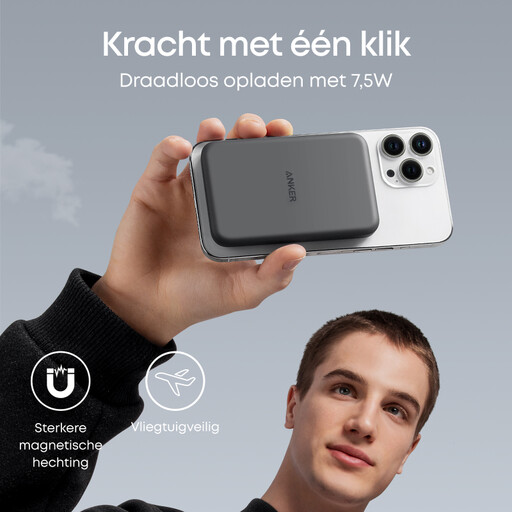
Why This Fits Their Persona: Ideal for those on the go who want a cable-free experience. This compact magnetic power bank snaps onto the back of a MagSafe-compatible iPhone for a quick power boost. Perfect for your pocket or a small bag.
This power bank avoids the "capacity myth" by focusing on maximum convenience rather than a huge number. The 5,000 mAh capacity is deliberately chosen for compactness and is more than enough for a significant top-up.
Advantage: Magnetic attachment for cable-free wireless charging. Pro: Extremely compact and lightweight, fits in any pocket.
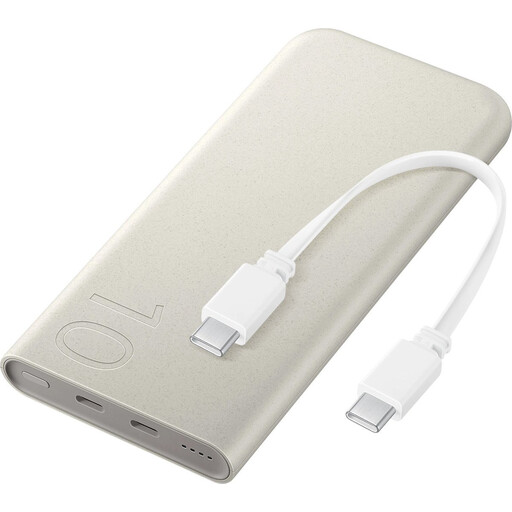
Why This Fits Their Persona: For the user who is fully invested in the Samsung ecosystem. This power bank is designed to work seamlessly with Galaxy devices, including support for 25W Super Fast Charging.
This model tackles the slow charging speed pitfall by specifically supporting Samsung's fast-charging protocols. This ensures you get the maximum speed your phone can handle.
Advantage: Supports 25W wired and 7.5W wireless charging. Pro: Can charge up to three devices simultaneously, useful for a phone, earbuds, and smartwatch.
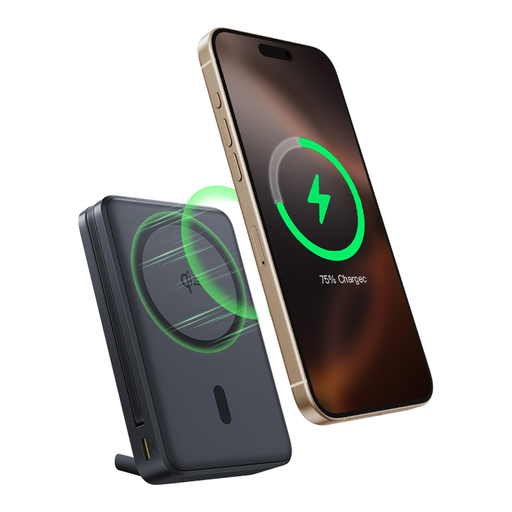
Why This Fits Their Persona: For those who want it all: speed, convenience, and versatility. With 45W of power, this power bank charges not only your phone but also a tablet or even a compact laptop. The built-in cable and stand make it a complete mobile workstation.
This model breaks the "one-size-fits-all" fallacy by being genuinely versatile. Its high output and multiple charging options (wired, wireless, built-in cable) make it suitable for a wide range of devices.
Advantage: Very high 45W output via USB-C, suitable for laptops. Pro: Qi2-certified for fast wireless charging (15W) and includes a handy built-in stand.
We have compiled a complete, up-to-date list of products that meet these strict selection criteria and local safety regulations.
This depends on your phone's battery capacity and the power bank's efficiency. As a rule of thumb, you can multiply the power bank's capacity by 0.7 (for 70% efficiency) and divide that by your phone's battery capacity. A 10,000mAh power bank provides about 7,000mAh in practice. Therefore, you can charge an iPhone 15 Pro (approximately 3,274mAh) about twice.
Yes, a magnetic power bank designed for standards like MagSafe is completely safe. The magnets are specifically positioned and calibrated to perfectly align the charging coil without interfering with your phone's internal components. Always choose models from reputable brands that have the proper certifications.
Qi is the universal standard for wireless charging. Almost every phone with wireless charging capability supports Qi. MagSafe is Apple's proprietary technology, which uses Qi as its foundation but adds a ring of magnets. This ensures the charger clicks perfectly into place, resulting in a more efficient and often faster charge than with a standard Qi charger.
