
Vandaag of morgen in huis

Kwaliteit gegarandeerd

Welkomstaanbiedingen ontgrendelen: GRATIS bezorging | Tot 80% korting | Gratis 30 dagen JoyPlus-proefperiode
Download de app
A dead phone battery just when you need to catch a train or look up a critical address. We've all been there. A good power bank, or portable charger, is no longer a luxury but a necessity. However, the market is flooded with models that promise the world. How do you avoid making a poor choice?
Many power banks fail to deliver on their promised performance. Let's look at three common pitfalls that can cost you money:
powerbank 20000mAh might seem ideal, but it's often heavy and bulky. For a daily commute, such a model is inconvenient and won't easily fit in your jacket pocket or bag.To avoid these pitfalls, focus on a few concrete specifications. These are the factors that truly matter.
Capacity, expressed in milliampere-hours (mAh), determines how many times you can charge a device. A powerbank 10000mAh is a popular choice that offers a great balance between size and power. It can charge a modern smartphone about 1.5 to 2 times. For longer trips or charging multiple devices, a powerbank 20000mAh is a better option. Always consider the efficiency mentioned earlier: expect about 6,000-7,000mAh of usable energy from a 10,000mAh model.
The charging speed is expressed in Watts (W). A standard USB port delivers about 5W, which is very slow. A modern fast charger delivers 20W or more. To quickly charge most new smartphones, including a powerbank for iPhone, you need a model that supports Power Delivery (PD) via a powerbank usb-c port. Check the wattage your device can handle and choose a power bank that can deliver this output. For example, a 45W power bank can also charge many tablets and even some laptops.
Most new power banks use USB-C for both charging and discharging. This is the current standard. Additionally, some models come with extras that enhance usability:
Below are a few models that suit different user profiles, based on their objective specifications.
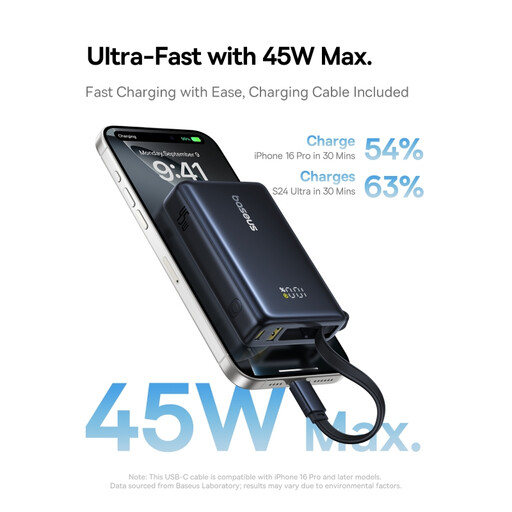
Why This Fits Their Persona: Ideal for those on the move every day. This model combines a compact form factor with serious charging speed, ensuring your phone is quickly topped up on the train or during a coffee break. It fits easily into a bag or jacket pocket.
With 45W Power Delivery via USB-C, this model bypasses the "slow fast-charging" pitfall. The digital display shows the precise percentage, so you never have to guess the remaining capacity.
High charging speed (45W) in a compact 10,000mAh body. The digital display provides clarity on the battery status.
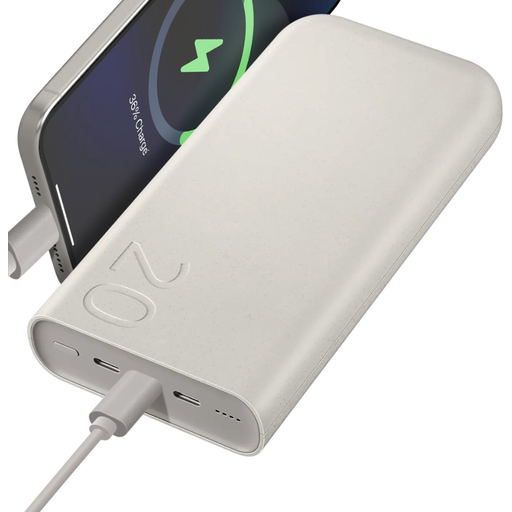
Why This Fits Their Persona: For those who need to power multiple devices (phone, tablet, earbuds, even a laptop) during a long trip or a busy work week. The high capacity and multiple ports make this a true workhorse.
This model delivers a verifiable high capacity of 20,000mAh and a true fast-charging feature with 45W Super Fast Charging. No vague promises, just concrete specs for demanding users.
Three USB-C ports to charge multiple devices simultaneously. The 45W output is sufficient to charge compatible laptops.
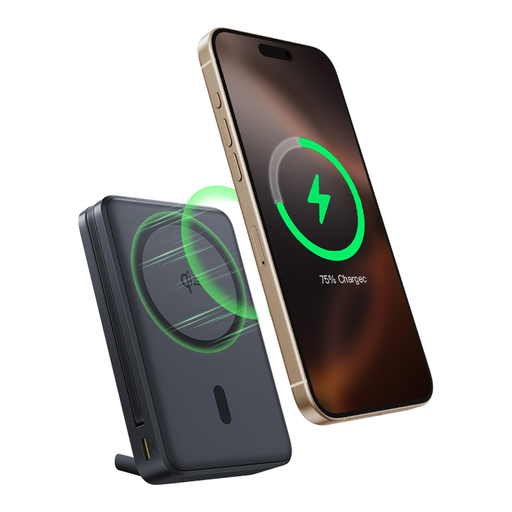
Why This Fits Their Persona: Designed for convenience. Magnetically snap it onto your iPhone for wireless charging on the go. The built-in stand is perfect for watching videos or taking video calls while you charge.
This model uses Qi2 certification, the latest standard for fast wireless charging (15W). This is a clear, verifiable specification, unlike vague "wireless charging" claims. The built-in cable also delivers 45W.
Combines 15W magnetic wireless charging with a built-in 45W USB-C fast-charging cable and a convenient stand.
We have compiled a complete, up-to-date list of products that meet these strict selection criteria and safety regulations.
This depends on your phone's battery capacity. An average smartphone has a battery of 4,000 to 5,000mAh. Factoring in energy loss, you can expect a 10,000mAh power bank to fully charge your phone about 1.5 times.
Yes, power banks are allowed in your carry-on luggage, but not in your checked luggage. Most airlines have a limit of 100Wh (Watt-hours). A 20,000mAh power bank at 5V is approximately 100Wh, so most common models are not a problem. To be safe, always check the specific rules of your airline.
A regular wireless power bank can charge any phone that supports Qi wireless charging, but you need to position the phone precisely. A MagSafe power bank is specifically designed for recent iPhones. It magnetically snaps into the perfect spot, ensuring a more efficient and stable charging connection.
