
Vandaag of morgen in huis

Kwaliteit gegarandeerd

Welkomstaanbiedingen ontgrendelen: GRATIS bezorging | Tot 80% korting | Gratis 30 dagen JoyPlus-proefperiode
Download de app
A dead battery at the worst possible moment is more than just an inconvenience; it can disrupt your entire day. A power bank is the solution, but the market is flooded with models that overpromise and underdeliver. Before you invest in a portable charger, it's crucial to recognize the common pitfalls that lead to a bad purchase.
Many consumers fall for marketing claims that don't align with reality. These are the three main areas where things often go wrong:
To make an informed choice, you need to look beyond the marketing and focus on the specs that truly matter. Pay attention to the following three key points.
The capacity of a power bank is expressed in milliampere-hours (mAh). This represents the capacity of the internal battery cells. However, when transferring power to your device, energy is lost, primarily as heat. Expect an efficiency of around 65-80%.
Fast charging depends on the power output, measured in Watts (W), and the charging protocol. The two most important standards are:
Check which protocol and maximum wattage your device supports. A power bank with 20W PD is a good match for a recent iPhone, while a laptop will need a model with 45W, 65W, or even 100W.
The most practical power bank is the one you'll actually use. Think about the connections and features that will make your life easier:
Based on these criteria, we have selected several popular choices that fit different user profiles.
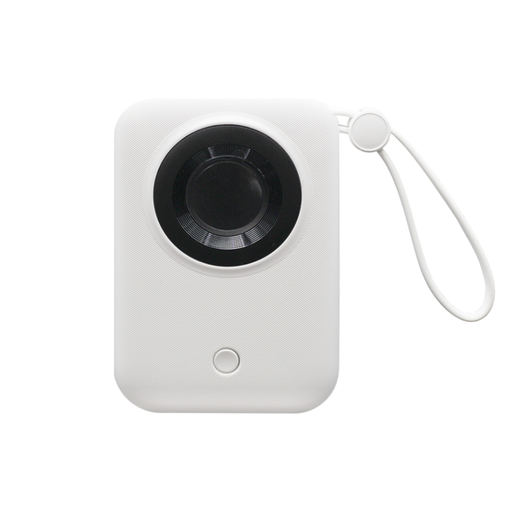
Why This Fits Their Persona: Ideal for those constantly on the move between home, work, and appointments. This compact power bank fits easily into a bag or pocket, and the built-in cables ensure you're never without the right one.
Directly solves the "portability problem." The integrated Lightning and USB-C cables eliminate the need for separate accessories.
Two built-in cables (Lightning/USB-C), 22.5W fast charging, and a clear display that shows the battery percentage.
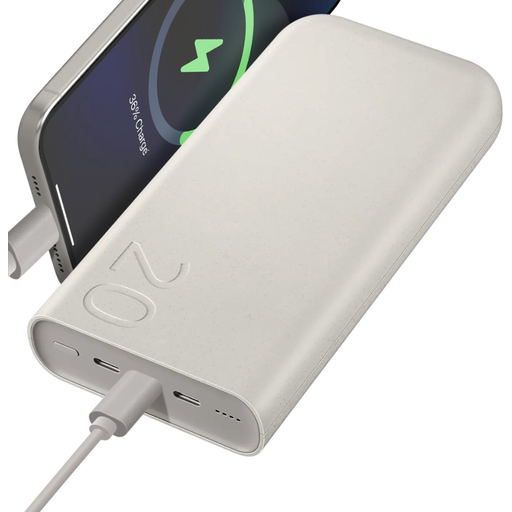
Why This Fits Their Persona: For those who rely on multiple devices, including a laptop. The high capacity and powerful output make this a workhorse for long trips, intensive workdays, or a weekend away.
Avoids the vague "fast-charging" claim by clearly specifying 45W Super Fast Charging and Power Delivery 3.0. This is verifiable speed for compatible devices.
High capacity of 20,000 mAh, 45W output for charging laptops, and three USB-C ports to power multiple devices simultaneously.

Why This Fits Their Persona: This isn't just a power bank; it's an essential tool for every car owner. Getting stranded with a dead battery is a thing of the past. This device provides peace of mind on the road, especially on cold mornings or in remote locations.
This product focuses on a specific, critical function: jump-starting a car. It's not a compromise, but a specialized solution that also happens to charge your phone.
Extremely powerful car jump starter (4000A peak) that can handle most gasoline and diesel engines. Also functions as a rugged portable charger.
We've curated a complete, up-to-date list of products that fully meet these strict selection criteria and safety regulations.
This depends on your phone's battery capacity and the power bank's efficiency. As a rule of thumb, you can multiply the advertised capacity by 0.7. A 10,000mAh power bank will therefore deliver about 7,000 mAh. If your phone has a 3,500 mAh battery, you can charge it approximately twice.
Not necessarily. A 20,000mAh power bank or larger is considerably heavier and bigger than a 10,000mAh model. For daily use around town, a lighter, more compact model is often more practical. A higher capacity is most useful for long trips, camping, or if you need to power multiple devices like a tablet or laptop. The choice depends on your lifestyle.
Yes, in fact, power banks must be carried in your carry-on luggage and are not allowed in checked baggage. Most airlines have a limit of 100 watt-hours (Wh) per battery. A 20,000mAh power bank (approx. 74 Wh) and a 10,000mAh power bank (approx. 37 Wh) fall well within this limit. Always check the specific rules of your airline before you fly.
