
Vandaag of morgen in huis

Kwaliteit gegarandeerd

Welkomstaanbiedingen ontgrendelen: GRATIS bezorging | Tot 80% korting | Gratis 30 dagen JoyPlus-proefperiode
Download de app
You know the feeling: you're on the go, have an important meeting, or are about to take that perfect photo, and then the "low battery" notification pops up. A dead phone, tablet, or laptop can seriously disrupt your day. In those moments, a good power bank, or portable charger, isn't a luxury—it's a necessity.
But with so many choices on the market, buying a power bank is easier said than done. What capacity do you need? How important is charging speed? And what size fits your lifestyle? In this article, we'll guide you with practical advice and highlight some popular choices to help you find a model that's truly right for you.
Before you make a decision, it's helpful to consider a few key specifications. These determine how well a power bank will suit your devices and usage habits.
The capacity of a power bank is expressed in milliampere-hours (mAh). This number indicates how much energy the battery can store.
Nobody wants to wait hours for a device to charge. The charging speed, expressed in Watts (W), is therefore crucial. A modern fast charger can power up your devices significantly faster. Look for technologies like Power Delivery (PD).
A USB-C power bank is the standard today. This port often supports both fast charging for your devices and fast recharging of the power bank itself. For optimal performance, check that the power bank's wattage (W) matches what your smartphone, tablet, or laptop can handle.
A powerful power bank is great, but not if you leave it at home because it's too big or heavy. Think about how you'll use the portable charger. For daily commuters, a compact and lightweight model is more convenient, while for travellers who carry it in a backpack, a larger model with more capacity might be more practical.
Based on specifications and use cases, we've selected a few models from the Anker brand that cover different needs.
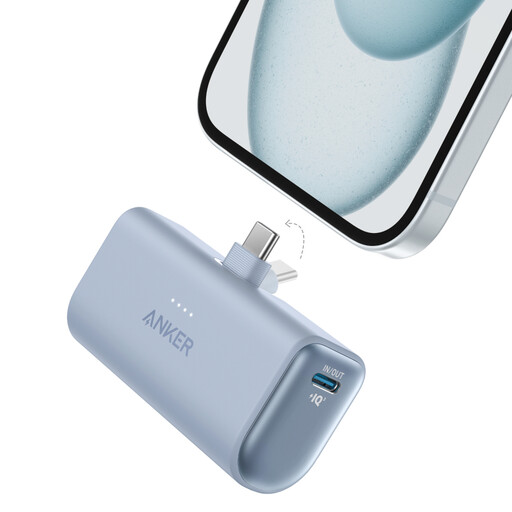
Why This Model Stands Out The built-in, foldable USB-C connector is the major selling point of this model. You no longer need a separate cable to charge your phone. Just plug the power bank directly into your device, and you're good to go.
Pros
Who Is This a Good Choice For? This is an excellent small power bank for daily use. Ideal for students, commuters, and anyone looking for a compact, hassle-free charging solution on the go.
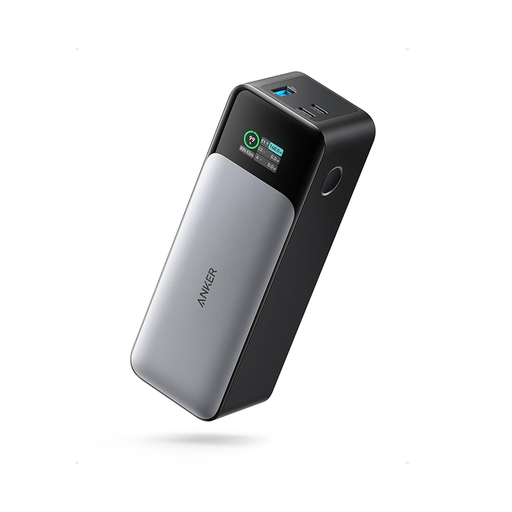
Why This Model Stands Out This power bank is a powerhouse. With 140W of power and a 24,000 mAh capacity, this is a serious power bank for laptops and other demanding devices. The smart digital display shows real-time information about input, output, and remaining charging time.
Pros
Who Is This a Good Choice For? Perfect for professionals, digital nomads, and travellers who depend on their laptops and other devices. If you need maximum power and capacity, this is a very suitable option.

Why This Model Stands Out This model offers an excellent balance of capacity, speed, and portability. The 10,000mAh capacity is sufficient for most users, while the 30W output via the USB-C port ensures fast charging times. The colour screen is a handy bonus.
Pros
Who Is This a Good Choice For? This is a versatile portable charger for the average user. Suitable for daily use, city trips, and for anyone looking for a reliable and reasonably fast power bank without the weight of a laptop charger.
Didn't find your ideal match, or are you curious about other brands and specifications? A wide range of models is available, from ultra-compact power banks to models with solar panels.
Check out our full range of external batteries for more choices.
This depends on your phone's battery capacity. An average smartphone has a battery of around 4,000-5,000 mAh. In practice, due to energy loss during transfer, you can fully charge your phone about 1.5 to 2 times with a 10,000mAh power bank.
Yes, power banks must be carried in your hand luggage and are not allowed in checked baggage. Most airlines have a limit of 100 Wh (Watt-hours). A 24,000 mAh power bank (like the Anker 737) is well under this limit at approximately 88 Wh. Always check your airline's specific rules before you fly.
USB-C with Power Delivery is a modern charging standard that can handle significantly higher power levels than the traditional USB-A port. This means you can charge devices that support PD, such as many smartphones, tablets, and laptops, much faster. Additionally, the USB-C port is often bidirectional, meaning you use the same port to charge your devices and to recharge the power bank itself.
