
Vandaag of morgen in huis

Kwaliteit gegarandeerd

Welkomstaanbiedingen ontgrendelen: GRATIS bezorging | Tot 80% korting | Gratis 30 dagen JoyPlus-proefperiode
Download de app
A flat tire always happens unexpectedly and in an inconvenient place. A trip to the gas station isn't always an option. A portable compressor in your trunk seems like the perfect solution. Yet, the number of choices is overwhelming, and hidden pitfalls can turn a handy tool into a source of frustration.
Many buyers fall into the same traps:
mini compressor that promises 150 PSI but takes an eternity to add a little air to a car tire, or even overheats before the job is done.cordless tire inflator is convenient until the battery dies after inflating a single bicycle tire. The advertised capacity often doesn't match real-world performance.This guide will help you avoid these problems and choose a model that actually delivers on its promises.
To avoid buyer's remorse, it's crucial to look beyond the marketing claims and focus on a few key specifications. These determine whether a portable air pump is right for your situation.
Choosing the power source is the first and perhaps most important step.
battery compressor is ideal for bicycles, sports balls, and quick checks of your car tires. The downside is the limited battery life. Pay close attention to the capacity (expressed in mAh) and how the manufacturer describes its performance.electric tire inflator plugs directly into your vehicle's 12V socket (cigarette lighter). The major advantage is the constant and reliable power supply; you never have to worry about a dead battery. The disadvantage is that you always need your car, and the length of the cord limits your reach.These two values determine the compressor's performance.
car tire inflator, a pressure of around 2.5 bar (approximately 36 PSI) is usually sufficient. However, if you have a road bike, you'll need a model that can handle at least 8 bar (115+ PSI). A maximum pressure that is too low makes the pump unsuitable for certain applications.mini compressor with a low L/min value will take significantly longer to inflate a large SUV tire than a model with high airflow. For a bicycle air pump, this is less critical, but for a car, a reasonable airflow is desirable.Some features may seem like luxuries, but in practice, they are indispensable for convenience and safety.
Based on these criteria, we have selected several models that suit different user profiles.
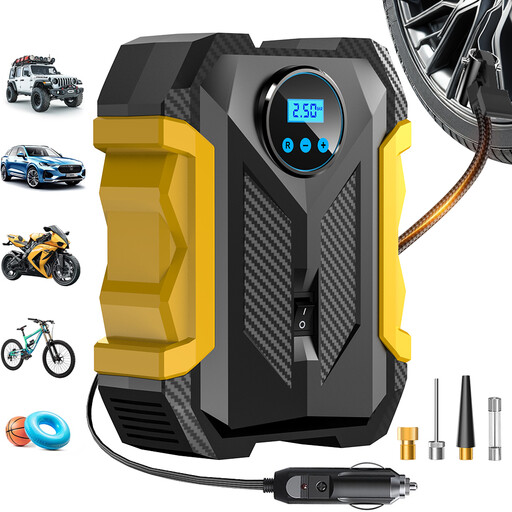
Why This Fits Their Persona: This is a no-nonsense solution for those who primarily need a reliable pump for their car. It lives in the trunk for emergencies and always works, as long as the car has power. No worries about a dead battery when you need it most.
Because it runs directly off the 12V socket, this model bypasses the pitfall of an unreliable or dead battery. The digital display also prevents the inaccurate guesswork of an analog gauge.
Reliable 12V power; digital display for accuracy; a 3-meter cord provides enough reach for most passenger cars.
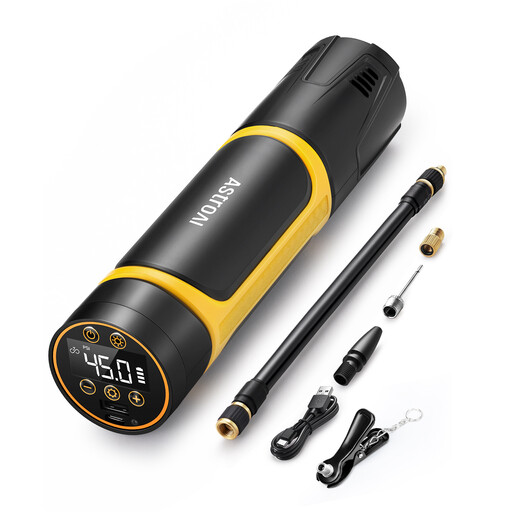
Why This Fits Their Persona: Ideal for someone who wants one device for the car, the (electric) bike, and the kids' soccer ball. It's cordless, compact, and fits easily in a backpack. The different modes make it flexible enough for the whole family.
The 5 intelligent modes and included adapters prevent you from buying a device that's only suitable for one purpose. The specified battery capacity (3x1500mAh) gives a more realistic picture of performance than vague claims.
Fully cordless with a rechargeable battery; 5 preset modes for cars, motorcycles, bikes, and balls; includes adapters for Presta and Schrader valves.
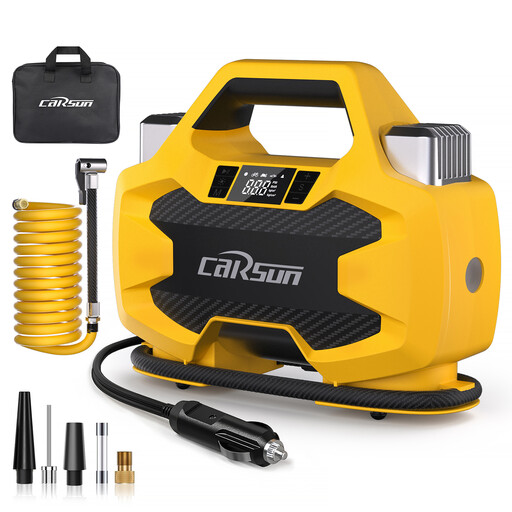
Why This Fits Their Persona: The larger tires of an SUV, van, or RV demand more power and airflow. A standard pump is often too slow. This dual-cylinder model is specifically designed for these tougher jobs and delivers the necessary performance.
This model tackles the problem of standard compressors overheating or being extremely slow when filling large tires. The "heavy-duty" specification isn't just an empty marketing term here, but a reference to its dual-cylinder design.
Designed for heavier vehicles (SUV/RV); dual cylinder for higher airflow and faster inflation; runs on the reliable 12V socket.
We have compiled a complete, up-to-date list of products that fully meet these strict selection criteria and local regulations.
This depends heavily on the battery capacity (expressed in mAh) and what you are inflating. A good quality model can typically top off several car tires by a few PSI, or inflate one to two completely flat car tires. Manufacturers often provide an estimate, such as "enough for 5 car tires from 0 to 2.5 bar." Check these specifications to get a realistic idea.
When used correctly, it is not harmful. It is recommended to keep the car's engine running while using the compressor. This allows the alternator to recharge the battery and prevents it from draining, which is especially important when inflating large or completely flat tires.
Not always. Road bike tires require very high pressure, often 8 bar (115 PSI) or more. Check that the maximum pressure of the mini compressor you are considering is high enough. Additionally, most road bikes have a Presta valve. Make sure the pump includes a suitable adapter for it, although this is standard with most versatile models.
