
Vandaag of morgen in huis

Kwaliteit gegarandeerd

Welkomstaanbiedingen ontgrendelen: GRATIS bezorging | Tot 80% korting | Gratis 30 dagen JoyPlus-proefperiode
Download de app
The search for a good, healthy frying pan can feel like navigating a maze. You're hearing more and more about the downsides of pans with PFAS (also known as Teflon) and want a safer alternative. But the market for PFAS-free pans is filled with marketing promises that don't always hold up. Before you buy a new pan, it's helpful to know the common pitfalls.
Common mistakes when buying a PFAS-free pan:
To avoid wasting money on a pan that wears out quickly, there are a few technical specifications that make all the difference.
A healthy frying pan is one free from harmful substances. Most PFAS-free pans use a ceramic coating. This is a pan without Teflon and therefore also a PFOA-free pan. However, pay attention to the details:
The base determines how the pan performs. For induction cooktop users, a completely flat, magnetic base is essential for proper function. A thicker, multi-layered base (often referred to as 'tri-ply' or '5-ply') ensures much better and more even heat distribution. This prevents hot spots and ensures your food cooks at the same rate across the entire pan.
The material of the pan's body is also important. Forged aluminium is lightweight and heats up quickly, while stainless steel is heavier but retains heat longer. If you plan to use your pan in the oven, always check the maximum temperature that both the pan and its handle can withstand. A stainless steel handle is often a safe bet for higher temperatures.
Based on objective specifications, we have selected a number of pans that suit different user profiles.

Why it's a match: A reliable pan for daily use. Ideal for preparing a fried egg, a piece of fish, or vegetables without any hassle. The pan is made from recycled materials and is a solid choice for the eco-conscious home cook.
The body of forged aluminium ensures fast and even heating, avoiding the pitfall of uneven heat on induction. The double-layer ceramic coating is designed for durability.
Made from 100% recycled aluminium (RCS-certified) and oven-safe up to 200°C thanks to its stainless steel handle.
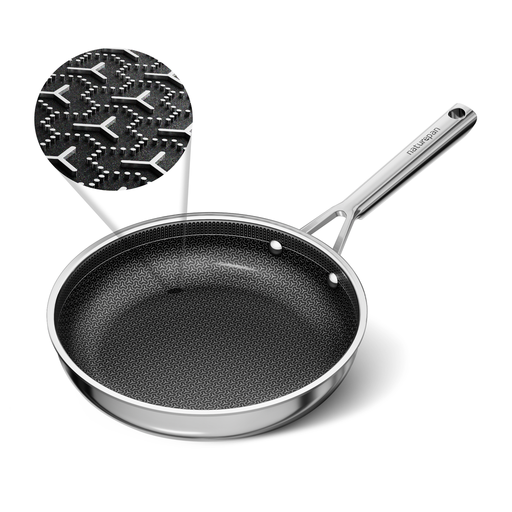
Why it's a match: For those who turn cooking into an art. This pan is designed for superior searing of meat and fish while retaining its non-stick properties for more delicate dishes.
The hybrid construction with a hexagonal pattern of stainless steel and ceramic combines the best of both worlds: perfect searing and a great non-stick surface. The diamond-titanium reinforced coating is designed for a long lifespan.
Advanced 5-layer construction and oven-safe to a high temperature of 260°C, offering versatility from stovetop to oven.
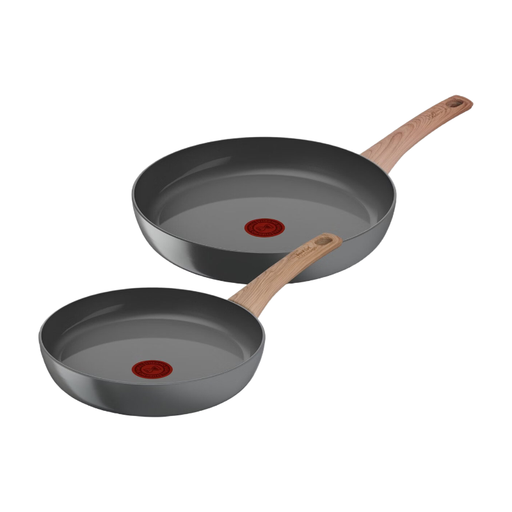
Why it's a match: A practical set with two popular sizes, ideal for preparing family meals. The Thermo-Signal helps you start cooking at the right temperature, which is handy in a busy kitchen.
According to Tefal, the Thermo-Signal technology helps prevent overheating, a major cause of coating wear. The set immediately provides the right sizes for different dishes, which is more efficient.
A complete set of two pans (24 and 28 cm) with a convenient heat indicator, suitable for all heat sources including induction.
We have compiled a complete, up-to-date list of products that meet these selection criteria and comply with Dutch regulations.
The lifespan of a ceramic frying pan depends heavily on the quality of the coating and its maintenance. A high-quality pan with a reinforced layer can last for several years with proper use (avoiding metal utensils, not overheating, washing by hand). Cheaper models with a thin coating often need to be replaced within a year.
Although many manufacturers state that their pans are dishwasher-safe, washing by hand is almost always recommended. The aggressive detergents and high temperatures in a dishwasher can degrade the ceramic non-stick coating over time, significantly shortening its lifespan. A quick wash with a soft sponge and some washing-up liquid is usually sufficient and better for the pan.
A ceramic frying pan is primarily a different choice. Its main advantage is that the coating is completely free of PFAS, PFOA, and PTFE. This gives many people peace of mind. In terms of use, a ceramic pan sometimes requires a bit more care: it's advisable to cook on medium-high heat and always use some oil or butter. Traditional Teflon pans can release harmful fumes if overheated, a risk you don't run with a 100% ceramic pan.
