
Vandaag of morgen in huis

Kwaliteit gegarandeerd

Welkomstaanbiedingen ontgrendelen: GRATIS bezorging | Tot 80% korting | Gratis 30 dagen JoyPlus-proefperiode
Download de app
Buying a parasol seems simple. You pick a colour that matches your garden furniture, and you're done. But in practice, things often turn out differently. An unexpected gust of wind snaps the pole, or you notice your skin is red after an afternoon in the shade. A good parasol offers comfort and protection; a bad one is mainly a source of frustration. Before you make a choice, it's wise to consider a few common pitfalls.
To avoid a bad purchase, you can focus on a few objective features. These specifications provide a more accurate picture of quality and usability than most advertising slogans.
The sturdiness of a parasol depends on its frame. A full-aluminium frame is often a good indicator of durability. It's lightweight, strong, and doesn't rust. For smaller, portable models like a folding umbrella, fibreglass ribs offer a good balance between flexibility and strength, making them more resilient to wind.
A cantilever parasol has its mast on the side, which provides unobstructed space underneath and more flexible shade options. Pay extra attention to the sturdiness of the mast and base, as this design catches more wind. A heavy, stable base (often sold separately) is essential here.
Good sun protection is the most important function of a parasol or UV umbrella. The level of protection is expressed by the UPF value.
Some canopies have a special coating, like the L.R.C Black Coating used in certain umbrellas, to block heat and radiation even more effectively. Always check the product details for a specific UPF value.
The right choice depends entirely on your situation.
Based on objective specifications, we have selected a number of products that suit different user profiles.
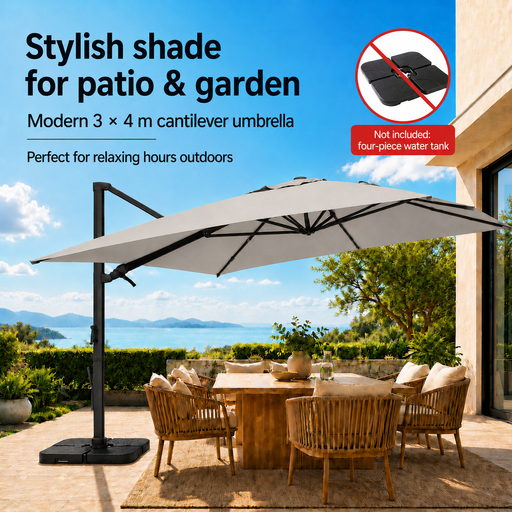
Why it's a match: This 3x4 metre cantilever parasol is ideal for creating a large shaded area over a big garden set or lounge corner. The side mast ensures the space under the parasol remains completely unobstructed.
The full-aluminium frame and sturdy pole provide a solid foundation that is more resistant to wind than cheaper steel variants. The side-mast design prevents the annoyance of a pole getting in the way.
The 360° rotation function and tilt options make it easy to adjust the shade throughout the day according to the sun's position, without having to move the heavy base.
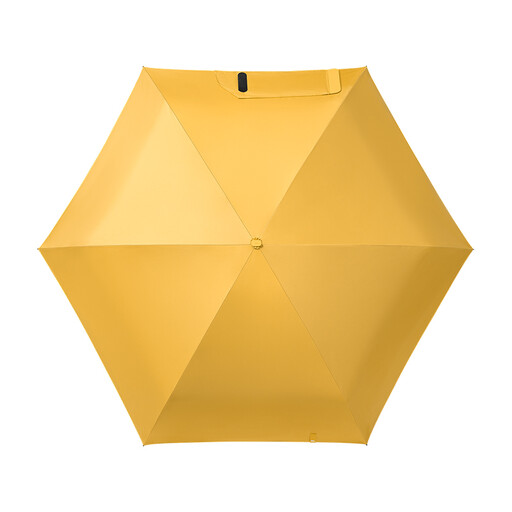
Why it's a match: For those who are often on the go and need protection from both sun and rain. This umbrella is extremely compact and lightweight, making it easy to fit into a handbag or backpack.
This model tackles the pitfall of vague claims with a clear specification. According to the manufacturer, the L.R.C Black Coating provides UPF 50+ protection, which blocks over 99% of UV rays.
Its ultra-compact and lightweight design (approx. 170 grams) makes this a practical companion for daily use, without compromising on protection. It's both a sunshade and a rain umbrella in one.
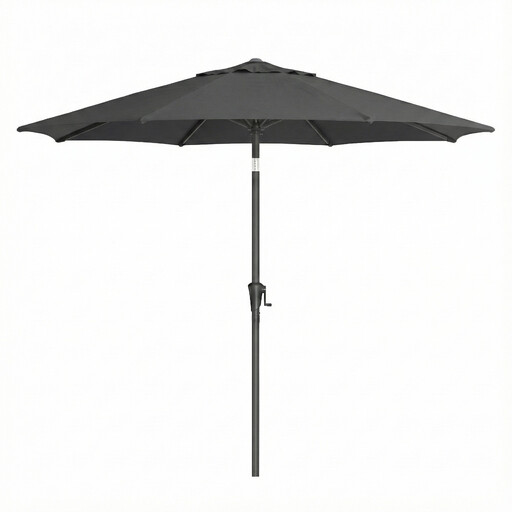
Why it's a match: A classic centre-pole parasol suitable for a spacious balcony or terrace. Its operation is focused on ease of use, ideal for those who want to create shade quickly and without hassle.
This model addresses the pitfall of impractical design. The push-button tilt function and the crank for opening and closing make the parasol easy to operate and adjust to the sun's position.
The 180 g/m? polyester canopy offers protection against UV radiation and light rain. The powder-coated steel ribs ensure a reliable and rust-resistant structure.
We have compiled a complete, up-to-date list of products that meet strict selection criteria and current regulations.
How much wind can a parasol withstand? This varies greatly by model. A wind-resistant umbrella or parasol often has a sturdier frame (aluminium, fibreglass) and sometimes ventilation vents in the canopy. Nevertheless, the advice is to close any parasol, regardless of its specifications, in strong winds (Force 5 or higher) to prevent damage. Always check the manufacturer's recommendations.
What is a good UPF value for a parasol? A UPF value of 30 is considered good, but for optimal sun protection, UPF 50+ is the recommended standard. This means the fabric filters out more than 98% of harmful UV rays. Products without a specified UPF value offer no guaranteed protection.
How do I clean and store my parasol? Most parasol canopies can be cleaned with a soft brush and a solution of lukewarm water and mild soap. Rinse thoroughly and let the canopy dry completely before closing and storing the parasol. Always store the parasol dry in a protective cover to prevent mould and discolouration. This will significantly extend its lifespan.
