
Vandaag of morgen in huis

Kwaliteit gegarandeerd

Welkomstaanbiedingen ontgrendelen: GRATIS bezorging | Tot 80% korting | Gratis 30 dagen JoyPlus-proefperiode
Download de app
An unexpected light on your dashboard? For many car owners, this is the start of an uncertain and often expensive trip to the mechanic. A good OBD2 scanner can tell you exactly what's wrong, putting you back in control and helping you save on unnecessary costs. But the market for these diagnostic tools is filled with pitfalls. Many devices promise more than they deliver, with hidden costs and limited features.
As a Joybuy Product Recommendation Officer, I help you make the right choices. We look past the marketing hype and focus on what really matters. Here are the most common pitfalls and how to avoid them.
Pitfall 1: The "Free Lifetime Updates" Lie Many manufacturers advertise "free lifetime updates." In practice, this often only applies to the most basic engine code functions. To read other systems (like ABS or airbags) or use service reset functions, you'll still need to purchase an expensive subscription after a year.
Pitfall 2: Limited System Coverage A cheap code reader can only access the engine control module (ECM). Is your ABS or airbag (SRS) light on? Then such a device is useless. You need a tool that supports all-system diagnostics to get a complete picture of the vehicle's health.
Pitfall 3: A Tool That Doesn't Match Your Needs A professional mechanic has different requirements than a DIYer who just wants to perform an oil reset. Investing in an overly advanced tool is a waste of money, while a model that's too simple leads to frustration. The key is to find the right balance between functionality and price.
To avoid a bad purchase, it's important to understand which specifications really matter. Consider the following three points before making a choice.
The foundation of any OBD2 scanner is reading the engine control module. This is sufficient to find the cause of a check engine light. However, if you also want to diagnose issues with the brakes (ABS), airbags (SRS), transmission (TCM), or air conditioning, you need a model that supports all-system diagnostics. Always check for this explicitly in the product description.
A service reset function allows you to perform maintenance tasks yourself and reset the corresponding service notifications. The most common functions are:
Consider which tasks you want to perform yourself. For most DIYers, 2 to 5 basic functions are sufficient. Advanced users will benefit from a wider range of resets, such as injector coding.
For the serious enthusiast or professional, there are two features that make all the difference:
Not everyone has the same needs. That's why we've curated a selection tailored to different user profiles, from the beginner DIYer to the demanding professional.
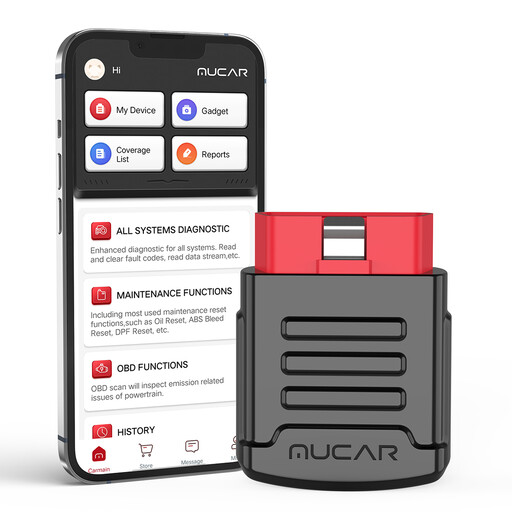
Why This Fits Their Persona: A compact and affordable Bluetooth car scanner that works via your smartphone. Ideal for quickly reading fault codes, turning off the check engine light, and performing basic maintenance. Perfect for the DIYer who wants to check more than just the engine.
This model offers free lifetime access to all-system diagnostics. So, you don't pay extra to read ABS, airbag, or transmission codes. The 15 service resets are free for one year, which is communicated transparently.
The combination of full system diagnostics with lifetime updates and a wide range of resets (for the first year) offers excellent value for money for beginners.
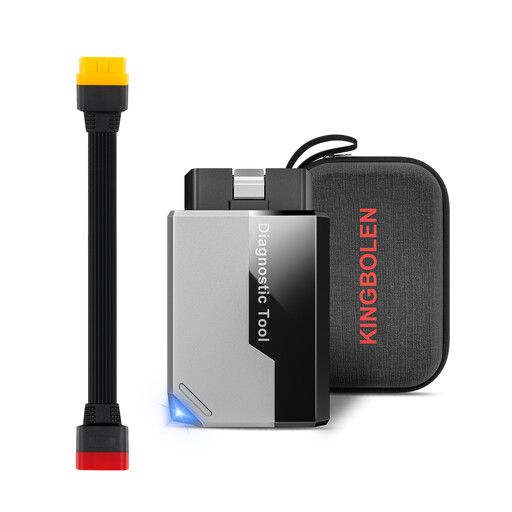
Why This Fits Their Persona: For the enthusiast who wants to dig deeper. This tool not only offers all-system diagnostics but also bi-directional control to actively test components. A powerful step up without the cost of a professional garage tool.
This model tackles the subscription trap head-on. It offers free lifetime updates for all key functions: full system diagnostics, 15+ service resets, and bi-directional tests. A one-time investment with no hidden costs.
The combination of bi-directional control and free lifetime updates for all functions is rare in this price range. Supports CAN-FD for newer vehicles.
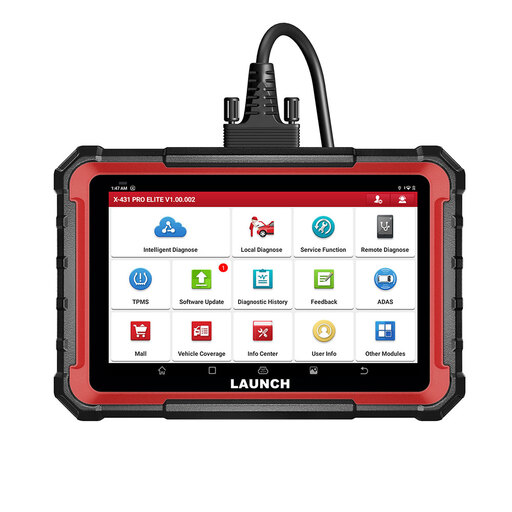
Why This Fits Their Persona: A robust tablet scanner for those who demand professional performance. This automotive diagnostic tool offers OE-level diagnostics, advanced ECU coding, and support for modern protocols like CAN FD and DoIP. Suitable for daily, intensive use in a workshop.
This is a professional investment. The updates are free for 2 years, which is clearly stated. It's a transparent trade-off: you pay for unparalleled functionality that cheaper models simply cannot offer.
Offers advanced features like ECU coding and support for DoIP/CAN FD, essential for working on the latest vehicle models. The tablet interface makes complex data analysis manageable.
We have compiled a complete, up-to-date list of products that fully meet these strict selection criteria and current regulations.
Most petrol cars built after 2001 and diesel cars after 2004 in the EU are OBD2 compliant. The OBD2 port is usually located under the dashboard on the driver's side. For absolute certainty, it's advisable to check the manufacturer's compatibility list, which specifies supported makes and models.
A Bluetooth car scanner (dongle) is compact, affordable, and ideal for quick diagnostics via your smartphone. They are perfect for reading codes and performing simple resets. A tablet scanner is an all-in-one device with a larger screen, faster processor, and more storage. This makes them more suitable for in-depth data analysis, graphing live data, and advanced functions like bi-directional control and ECU coding.
This is a critical point. Always check the fine print. "Free lifetime" can refer to:
Options 2 and 3 offer the most value. Be skeptical if a product is extremely cheap yet promises everything for free for life; there's likely a catch.
