
Vandaag of morgen in huis

Kwaliteit gegarandeerd
Download de app
Categorieën

An uncluttered bathroom creates a sense of calm, but the thought of drilling into new tiles or the walls of a rental property is often a major hurdle. A bathroom rack that comes loose after a week is hardly a solution either. Finding a functional bathroom storage rack that can be installed without drilling requires the right information. The goal is to create a stable and durable storage space for your shower gel, shampoo, and towels, without causing any permanent damage.
In this guide, we'll cover the key criteria for choosing a drill-free bathroom rack and highlight a few specific products based on their specifications.
Before making a choice, it's wise to consider a few practical aspects. These factors will determine how well the rack fits and functions in your bathroom.
The installation method is the core of any 'drill-free' solution. The most common methods are:
The bathroom is a humid environment, which places demands on the material.
Always check the maximum load capacity specified by the manufacturer. A rack for a few bottles of shampoo requires less capacity than a towel rack intended for wet bath towels. Consider what you need to store beforehand and choose a bathroom organiser with enough shelves and the right dimensions.
Below is a selection of products, each offering a different approach to drill-free storage. The choice is based on product specifications and intended use.
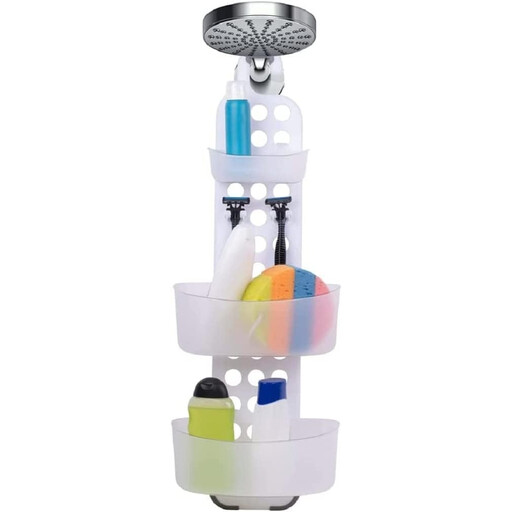
Why this product: This Alpina shower caddy is a straightforward, tool-free solution. With a large hook, it can be easily hung over a shower screen or door. The three baskets provide space for basic shower essentials.
Advantages:
Who is this for: For users seeking a quick, non-permanent, and portable solution for lightweight shower products. Ideal for placement on a shower screen or door. Note the specified maximum load capacity of 1 kg.
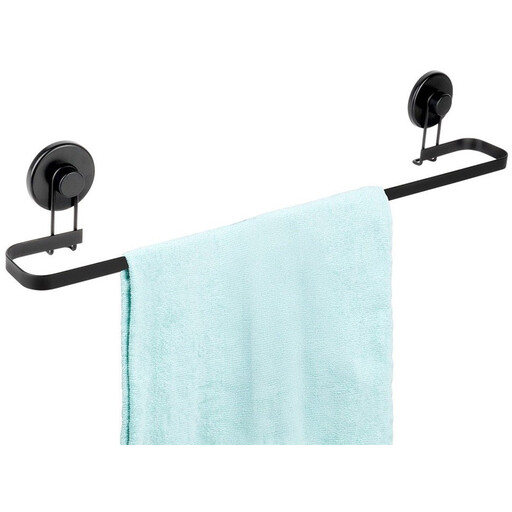
Why this product: This drill-free towel rack combines a modern look with a functional suction cup mounting system. It offers a dedicated solution for hanging towels on smooth surfaces, without the need for permanent installation.
Advantages:
Who is this for: For those looking for a stylish drill-free towel holder who have a smooth, non-porous surface like large tiles or a glass panel. It is specifically designed for hanging towels.
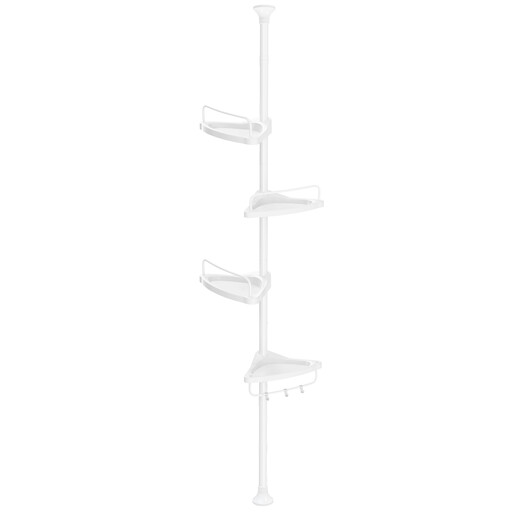
Why this product: This telescopic corner rack from SONGMICS makes optimal use of vertical space. It is secured between the floor and ceiling using a tension-mounted system (spring-loaded rod), ensuring a stable, screw-free construction.
Advantages:
Who is this for: For users who need significant storage space in a shower corner or elsewhere in the bathroom. It's an excellent solution for bathrooms with a standard ceiling height where a stable and spacious corner bathroom rack is desired.
Every bathroom has a unique layout, and not every solution is a universal fit. Are you looking for a different size, a specific material, or another type of bathroom organiser? For a more comprehensive overview of available solutions, you can browse our full range.
Explore all bathroom accessories here.
1. How do I ensure a bathroom rack with suction cups stays firmly attached? First, thoroughly clean the surface (e.g., tiles or glass) and ensure it is free of grease. Make sure both the surface and the suction cup are completely dry. Press the suction cup firmly to expel all the air from underneath. It is best to wait several hours before loading the rack to allow the bond to stabilise.
2. Can I use a drill-free bathroom rack on any wall? No, suitability depends on the mounting method. Suction cups and adhesive strips work best on smooth, non-porous surfaces. They adhere poorly to plastered walls, wallpaper, or textured tiles. Telescopic racks require a sturdy floor and a solid ceiling. Hanging racks need a suitable edge (shower screen, door) to hang from.
3. What is the difference between a telescopic and a hanging shower caddy? A hanging shower caddy is hung over an edge and is very easy to install and move, but it often has a lower load capacity. A telescopic shower caddy is secured by tension between the floor and ceiling, typically offering more storage space and stability, but its installation requires more attention and is location-specific.