
Vandaag of morgen in huis

Kwaliteit gegarandeerd
Download de app
Categorieën

A long day at the computer or after physical labour can result in an aching pain in your neck and shoulders. A massager might seem like a logical solution, but the market is vast. How do you choose a model that actually delivers on its promises and avoid a poor purchase?
This article provides an overview of the key selection criteria and presents several concrete product options. We focus on factual specifications to help you make an informed decision.
Before making a choice, it's helpful to know which features are important. Below is a practical guide to the key points of consideration.
Most modern devices use a shiatsu massage technique. This involves rotating massage nodes that mimic a kneading, pressing motion. Pay attention to the number and design of the massage nodes. More advanced models have nodes that not only rotate but can also change direction and height for a more dynamic massage.
A massager with a heat function can add an extra dimension to your relaxation. Heat helps to relax the muscles, which can increase the effectiveness of the massage. Check the specifications for the temperature ranges and the size of the heating surface. A larger surface area ensures a more even distribution of heat across the neck and shoulders.
A wireless neck massager offers significantly more freedom of movement. You are not tethered to a power outlet and can use the device wherever you want. The battery life is a crucial factor here. Look at the capacity (expressed in mAh) and the estimated usage time per charge. A runtime of 60 to 90 minutes is common for high-quality models.
Comfort is largely determined by the fit. Many devices have a 'scarf' or 'backpack' design that you wear over your shoulders, sometimes with loops for your arms to regulate the pressure. A hands-free design is practical, as it leaves your hands free during the massage. Also, consider the weight; an overly heavy device can become uncomfortable on the shoulders over time.
Some massagers, such as those from SKG, integrate additional technologies. An example of this is red light therapy. Devices with this feature contain LED lights that emit light at a specific wavelength (often around 630-660 nm) onto the skin.
Based on the criteria above, we have selected a number of products. These recommendations are based on the product specifications as provided by the manufacturer.
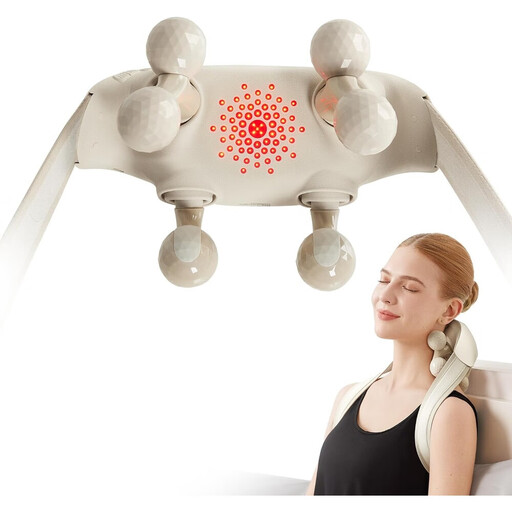
Why We Chose It The SKG H7 Ultra is designed for a deep massage of both the neck and shoulders. The device features 6D massage nodes and a large heating surface of 2826 mm², equipped with 64 red light beads. The hands-free 'backpack' design and a weight of approximately 1 kg make it comfortable to use.
Pros
Who It's For For users seeking a powerful and comprehensive massage for the neck and shoulder area who value a hands-free, wireless design with advanced heat and light functions.
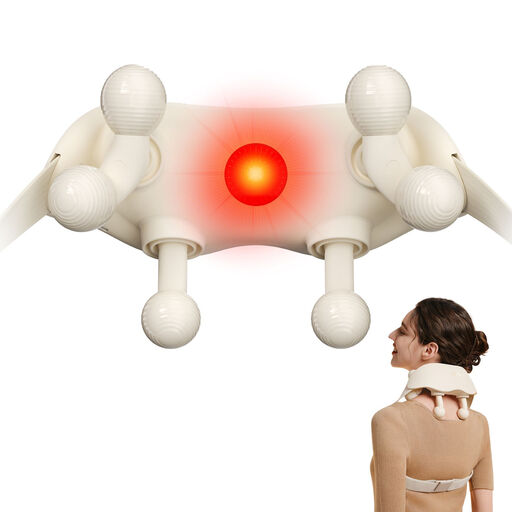
Why We Chose It The SKG HS500-2 is a lighter, more compact alternative. This model focuses on portability and ease of use. It is wireless, has a battery life of about 70 minutes, and offers 6 massage modes and 3 heat levels. The elastic neck support is designed for a comfortable fit.
Pros
Who It's For Ideal for those looking for an effective, yet lighter and more portable shiatsu massage cushion for the neck and shoulders. Suitable for use at home, in the office, or on the go.
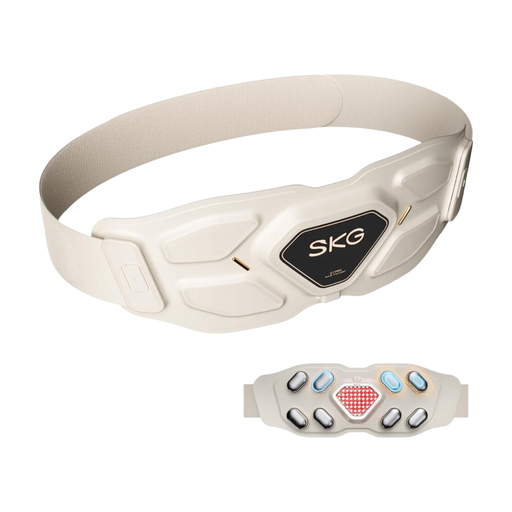
Why We Chose It For those who suffer not only from shoulder tension but also from lower back pain, there is the SKG W9 Pro. This back massager is specifically designed for the lumbar region. It combines EMS+TENS technology (electrical muscle stimulation) with heat and red light. The device has 8 massage nodes and a very large heating surface of 18000 mm².
Pros
Who It's For Individuals primarily looking for a solution for lower back pain who prefer a technologically advanced device with app functionality.
The SKG devices discussed integrate red light into their massage function. If you are specifically interested in the application of light therapy for wellness, there are also devices that focus exclusively on this. These devices use panels with LEDs to treat larger areas of the body. For more information on this technology, you can view our selection of red light therapy lamps.
1. How often can you use a neck and shoulder massager? Most manufacturers recommend using a massager for no longer than 15 to 20 minutes per session, and at most once or twice a day. Prolonged or excessive use on the same spot can lead to skin irritation or bruising. Always consult the manual of your specific product for the recommended duration of use.
2. What is the difference between a shiatsu massage cushion and a percussion massager? A shiatsu massage cushion uses rotating nodes that mimic a kneading and rolling motion, similar to a masseur's thumbs. A percussion massager (also known as a massage gun) delivers rapid, pulsating strokes that penetrate deep into the muscle tissue. Shiatsu is often aimed at relaxation and releasing superficial tension, while percussion massage is more intensive and focused on deeper muscle recovery.
3. Does a massager with a heat function help relieve neck pain? Heat can promote blood circulation and help muscles relax. When muscles are tense, it can lead to a painful and stiff feeling. The combination of massage and heat is found to be pleasant by many users and can contribute to a sense of relief and relaxation. However, it is not a medical treatment for chronic conditions.