
Vandaag of morgen in huis

Kwaliteit gegarandeerd
Download de app
Categorieën

Summers are becoming noticeably warmer. A fan is often no longer enough to keep a bedroom, home office, or living room comfortable. A mobile air conditioner offers a flexible solution. However, the range of options is vast, and choosing the wrong model can lead to unnecessarily high energy costs, noise disturbance, or inadequate cooling. This guide will help you make an informed decision based on key technical specifications.
To find the right portable air conditioner, it's important to understand a few technical specifications. These determine the device's effectiveness, energy consumption, and comfort level.
Cooling capacity is expressed in BTU (British Thermal Unit). A higher BTU number means more cooling power, suitable for a larger space. Too little capacity results in insufficient cooling, while excessive capacity consumes unnecessary energy.
The noise level, expressed in decibels (dB), is a crucial factor, especially for an air conditioner for the bedroom. A quiet mobile air conditioner produces around 50 dB, comparable to the hum of a refrigerator. Models exceeding 60 dB can be perceived as disruptive. Pay close attention to the specifications; manufacturers often list the sound pressure level at a certain distance, which can be lower than the maximum sound power level.
An energy-efficient air conditioner offers significant long-term savings on your electricity bill. The EU energy label provides an indication of its efficiency. Class A is good, while A+ or A++ are even more economical. The EER (Energy Efficiency Ratio) is also a useful indicator: a higher EER value means more cooling per watt consumed.
mobile air conditioner with an outdoor unit is typically quieter and more efficient, as the noisy compressor is located outside.Modern air conditioners often offer more than just cooling. An air conditioner with a heating function can also be used during the colder months. Other useful features include a dehumidification mode, a timer, and Wi-Fi control.
Based on the criteria above, we have selected three models with distinct features.
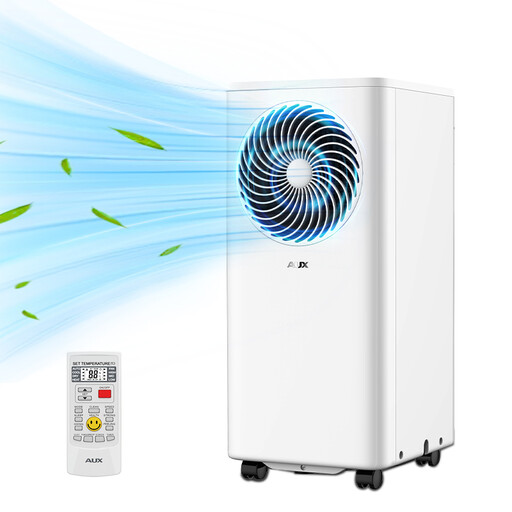
Why We Chose It This model from AUX is a compact and versatile monobloc air conditioner. With 9000 BTU and an Energy Class A rating, it strikes a great balance between cooling performance and energy consumption for standard-sized rooms. The addition of Wi-Fi control makes it a modern and user-friendly device.
Pros
Who is this for? For users seeking an affordable and easy-to-move solution for a bedroom or home office up to approximately 30 m². The Wi-Fi feature is a bonus for those who value convenience.
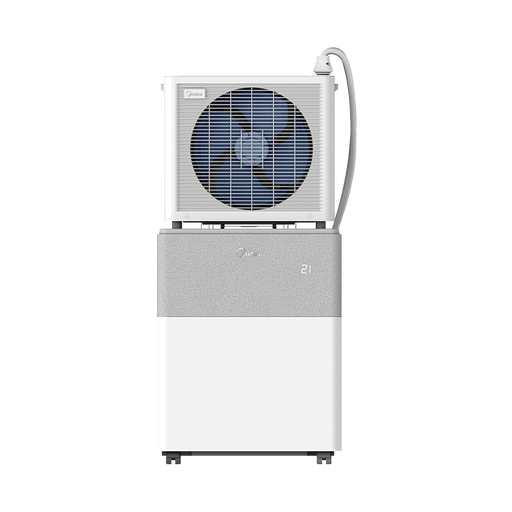
Why We Chose It The Midea PortaSplit is a mobile air conditioner with an outdoor unit. This design combines the flexibility of a portable unit with the advantages of a fixed split system: lower indoor noise levels and higher efficiency. With 12000 BTU and an Energy Class A++ rating, this is a powerful and highly economical choice.
Pros
quiet mobile air conditioner for the bedroom.Who is this for? For users who prioritise low noise levels and maximum energy efficiency. Ideal for long-term use in a living room or bedroom where the outdoor unit can be placed.
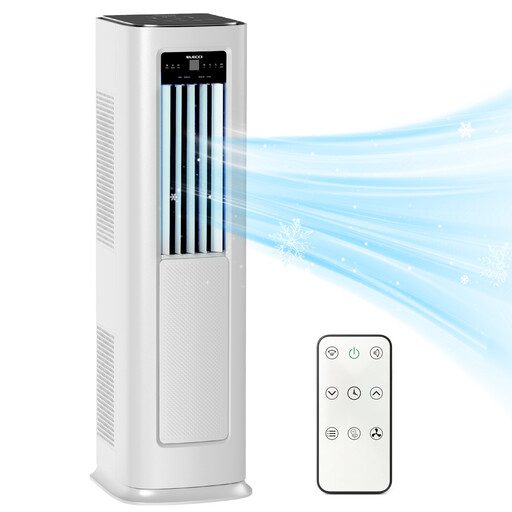
Why We Chose It This tower model from ELECCI is designed for maximum air circulation. With a powerful 12000 BTU motor and an airflow of 400 m³/h, this device can cool a larger room quickly and effectively. It is a robust monobloc solution with a focus on performance.
Pros
Who is this for? For those who need to quickly cool a large living room, attic, or open-plan office. The focus here is on pure power and airflow.
The selection above covers a range of needs, but you may be looking for a model with different specifications, a different capacity, or within another budget. A wide variety of mobile air conditioners are available.
Explore our full range of Cooling Appliances for more options.
1. How much noise does a mobile air conditioner make? The noise level varies greatly by model. A quiet mobile air conditioner produces around 50-55 dB. Louder models can reach up to 65 dB, which is comparable to a normal conversation. A mobile split-unit, where the compressor is outside, is significantly quieter, with the indoor unit producing only 39-45 dB.
2. What does BTU mean for a mobile air conditioner? BTU stands for British Thermal Unit and is the standard measure of cooling power. One square metre of living space with a standard ceiling height (2.5 m) requires approximately 100-130 BTU to be cooled effectively. Therefore, a 30 m² room would need an air conditioner of around 3000-3900 BTU, but factors like insulation, number of windows, and sun exposure also play a role. Manufacturers often provide a recommended room size.
3. Does every mobile air conditioner need an exhaust hose? Yes, virtually all mobile air conditioners (monobloc models) require an exhaust hose. This hose vents the heat extracted from the room to the outside. Without this exhaust, the air conditioner would blow the heat back into the room, rendering the unit ineffective. The hose is typically routed through a window or door using an included window sealing kit. Only "air coolers," which work by water evaporation and do not actually cool the air, operate without a hose.