
Vandaag of morgen in huis

Kwaliteit gegarandeerd

Welkomstaanbiedingen ontgrendelen: GRATIS bezorging | Tot 80% korting | Gratis 30 dagen JoyPlus-proefperiode
Download de app
A mattress vacuum cleaner can help remove dust, dead skin, hair and other dirt from mattresses, pillows and sofas. However, not every model is automatically right for your home. Marketing often focuses on UV-C, exceptionally high suction power or terms such as “anti-allergy”, while practical details get less attention.
If you’re looking for the best mattress vacuum cleaner for dust mites, it’s worth looking beyond one impressive figure. Pay particular attention to how the appliance works on fabric, how to maintain the filter and whether its features suit the way you’ll use it.
A high kPa figure sounds impressive, but it doesn’t tell you everything about cleaning performance. How well the appliance works also depends on the brush, the seal against the mattress, the air channel and how you move it. A mattress vacuum cleaner with 15 kPa isn’t automatically more practical than one with 12 or 14 kPa.
Also consider the weight. A powerful appliance weighing over 2 kg can become tiring to use when you’re cleaning a large mattress, several pillows and a sofa.
UV-C lighting is often presented as a sterilising feature. However, exposure time, distance from the surface and the speed at which you move the appliance all affect how it works in practice. Claims about removing mites or bacteria come from the manufacturer and shouldn’t be taken as a general guarantee.
Never use UV-C on people or pets. On some models, the lamp switches off automatically when you lift the appliance. This is an important safety feature, but always follow the instructions.
A small dust container fills up quickly when cleaning mattresses and sofas. A clogged filter can reduce airflow. So check the dust container capacity, the cleaning instructions and whether replacement filters are available.
A multi-stage filtration system is useful for fine dust, but it doesn’t mean you can skip maintenance. Washable parts must be completely dry before you put them back.
Check the stated suction power in Pa or kPa, but only compare figures from appliances whose manufacturers use the same measurement method. A vibration function or rotating brush can loosen dirt from fabric before it’s vacuumed up.
A model with a wide suction head will clean a mattress more quickly. According to its product specifications, the Xiaomi Dust Mite Vacuum Cleaner Pro has a 20 cm nozzle, 14 kPa of suction power and a vibration frequency of 48,000 movements per minute.
A well-sealed filtration system is important for households with pets or lots of fabric. Check:
According to the product information, the Xiaomi Dust Mite Vacuum Cleaner Pro uses four-stage filtration, with cyclone separation, metal mesh, a filter cartridge and a cotton filter. For this model, it’s recommended that you replace the filter roughly every two to three months, depending on use.
A hot-air drying function can be useful if you want fabrics to feel less damp after cleaning. The stated temperature varies between models: the appliances mentioned here operate at around 50 to 65 °C. Don’t use warm air on heat-sensitive fabrics for long periods, and always check the fabric’s care label.
A mattress vacuum cleaner isn’t a regular wet-and-dry vacuum cleaner. Don’t use these appliances on wet surfaces or to vacuum up liquids.
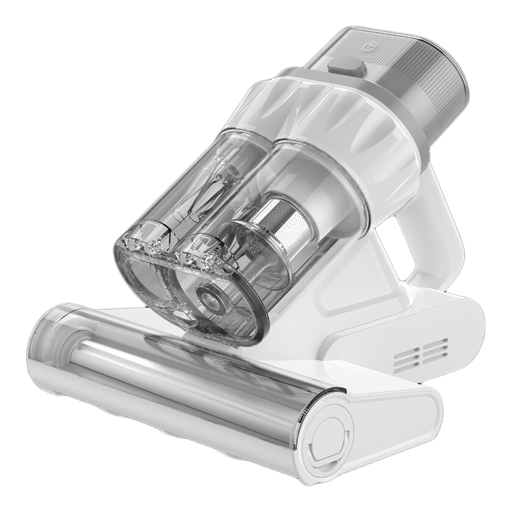
Why it suits this type of user: This model combines a relatively compact design with UV lighting, warm air and a 5-metre cord. It’s a good fit if you want to clean mattresses and pillows regularly without buying a large appliance.
The specifications cover more than just UV: they also include a 300 ml dust container, automatic shut-off of the UV lamp when the appliance is lifted and a clear safety warning.
12,000 Pa suction power, 65 °C warm air and a stated vibration frequency of 72,000 movements per minute.
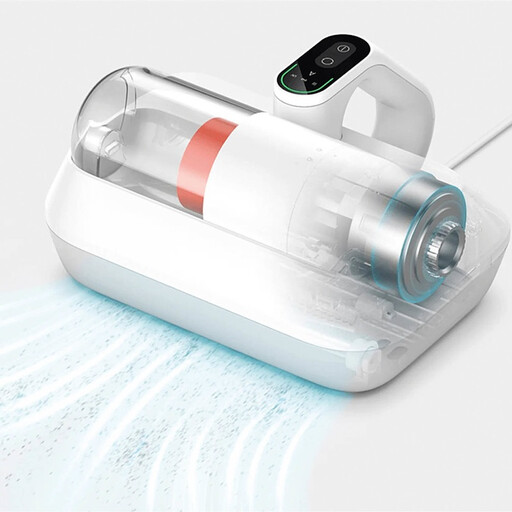
Why it suits this type of user: The smart mode, display, four-stage filtration and wide suction head make this an interesting choice if you want to clean different types of fabric and keep an eye on the settings.
The product information sets out the filters, modes, temperature and automatic UV shut-off. This gives you more to base your choice on than just the UV claim.
14 kPa suction power, 55 °C warm air, a 0.5-litre dust container and a stated weight of 2.06 kg.
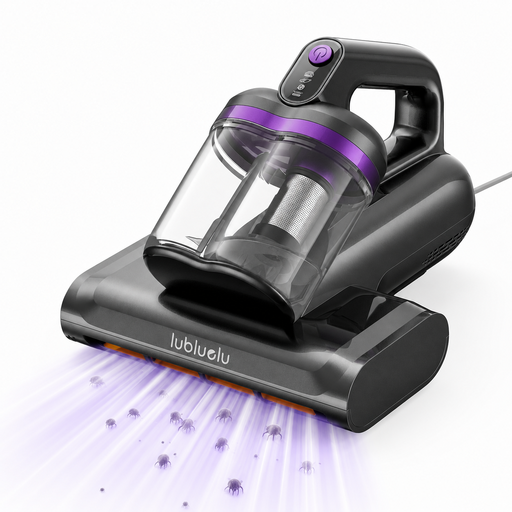
Why it suits this type of user: With a larger dust container and a 4-metre cord, this model is suitable if you regularly clean mattresses, sofas, pillows or other large fabric items.
As well as listing its UV function, the product description gives details of the cord length, noise level, dust container capacity and warm-air drying.
15 kPa suction power, a 650 ml dust container, 55 °C warm air and a stated power rating of 500 W.
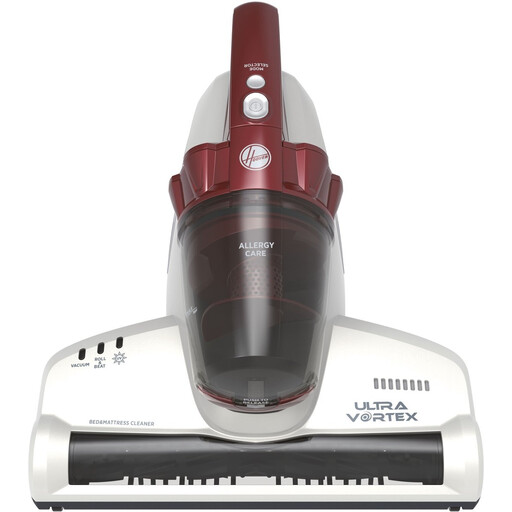
Why it suits this type of user: The Roll & Beat brush, UV-C light and 500 W power make this a good match for households that also want to tackle sofas, pillows, duvets and pet hair.
The mechanical Roll & Beat function complements the UV-C feature. According to the product description, the appliance is designed for several types of fabric, not just mattresses.
500 W power, cyclone separation, a UV-C function and a weight of 2.3 kg.
We’ve put together a complete, up-to-date list of products that meet these strict selection criteria and the applicable European safety requirements.
A mattress vacuum cleaner isn’t a substitute for regular washing, airing or following the care instructions for your mattress. Think of it as an addition to your usual cleaning routine.
A dust mite vacuum cleaner can suck up dust and dirt from fabric. Some models combine this with vibration, UV-C or warm air. Claims about the percentage of mites removed or disabled come from the manufacturer. Results also depend on how you use the appliance, the surface, the speed and maintenance.
It depends on your household. If you have pets, use lots of fabric items or notice visible dirt, regular cleaning can be useful. Also follow the washing instructions for your bedding, and clean the filter after use if the manual recommends it.
Most models in this category are corded appliances with a stated power rating of around 300 to 500 W. Actual energy use depends on how long you use the appliance and which mode you choose. An appliance with a shorter cleaning time may use less electricity overall than a lower-powered model that needs to run for longer.
