
Vandaag of morgen in huis

Kwaliteit gegarandeerd

Welkomstaanbiedingen ontgrendelen: GRATIS bezorging | Tot 80% korting | Gratis 30 dagen JoyPlus-proefperiode
Download de app
Whether you're searching for your toddler's first markers, a set for your hand-lettering hobby, or a creative gift, the selection can be overwhelming. Not all markers are created equal. Different tips, ink types, and features make each set suitable for specific purposes. This article helps you make an informed choice by comparing various types of markers and offering practical tips, ensuring you find the right set for your project.
Before making a choice, it's helpful to consider a few key features. These determine who and what a marker set is best suited for.
The marker's tip is perhaps its most important component. It determines the line width and the feel while drawing or coloring.
Especially with markers for kids, the ink's composition is a critical consideration.
A marker set can range from a few basic colors to an extensive palette of dozens of shades. Think about what you'll be using the markers for. For a child just starting with coloring, a basic set of 12 colors is often sufficient. For more serious drawing or hobby projects, a larger set with more color nuances may be desirable.
Below is a selection of markers that stand out for their specific features, suitable for different ages and creative goals.
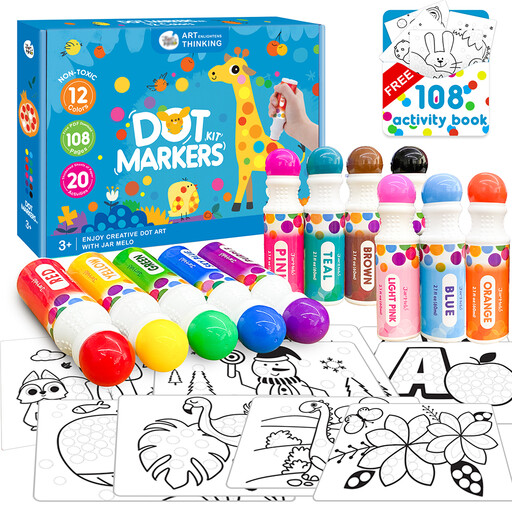
Why It Stands Out These dot markers are specially designed for small children's hands. The thick, round shape is easy to hold, and the sponge tip makes it simple to create colorful dots without making a mess.
Advantages
Who Is It For? Ideal for toddlers and preschoolers (from around 2-3 years old) as a first introduction to coloring and drawing. It playfully stimulates motor skills.
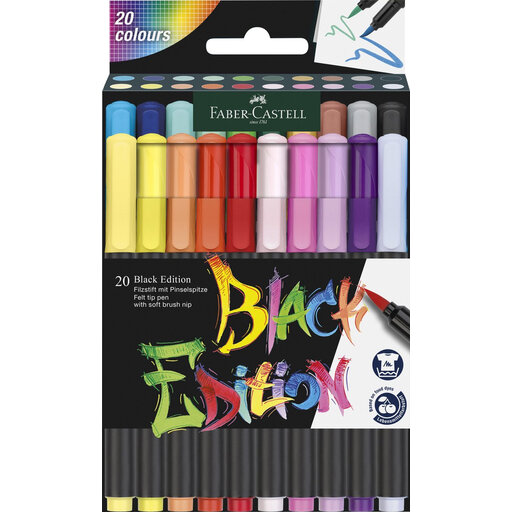
Why It Stands Out This set from Faber-Castell contains brush pens with a flexible brush tip. They allow you to create smooth lines that vary from thick to thin, making them highly suitable for creative writing and drawing techniques.
Advantages
Who Is It For? This set is a great choice for older children (ages 10 and up), teenagers, and adult hobbyists who want to focus on calligraphy, illustration, or hand-lettering.
View the Faber-Castell Brush Pen Set
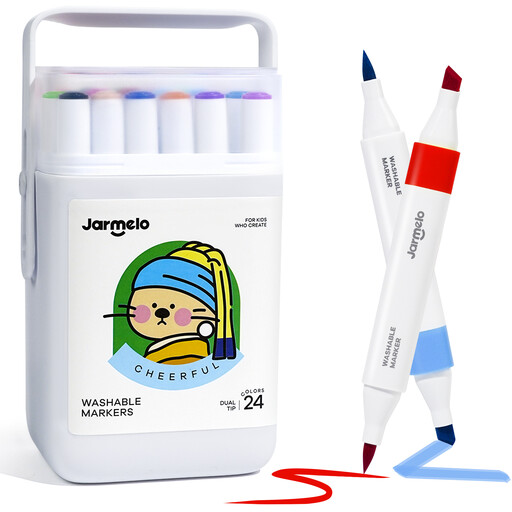
Why It Stands Out This set combines the best of both worlds with a dual tip: a brush tip for details and a chisel tip for broader strokes. The 24 colors come in a convenient storage case.
Advantages
Who Is It For? A versatile marker set for children (ages 4 and up) and beginner hobbyists looking for a complete and organized set for various drawing and coloring projects.
View the Jar Melo Dual Tip Markers

Why It Stands Out This is more than just a set of markers; it's a creative laboratory. With this kit from Clementoni, children can create and personalize six of their own highlighters using over 50 accessories.
Advantages
Who Is It For? Perfect for curious children aged 6 and up who love crafting and experimenting. Adult supervision is recommended when handling the ink.
View the Clementoni Highlighter Lab set
The world of markers is vast and diverse. Are you looking for other types of pens, such as fineliners, gel pens, or specific calligraphy markers? Many more options are available to suit a wide range of creative needs.
1. What is the difference between felt-tip markers and brush pens? The main difference is the tip. A felt-tip marker has a hard, fixed tip that produces a line of constant thickness. A brush pen has a soft, flexible tip like a paintbrush. By varying the pressure, you can create both thin and thick lines, which is ideal for hand-lettering and expressive drawings.
2. How do you get washable marker stains out of clothing? Although the name "washable" suggests that stains disappear easily, it's wise to act quickly. First, dab the stain with a damp cloth (do not rub). You can pre-treat the stain with a stain remover and then wash the garment according to the care label. Most water-based inks are designed to wash out of most common fabrics, but there is no guarantee for all materials.
3. At what age are markers safe for children? For the very young (toddlers aged 2-3), there are special, thick dot markers or jumbo felt-tip markers that are easy to hold. Always ensure the markers are non-toxic and have a ventilated cap to reduce the risk of choking. For older children, more advanced options like brush pens or dual-tip sets are available. Always read the recommended age on the packaging.
