Vandaag of morgen in huis

Kwaliteit gegarandeerd

Welkomstaanbiedingen ontgrendelen: GRATIS bezorging | Tot 80% korting | Gratis 30 dagen JoyPlus-proefperiode
Download de app
Switching from halogen to LED headlights is a popular upgrade for many drivers. The promise of better visibility, a longer lifespan, and a modern look is appealing. However, the choice isn't always straightforward. An incompatible set can lead to dashboard error messages, an incorrect beam pattern that dazzles oncoming drivers, or even cause you to fail a vehicle inspection.
This article will help you make an informed choice. We will discuss the key parameters to consider and highlight several products based on their specifications.
A successful upgrade depends on a few technical factors. By paying attention to these, you reduce the risk of compatibility issues and ensure a safe, durable solution.
The fitting is the physical socket for the bulb in the headlight assembly. This is the first and most crucial step. Your car is designed for a specific fitting, such as H7 LED or H11 LED. This code is listed in your car's owner's manual or often on the old halogen bulb itself. A bulb with the wrong fitting simply won't fit.
Modern cars use a CAN bus (Controller Area Network) system to monitor electronic components. Because LED bulbs consume significantly less power than halogen bulbs, the system may interpret this as a faulty bulb and display an error message on the dashboard. Therefore, opt for CAN bus-compatible LED lighting. These bulbs have a built-in resistor or an external driver that simulates the power consumption of a halogen bulb, preventing error messages.
A good LED bulb must replicate the beam pattern of the original halogen bulb as accurately as possible. This ensures the light is projected correctly onto the road and prevents dazzling oncoming traffic, a critical point for vehicle safety inspections. Bulbs with a "1:1 mini size" design, where the dimensions and the position of the LED chips match the filament of a halogen bulb, often provide the best results.
Colour temperature is expressed in Kelvin (K). While halogen bulbs have a yellowish glow (around 3200K), 6000K car bulbs provide a bright, white light often described as a xenon look LED. This ensures better colour perception and a more modern appearance. Brightness, expressed in lumens (LM), indicates the total light output. More lumens doesn't always mean better; a correct beam pattern is more important.
Many DIY enthusiasts prefer plug-and-play headlights. These are models without external drivers or loose cables that fit directly into the existing socket. This makes the process of replacing car headlights significantly easier and comparable to changing a standard halogen bulb.
Below is a selection of LED headlights, analysed based on their manufacturer-stated specifications.
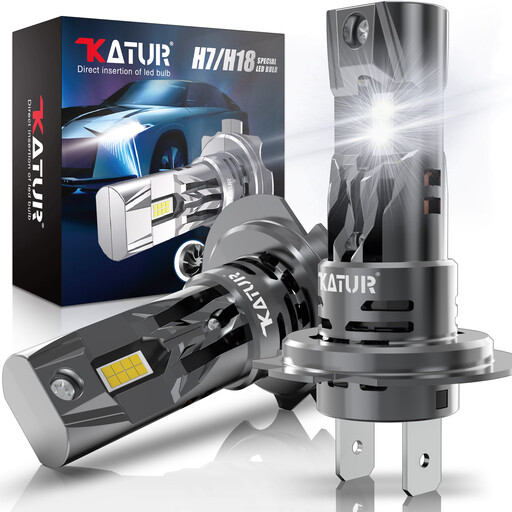
Why this product: This KATUR H7 set stands out for its high stated light output and compact 1:1 size. According to the manufacturer, the Automotive-Grade LED GC chips provide a light output of 30,000 lumens per pair, resulting in a wide and far-reaching light field. The design is identical to a halogen bulb, which simplifies installation.
Benefits (based on specifications):
Who is this for: Drivers with an H7 fitting who are looking for high light output and a simple, wireless installation. Suitable as an LED low beam or high beam.
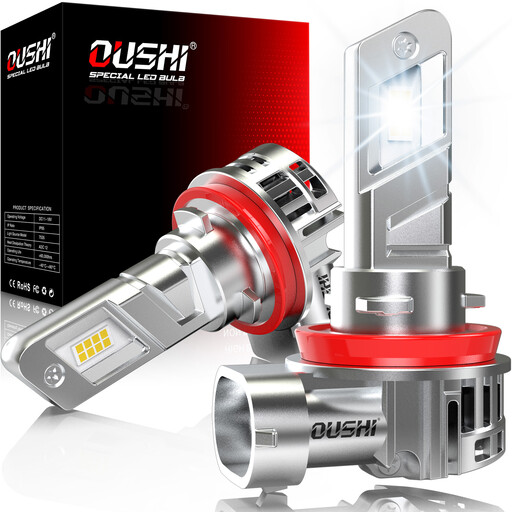
Why this product: The OUSHI H11 set is designed for vehicles that use an H11, H8, or H9 fitting. The manufacturer claims a light output 600% higher than halogen and emphasizes compatibility with European vehicles thanks to an advanced CAN bus system.
Benefits (based on specifications):
Who is this for: Drivers of cars with an H11/H8/H9 fitting, especially European brands, who are looking for a solution with high compatibility and no external components.
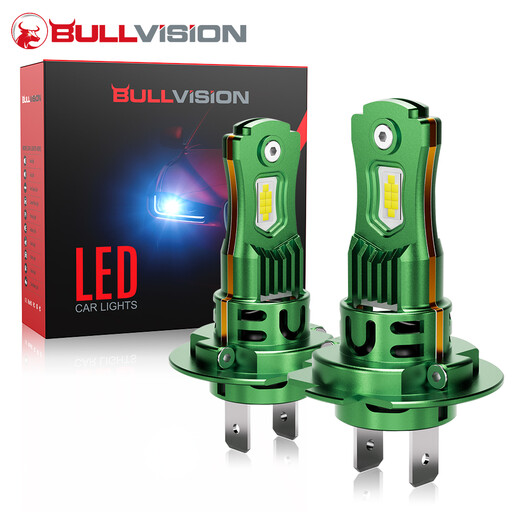
Why this product: These Bullvision H7 bulbs strongly focus on maintaining the original beam pattern. The 1:1 design ensures the light source is in the exact same position as a halogen bulb, which is essential for a correct and safe beam. The manufacturer issues a clear warning for specific car brands.
Benefits (based on specifications):
Who is this for: Drivers with an H7 fitting who prioritise a correct beam pattern and simple installation. A good choice for those who are aware of the potential need for an extra decoder for certain German car brands.
Is the specific fitting for your car not mentioned, or are you looking for a different brightness or colour temperature? The range of LED lighting is extensive. For a more comprehensive overview of available models, you can browse our entire assortment.
See more options for white LED bulbs here
1. Are LED headlights legal? Yes, the use of LED headlights is permitted, provided they comply with legal requirements. This means the bulbs must produce a correct beam pattern that does not dazzle oncoming drivers, and the light colour must be white or yellow. For safety inspections, the beam pattern is the most important factor. Bulbs with an E-mark (ECE approval) have been tested and approved for use on European roads.
2. What exactly does 'CAN bus ready' mean? 'CAN bus ready' or 'CAN bus proof' means the LED bulb is equipped with technology (usually a built-in resistor) to compensate for its low power consumption. This prevents the car's onboard computer from thinking the bulb is faulty and displaying an error message on the dashboard.
3. Can I replace my halogen bulbs with LEDs myself? For most cars, replacing halogen bulbs with plug-and-play headlights is a relatively simple job that you can do yourself. The procedure is often similar to changing a standard bulb. However, it is always advisable to consult your car's owner's manual for specific instructions and to check that there is enough space behind the headlight assembly.