
Vandaag of morgen in huis

Kwaliteit gegarandeerd

Welkomstaanbiedingen ontgrendelen: GRATIS bezorging | Tot 80% korting | Gratis 30 dagen JoyPlus-proefperiode
Download de app
A recipe failing because the proportions are off is a familiar problem for many home cooks. The culprit is often an unreliable kitchen scale. The market is flooded with models that promise a lot but don't always deliver. Before you buy a new one, it's wise to know what to look for to avoid wasting money on a device that becomes inaccurate after just a few months.
Common pitfalls include:
smart scale with an app sounds convenient, but in practice, many apps are clumsy to use, are no longer updated, or have an unstable connection. You end up paying extra for a feature that causes more frustration than convenience.To make a sound choice, it's best to focus on a few key specifications that truly make a difference in the kitchen.
Accuracy is perhaps the most important feature of a digital kitchen scale. Most scales measure in 1-gram increments.
scale for baking, this is sufficient.precision scale with this level of accuracy is indispensable for specific applications. Think of weighing yeast, salt, spices, or coffee beans. For coffee enthusiasts working with pour-over or espresso, a dedicated coffee scale with 0.1-gram precision and a built-in timer is a targeted investment.Most kitchen scales have a maximum capacity of 5 kg, which is more than sufficient for most households. Do you often bake large batches of bread or cook for a large family? Then a model with a 10 kg capacity might be more convenient.
The material of the weighing platform determines its durability and ease of maintenance:
Regardless of the model, a good kitchen scale with a tare function is essential. The tare function (or add-and-weigh function) resets the weight to zero after you place a bowl or ingredient on it. This allows you to weigh multiple ingredients consecutively in the same bowl without any mental math. For those who track their nutrition, a nutrition scale with a built-in database or app connectivity can be a useful addition, provided the functionality is well-executed.
To help you make the right choice, we've matched a few popular models to different user profiles.
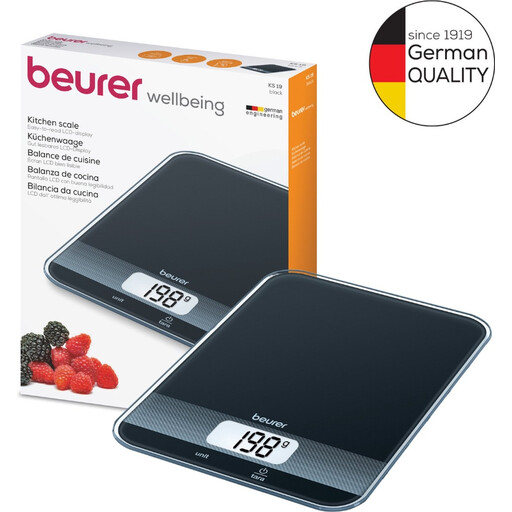
Why This Fits Their Persona: This model is ideal for the everyday cook and baker looking for a reliable and straightforward device. No unnecessary frills, just accurate weighing. Its slim design is easy to store in any kitchen drawer.
The glass surface is easy to clean, preventing the hygiene issues associated with cheap plastic. The focus is on core functions that work well, without making you pay for superfluous smart features.
Capacity: 5 kg with 1-gram precision.
Features: Clear LCD screen and an essential tare function.

Why This Fits Their Persona: For those who track calories, protein, and other nutritional values, this is a powerful tool. The nutritional information is displayed directly on the scale's colour screen, which speeds up the process.
This model bypasses the pitfall of a clumsy app by displaying the most important data directly on the device itself. The app is a supplement, not a necessity for core functionality.
Database: Access to a database of 1.3 million food items, according to the manufacturer.
Display: Large VA colour screen for a clear display of nutritional values.
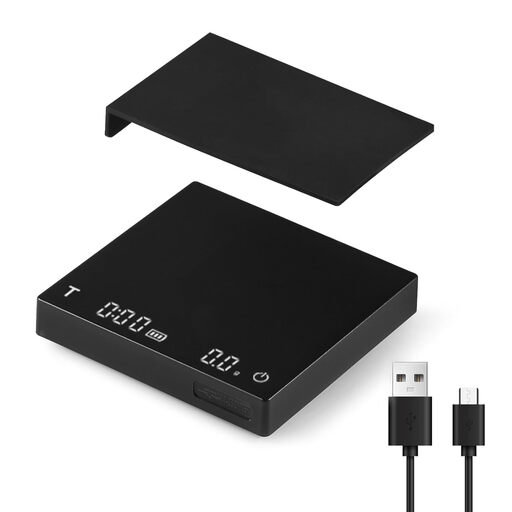
Why This Fits Their Persona: Specifically designed for brewing coffee. The 0.1-gram precision is crucial for the perfect extraction. Its compact size fits on the drip tray of most espresso machines, and the built-in timer is indispensable for pour-over methods.
This isn't a general-purpose kitchen scale trying to be a jack-of-all-trades. It's a specialised tool that excels at one task: accurately weighing and timing coffee. This avoids the pitfall of inaccurate sensors at small weights.
Precision: 0.1-gram accuracy.
Extras: Built-in timer, rechargeable via USB-C, and a heat-resistant silicone mat.
A good kitchen scale is an investment in better cooking and baking results. If the models above don't quite match your needs, explore our full range.
Most home-use kitchen scales are calibrated at the factory and do not require manual adjustment. The most important step for an accurate measurement is to always place the scale on a hard, flat, and stable surface. If you doubt its accuracy, you can check it with an object of a known weight, such as an unopened 1 kg bag of sugar.
The lifespan heavily depends on the quality of the sensors and how you use the device. A solid model from a reputable brand can easily last 5 years or more with normal use. To maximise its lifespan, avoid dropping the scale, overloading it, or submerging it in water.
This depends entirely on your goal. For most cooks, it's not a necessary feature. However, if you follow a strict diet, want to track your macros accurately, or keep a detailed food diary, a smart scale with a well-functioning app can be a valuable tool. Just be sure to check reviews of the companion app beforehand.
