
Vandaag of morgen in huis

Kwaliteit gegarandeerd

Welkomstaanbiedingen ontgrendelen: GRATIS bezorging | Tot 80% korting | Gratis 30 dagen JoyPlus-proefperiode
Download de app
Buying a new kettle seems simple—until your model is caked in limescale after three months, spills hot water across your countertop, or makes more noise than a jet engine. Many marketing promises focus on shiny bells and whistles, while the real pain points are often hidden in the design. Before you make a choice, it's wise to understand the most common pitfalls that lead to dissatisfaction and unnecessary expense.
designer kettle can be an asset to your kitchen, until you notice the spout dribbles, the handle is awkward, or the lid sticks when it's hot. Functionality should always take precedence.electric kettle. An extremely rapid-boil kettle can trip the circuit breaker and is often noisier. The balance between speed and practicality is more important.To find a model that fits your daily routine, it's helpful to look beyond just aesthetics. These three factors determine how practical a kettle is in day-to-day use.
The material affects not only durability and appearance but also maintenance and safety.
glass kettle looks modern, and you can see exactly how much water is inside. However, limescale is also immediately visible, which requires more frequent cleaning. Opt for borosilicate glass; it is more resistant to thermal shock.Not every hot beverage requires boiling water. For tea and coffee lovers, or parents with young children, extra features are worth considering.
The size and power should match your household.
rapid-boil kettle. However, check if your kitchen's electrical circuit can handle this, especially if other appliances are running at the same time.Based on these criteria, we have selected several popular choices that suit different needs and households.

Why it's a match: For those who drink different types of tea, the right temperature is crucial. This model not only offers preset temperatures but also the ability to set the temperature with degree-level precision via an app.
This model bypasses the "one-size-fits-all" approach. Instead of boiling everything at 100°C, which can scorch delicate tea, its precise temperature control gives you complete command.
The combination of a stainless steel body, a keep-warm function, and Wi-Fi connectivity for ultra-precise temperature settings (1-100°C) via the Smartlife app.

Why it's a match: In a busy household, capacity, speed, and safety are paramount. This 1.7-liter model quickly boils water for the whole family, while the glass jug and LED lighting make it instantly clear if it's on and how much water is inside.
It avoids the "design flaw" by focusing on a practical design. The transparent jug prevents you from boiling too much or too little water, and the auto shut-off and boil-dry protection provide peace of mind.
A large capacity of 1.7 liters and a high power of 2200W for rapid boiling. The borosilicate glass is durable, and the blue LED lighting serves as a clear visual indicator.
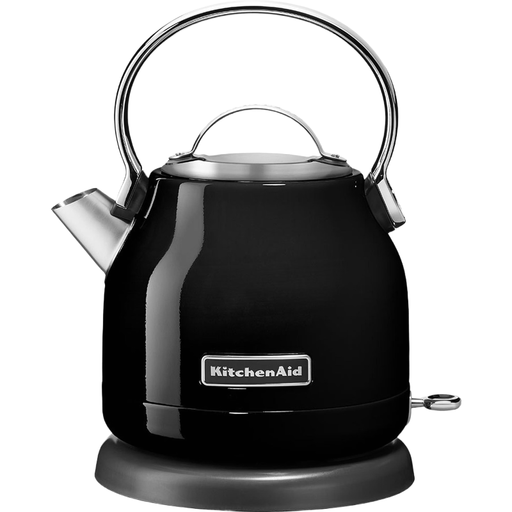
Why it's a match: For those who value a clean and stylish countertop, this model offers the iconic KitchenAid aesthetic without compromising on quality. Its compact size is perfect for smaller kitchens.
This is a `designer kettle` that avoids the pitfall of impractical design. The stainless steel body is durable, the spout is designed to be drip-free, and the core functionality is solid and reliable.
A timeless and iconic design, combined with a durable stainless steel construction and a compact 1.25-liter capacity. The removable lid makes filling and cleaning easy.
For those who need instant hot water continuously without boiling a full kettle each time, a hot water dispenser can be a game-changer. Check out models that deliver water at your desired temperature instantly.
This largely depends on the water hardness in your area. In regions with hard water, it's advisable to descale your kettle monthly. A good indicator is when you see a white, chalky layer on the bottom or the heating element. Regular descaling with vinegar or a dedicated descaler extends the lifespan and ensures more efficient operation.
No, the material of the jug itself has a negligible impact on energy consumption. Consumption is primarily determined by the power (wattage) of the heating element and how efficiently heat is transferred to the water. A double-walled stainless steel kettle might keep water warm slightly longer, but the boiling process itself consumes the same amount of energy as a glass model with equivalent power.
Yes, it can. If you often need water for green tea (80°C) or baby formula (around 40-55°C), you use less energy than if you were to boil the water to 100°C every time. By heating the water only to the required temperature, you save on your energy bill in the long run.
