
Vandaag of morgen in huis

Kwaliteit gegarandeerd

Welkomstaanbiedingen ontgrendelen: GRATIS bezorging | Tot 80% korting | Gratis 30 dagen JoyPlus-proefperiode
Download de app
A dead battery or a flat tyre always happens unexpectedly. Whether you're on your way to work, on holiday with the camper, or enjoying a quiet Sunday drive, car trouble is a major disruption. A jump starter with a compressor seems like the perfect all-in-one solution. However, many models on the market promise more than they can deliver.
Before you invest in an emergency kit for your car, it's crucial to recognise the common pitfalls. Many drivers make a choice based on marketing claims and end up with a device that leaves them stranded.
To avoid a bad purchase, focus on verifiable specifications rather than marketing buzzwords. Pay attention to the following three points when choosing a car jump starter.
The primary function of a 12V battery booster is to start your car. Instead of fixating on the peak current (Amps), it's better to look at the engine compatibility specified by the manufacturer. A reliable indicator is the maximum engine displacement (in litres) that the device can start.
A good built-in compressor saves you from needing a separate device and a trip to the petrol station. Pay attention to two things here:
A modern car emergency kit should be safe and versatile. Essential safety features include protection against:
Additionally, extras like a built-in car power bank with USB ports (to charge your phone) and a bright LED torch (with an SOS function) make the device a complete emergency solution.
Based on objective specifications, we have selected a number of models that suit different user profiles.
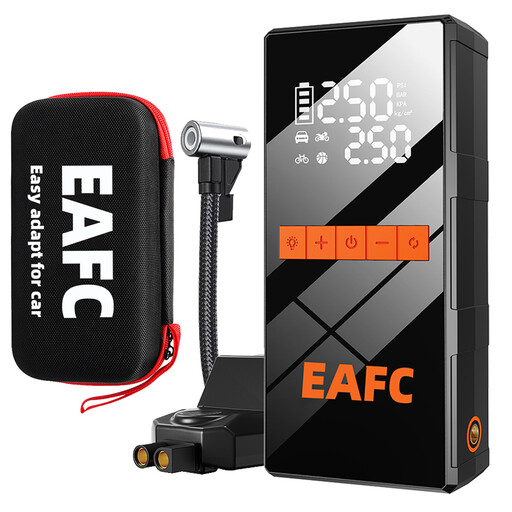
Why This Fits Their Persona: Ideal for owners of compact to mid-size cars who need a reliable, affordable all-in-one solution for emergencies. Perfect for the glove box of a city car or for daily commutes.
This model focuses on realistic performance for smaller engines (up to 4.0L petrol/2.0L diesel) rather than an exaggerated peak power rating. The 150 PSI compressor with auto-stop is functional and prevents issues.
Compact size and full 4-in-1 functionality (jump starter, compressor, power bank, torch) at an accessible price. Includes smart safety clamps.

Why This Fits Their Persona: Suitable for drivers of SUVs, vans, campers, or cars with large diesel engines. This user wants certainty and power, even in cold conditions, and is willing to invest in reliability.
The BUTURE BC02 delivers high starting power suitable for engines up to 9.0L petrol and 8.0L diesel. Its specifications are focused on performance, not just a high peak number. The compressor is designed for efficient use.
Powerful 4500A jump starter specification and a robust design with 10 safety features. The smart digital compressor with 5 modes and the bright 500-lumen torch make this a very complete package.
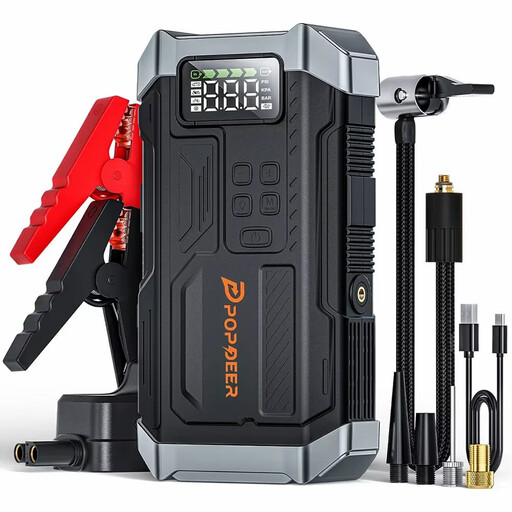
Why This Fits Their Persona: For those who travel with a camper or 4x4 and need a multifunctional device that is reliable in various conditions. This profile values versatility, from starting the engine to inflating bike tyres at the campsite.
This model combines high starting power (10L petrol/8L diesel) with an efficient compressor that quickly inflates a tyre. According to the manufacturer, the cooling system provides better heat dissipation, reducing the risk of overheating during intensive use.
Very powerful and versatile. The compressor has 4 modes and comes with 4 nozzles for cars, bikes, and balls. Its robust build and wide temperature resistance (-20°C to +60°C) make it suitable for adventurous use.
We have compiled a complete, up-to-date list of products that fully meet these strict selection criteria and safety regulations.
Most manufacturers recommend fully charging the jump starter every 3 to 6 months, even if you don't use it. Lithium-ion batteries slowly lose their charge over time. Regular charging ensures the device is ready for use when you need it and extends the life of the internal battery.
A modern jump starter with built-in safety features is designed to prevent damage. The most important feature is reverse polarity protection, which prevents current from flowing if you connect the clamps incorrectly. Without this protection, you could seriously damage your car's electronics. Therefore, always choose a model that explicitly mentions smart safety clamps.
No, probably not. A very powerful jump starter isn't harmful, but for a compact car with a small petrol engine (e.g., 1.0L to 2.0L), a model with a lower starting power (around 1200A-2000A peak) is usually sufficient and often more affordable. Engine compatibility is a better guide here than peak power alone.
