
Vandaag of morgen in huis

Kwaliteit gegarandeerd

Welkomstaanbiedingen ontgrendelen: GRATIS bezorging | Tot 80% korting | Gratis 30 dagen JoyPlus-proefperiode
Download de app
A dead battery or a flat tire always happens unexpectedly. Being stranded on the side of the road is not only frustrating but can also be unsafe. A jump starter with a compressor seems like the perfect all-in-one solution. However, many models on the market don't live up to their promises. As a Joybuy Product Recommendation Officer, I'll help you see through the marketing claims and find a device that won't let you down.
Before you make a purchase, it's crucial to recognise the most common pitfalls that many drivers fall into:
tire inflator and jump starter should be able to bring a tire up to pressure within minutes.battery booster that has lost its charge after just three months in the trunk is useless when you need it. The quality and type of battery determine the self-discharge rate. A device you have to recharge every month is not the reliable emergency tool you're looking for.To avoid a bad purchase, focus on the specifications that truly matter. Don't be distracted by marketing jargon; look at the hard numbers.
The starting power, expressed in amperes (A), determines if the car jump starter is powerful enough. A higher number isn't always better; it must be suitable for your engine.
portable jump starter with a peak power of around 1500A to 2000A is typically sufficient.jump starter for diesel with 4000A or more is necessary, especially in low temperatures. The cold increases the engine's resistance, requiring more power.Always check the manufacturer's specifications for compatibility with engine displacement (liters).
A compressor is rated on two values:
The internal battery is the heart of your car jump starter. Pay attention to the capacity (mAh), but especially the technology. Modern lithium-ion batteries with low self-discharge can hold their charge for up to 6-12 months. Extra features like a power bank with jumper cables to charge your phone, a bright LED flashlight, and various safety certifications (protection against short circuits, overheating, and reverse polarity) are what make a device a truly complete emergency kit.
Below is a selection of models that score well on the above criteria, matched to specific user profiles.
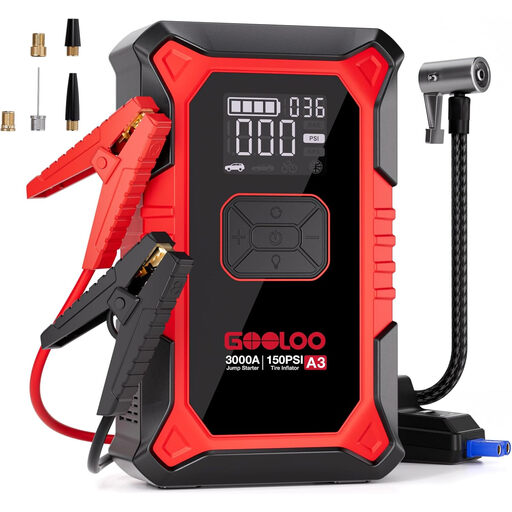
Why This Fits Their Persona: A perfect balance for most gasoline cars and compact SUVs. This model offers sufficient starting power and a functional compressor without the premium price tag. Ideal for those seeking peace of mind for daily use and road trips.
The compressor has a specified airflow of 35L/Min, which is significantly faster than budget models that only advertise high PSI. This prevents the frustration of a slow pump.
Versatility: functions as a jump starter, tire inflator, power bank, and flashlight. The preset inflation modes make it easy to use, even for beginners.
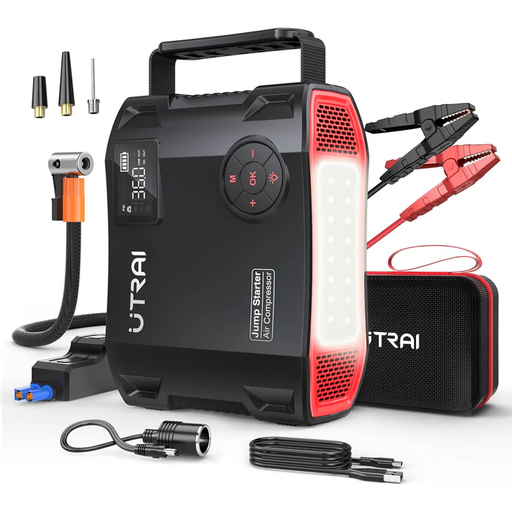
Why This Fits Their Persona: Specifically designed for the toughest jobs. Ideal for owners of RVs, vans, or large diesel SUVs who need absolute starting reliability, even in low temperatures.
With a peak power of 6000A and suitability for diesel engines up to 10.0L, this model bypasses the pitfall of 'inflated' specifications. This power is designed for large, cold engines.
Very high starting power and a 160W DC output to power other 12V devices like a cooler or vacuum cleaner. Furthermore, the 45L/Min airflow is extremely fast.

Why This Fits Their Persona: For those who seek not only power but also advanced safety and durability. The focus on protection mechanisms and a robust build is ideal for anyone unwilling to take risks with their car's electronics.
The emphasis on 10 safety features, including reverse polarity and spark-proof protection, addresses the fear of incorrect use. Its cooling technology prevents overheating, a common defect.
Advanced safety systems and a rugged design that, according to the manufacturer, can withstand extreme temperatures from -20°C to 60°C. The clear LCD screen provides instant status updates.
Many of these jump starters also function as a powerful power bank. If you're specifically looking for a portable charger for your smaller devices, we've put together a comprehensive overview.
This depends on the battery's self-discharge rate. High-quality models often only need to be topped up once every 3 to 6 months to keep them in peak condition. It's a good idea to set a reminder in your calendar. Check the manufacturer's manual for specific advice.
That depends on the engine displacement. For a smaller diesel engine (up to approx. 2.5L), 3000A may be sufficient in mild weather conditions. For larger diesel engines (3.0L and up) or in temperatures below freezing, a model with a higher peak power (4000A or more) is a safer choice.
Most jump starters are designed to be stored in a car, but extreme temperatures can affect the battery's lifespan. Most manufacturers specify an operating temperature range, for example, from -20°C to 60°C. Avoid leaving the device in direct sunlight on a hot summer day to protect the battery.
