
Handkerchief ironer with limited space
You iron small loads and share storage space. In that case, a compact appliance with straightforward controls may matter more than a large water tank.


For a few cotton handkerchiefs, a compact steam iron is usually a more practical choice than a steam generator, especially when storage space is shared. The Consumentenbond cites small amounts of ironing and limited storage space as reasons to choose a steam iron. Adjust the steam as needed, and always follow the care label for the temperature, as GINETEX advises.
You iron small loads and share storage space. In that case, a compact appliance with straightforward controls may matter more than a large water tank.
Different users need to understand the controls and know where the hot appliance can cool down safely. Automatic shut-off is an extra that varies by model, not a substitute for staying alert.
You also use the appliance for larger amounts of cotton or other laundry, and may have room for a bigger appliance. In that case, it’s worth considering a steam generator.
Choose this if: you iron small loads or have limited cupboard space.
Bear in mind: it has a smaller tank, and the iron may feel heavier than the iron on a steam generator.
Choose this if: you don’t want to refill the water tank and the handkerchief comes out smooth enough without extra steam.
Bear in mind: if cotton is difficult to smooth, you’ll miss the help of steam. Follow the ironing setting allowed by the care label.
Choose this if: housemates regularly iron larger loads one after another.
Bear in mind: a steam generator takes up more space and is often unnecessary for just a few handkerchiefs.
| What to consider | What should you check? | Who does this matter to? |
|---|---|---|
| Smoothing cotton | Check whether you can adjust the steam, and distinguish between continuous steam and a steam boost. | If I want to smooth my handkerchiefs without putting them away damp, I look for adjustable steam. Around 36% of consumers say smooth cotton is their top buying priority. |
| Space and purchase | Compare the size of the appliance and tank with your available storage space and the amount of laundry you iron. | If I have little shared cupboard space and mainly iron a few handkerchiefs, I don’t want an appliance that’s bigger than necessary. Around 29% of consumers prioritise space and a straightforward purchase. |
| Sharing safely | Check the controls, whether it has automatic shut-off, and the instructions for safe connection. | If several housemates use the iron, I want to know how it works and where it can cool down safely. Around 21% of consumers say safe shared use is their top priority. |
| Maintenance | Check the manual for instructions on filling, cleaning and descaling the model. | If different housemates refill the appliance, I want to be able to share the upkeep easily and avoid stains. Around 14% of consumers name easy maintenance as their top priority. |
A steam boost and the steam output throughout ironing are two different features. Too much steam can make the handkerchief or ironing board wet.
Compare the continuous steam output and how easily it can be adjusted separately. Use a steam boost only if the fabric and manual allow it.
A larger tank and more steam are mainly useful if you iron a lot and often. For a few handkerchiefs, the extra storage space it takes up may not be worthwhile.
Before choosing a generator, talk to your housemates about whether you’ll also use it for larger loads of laundry.
Anti-scale features can slow the build-up of limescale, but the appliance still needs maintenance. Automatic shut-off varies by model and doesn’t always happen immediately.
Agree on who will maintain the water tank and soleplate. Put the hot iron away safely and switch it off yourself after use.
The Express Steam FV2838E0 is a model worth comparing for shorter ironing sessions. Tefal lists five pre-set settings, a 270 ml tank and continuous steam of up to 40 g/min.
Philips lists a ceramic soleplate and a 300 ml tank for the 3000 Series DST3031/20. These are features to consider when weighing up an iron for small loads.
Braun lists a 270 ml tank and automatic shut-off for the TexStyle 3 SI 3054, which may be useful when the iron is shared.
These Joybuy products are suited to steam-ironing small cotton items. For each model, check that its controls, steam settings and maintenance instructions suit the way you’ll use it.
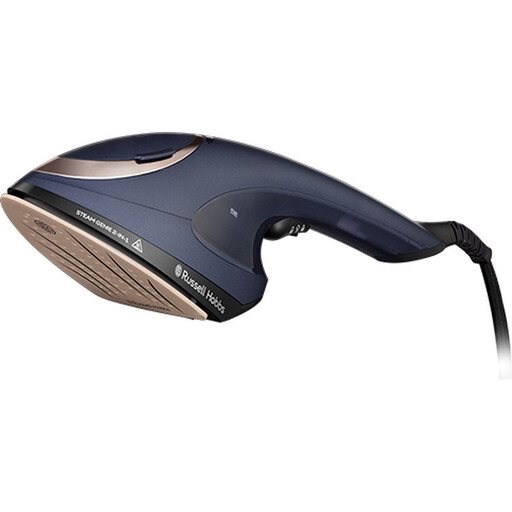 No image available
The listed ironing function and heated ceramic soleplate are suited to smoothing small items.
Joybuy lists a steam output of 20 g/min, a lock for continuous use and automatic shut-off.
 No image available
The described dry and steam settings with manual control may suit you if you want to choose between ironing with and without steam.
Joybuy lists a removable 0,15 L tank, a weight of 0,77 kg and a steam output of up to 22 g/min. The stated dimensions are 25 × 7,5 × 13,5 cm.
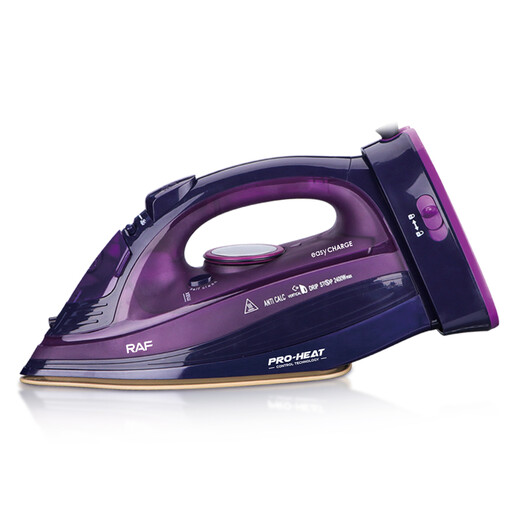 No image available
Cordless operation may suit you if you don’t want to use a cord where you iron.
The product name lists 2400 W, a 320 ml tank, a steam output of 15–25 g/min and a ceramic soleplate. The instructions state that the iron must be placed on the 360° charging base to heat up.
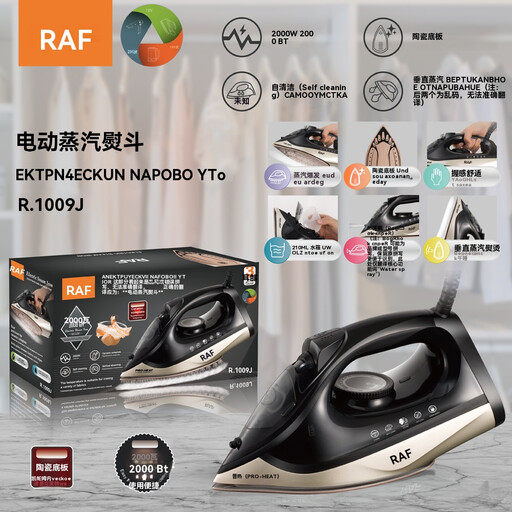 No image available
The listed steam-ironing function and ceramic soleplate are suited to smoothing handkerchiefs.
Joybuy lists a 210 ml tank, a spray function, a steam boost and a self-cleaning system.
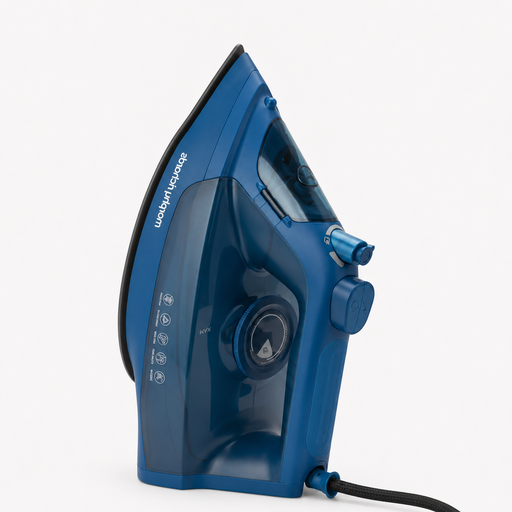 No image available
The listed variable steam may be useful if you want to adjust the steam output while ironing.
Joybuy lists a ceramic soleplate, a 350 ml tank, anti-scale and self-cleaning functions, and automatic shut-off. The stated continuous steam output is up to 50 g/min.
Follow the ironing symbol and any instructions on the handkerchief. GINETEX says that the maximum ironing temperature is determined by the care label, not just by the fibre name, cotton.
If the fabric and setting allow it, start by ironing with steam, then continue without steam until the fabric is dry. The Consumentenbond warns that too much steam can make laundry and the ironing board wet.
The Consumentenbond says that tap water is generally suitable for steam irons in the Netherlands, but check the manual for your exact model’s instructions on water and descaling. Don’t use scented ironing water or other products unless the manufacturer recommends them.
In the Netherlands, the seller must offer a solution if a product is faulty; the Dutch government states that there is no fixed statutory guarantee period of two years. For online purchases from a business, you’ll also usually have a 14-day cooling-off period, subject to legal exceptions.
Electrical appliances covered by the relevant EU rules must meet safety requirements. The Dutch government’s Ondernemersplein explains that manufacturers have obligations including CE marking and an EU declaration of conformity. A CE marking on its own is not an independent test of a specific appliance.