
Occasional ironer with limited cupboard space
You want to iron a few covers without having to store a bulky appliance. The Dutch Consumers' Association recommends a standard steam iron if you do little ironing and have limited storage space.


For a few cotton cushion covers and limited storage space, a standard steam iron is usually the sensible place to start. A steam generator is better suited to frequent, longer ironing sessions and stubborn creases, provided you have room for the separate base unit. The Dutch Consumers' Association explains the difference. Check the care label on each cover, following GINETEX guidance, and compare steam settings, tank capacity, size and maintenance requirements.
You want to iron a few covers without having to store a bulky appliance. The Dutch Consumers' Association recommends a standard steam iron if you do little ironing and have limited storage space.
You want to tackle longer ironing sessions and stubborn creases, and weigh a generator’s larger tank and more powerful steam against its larger size and storage requirements. The Dutch Consumers' Association explains this trade-off.
You want to connect and use the appliance safely, check the care labels on different covers and maintain the appliance properly. The Dutch Fire Service advises on connecting high-power appliances, while GINETEX explains textile care symbols.
Storage space, how much ironing you do, safe use and the care labels on your covers all play a part in this choice.
| Key consideration | What to look for when buying | Who is this most relevant to? |
|---|---|---|
| Compact storage | Compare the type of appliance and the space the unit takes up. | If I have limited cupboard space in student accommodation and only iron a few covers occasionally, I want an appliance that’s easy to store. Around 40% of consumers put storage first. |
| Smoothing out creases | Compare continuous steam output separately from the steam boost, and check whether the steam can be adjusted. | When I’m ironing several covers one after another or tackling stubborn creases, I prioritise the ironing results over a compact appliance. Around 30% of consumers focus mainly on this. |
| Safe use and maintenance | Check the user manual, whether the appliance has an automatic shut-off function, and the descaling instructions for the exact model. | In a shared home, I want to know how housemates can connect, use and maintain the appliance safely. Around 20% of consumers put this first. |
| Following the care label | Check the ironing symbol on each cover before choosing the temperature and steam setting. | If the covers have different finishes or care labels, I want to adjust how I treat each one accordingly, rather than relying on the word ‘cotton’ alone. Around 10% of consumers put this first. |
The Dutch Consumers' Association recommends a standard steam iron if you do little ironing and have limited space. A generator also needs room for its separate tank.
First, consider how often and how much you iron. A generator is best if you regularly iron larger loads and have space for the unit.
A steam boost is a different specification from continuous steam output. For example, Tefal lists separate figures for continuous steam and a steam boost for the FV2838E0, while Braun gives a figure for the SI 3041’s Turbo mode.
For each model, check which figure refers to continuous steam, which applies to a short boost, and whether a particular setting is required. Manufacturer specifications are not independent tests of ironing performance.
GINETEX describes the care label as a guide to treating the finished textile. So the fibre name alone doesn’t determine which ironing temperature is suitable for a cover.
Check the ironing symbol on each cover before setting the temperature and steam.
According to Tefal, the Express Steam FV2838E0 is a standard steam iron with five preset temperature settings and a 270 ml tank.
According to Braun, the TexStyle 3 SI 3041 Green has a thermostat dial and a 270 ml tank.
Tristar offers both the standard ST-8320 steam iron and the ST-8930 steam generator, giving you two types of appliance to compare.
Philips provides model-specific information on steam iron maintenance, including support for the DST3040/70.
These Joybuy products are standard steam irons for ironing covers. Check the controls and storage requirements of each model to see which suits your needs.
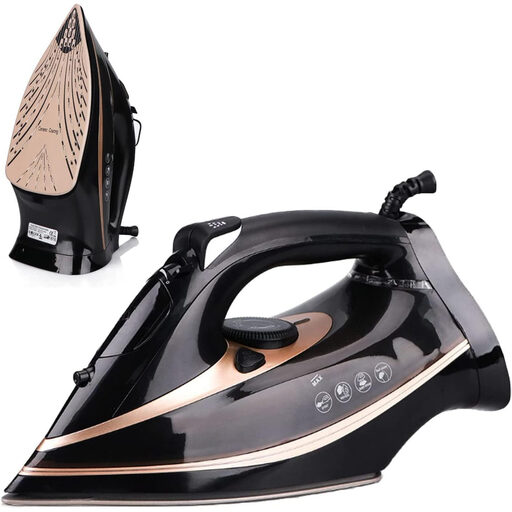 No image available
A standard ironing session doesn’t require a separate generator unit, but do check that the appliance will fit in your available storage space.
The product title lists 70 g/min steam output, an extra steam boost of 120 g and a 300 ml tank. A self-cleaning function is also listed.
 No image available
The product description lists adjustable temperature settings, which may be useful if you want to match the setting to the care label.
The description lists five temperature settings, a 350 ml tank, a non-stick soleplate, an automatic cleaning function and an anti-drip function.
 No image available
The product title describes this model as compact and lightweight, which may be useful if you have limited storage space.
The title lists dual voltage. The product description specifies a 0.15 l tank, manual temperature and steam controls, and a steam boost function.
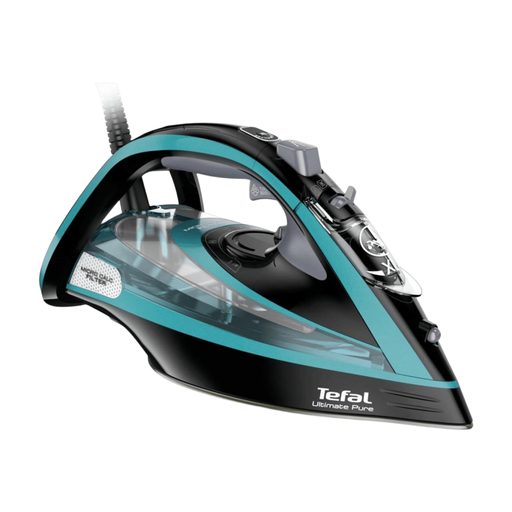 No image available
The product description lists variable steam output and an extra steam boost. Check that the controls suit the way you iron your covers.
The description lists a 0.35 l water tank, Micro-Calc filter technology and a cleaning alert.
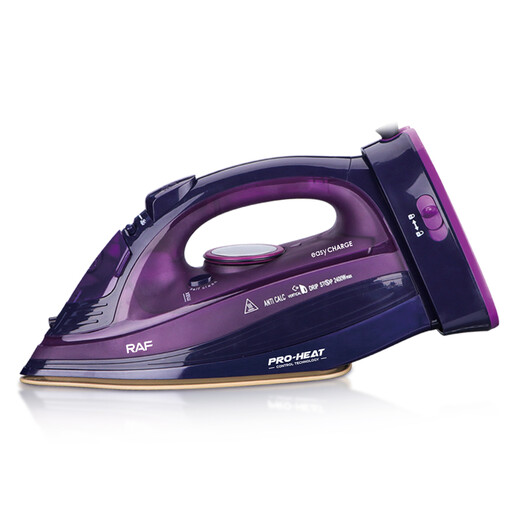 No image available
A cordless model may suit you if you’d rather iron without a cord attached to the iron. Check that its controls and operation work for your needs.
The product title lists 2400 W, a 320 ml tank and steam output of 15–25 g/min. The description lists a ceramic soleplate, self-cleaning and multiple steam settings.
No. Set the maximum ironing temperature according to the care label on that cover; the fibre name alone isn’t a reliable guide. GINETEX also lists a low-temperature ironing symbol that means you must not use steam.
Follow the descaling instructions for the exact model. Philips says that harder water can cause limescale to build up more quickly in its steam irons, and that the maintenance procedure varies by model.
The Dutch Fire Service advises plugging high-power appliances directly into a wall socket rather than into a cable reel or multi-socket adaptor. Also follow the user manual and never leave a hot iron unattended.
Consumers who buy online generally have a statutory cooling-off period of up to 14 days after delivery, subject to applicable exceptions. The statutory guarantee is separate from a manufacturer’s guarantee. If a product is faulty, the seller must offer a solution under the statutory conditions. ACM ConsuWijzer explains these consumer rights.
The NVWA states that the Low Voltage Directive applies to electrical equipment with a nominal AC voltage of 50 V to 1000 V. For the model on offer, check its identification, restrictions on use and relevant conformity information; a product listing alone does not establish that an individual item complies.