
Vandaag of morgen in huis

Kwaliteit gegarandeerd

Welkomstaanbiedingen ontgrendelen: GRATIS bezorging | Tot 80% korting | Gratis 30 dagen JoyPlus-proefperiode
Download de app
Are you ready to transition from hours of waiting to rapid, functional prototypes? For advanced hobbyists and small businesses, upgrading to a high-speed 3D printer is a logical next step. However, the market is saturated with technical specifications and marketing promises. It can be challenging to determine which features truly make a difference for your projects.
This article aims to provide clarity. We will discuss the key considerations when purchasing a high-speed FDM printer and highlight several popular models suitable for printing with advanced materials. This will help you make an informed decision that fits your needs.
Before making a choice, it's wise to consider a few technical aspects that determine a printer's performance and reliability.
Many high-speed printers use a CoreXY motion system. Unlike traditional printers where the print bed moves on the Y-axis, in a CoreXY system, the bed and frame remain largely stationary. The printhead moves quickly and precisely across the X and Y axes via a complex belt system. This results in fewer vibrations at high speeds, leading to better print quality and the ability to achieve print speeds of up to 600 mm/s.
Do you want to print with more than just PLA? For a 3D printer for engineering filaments like ABS, ASA, or carbon fiber-reinforced composites (PA-CF, PET-CF), an enclosed 3D printer is essential. An enclosed and sometimes even heated chamber ensures a stable ambient temperature. This minimises the risk of warping and cracking, which often occurs with materials printed at high temperatures. Furthermore, a hardened steel nozzle is a requirement to withstand the wear from abrasive materials like carbon fiber.
A professional 3D printer distinguishes itself with features that reduce the chance of failed prints. These include:
Based on specifications and functionalities, we have selected models that are compelling for users seeking speed and reliability.
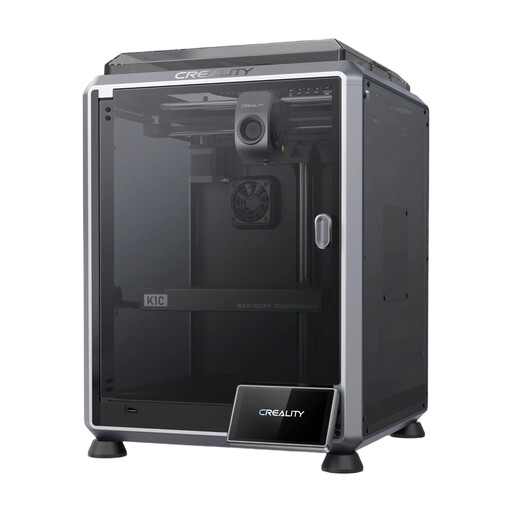
Why It Stands Out The Creality K1C is an evolution of the popular K1 series, specifically designed for printing with composite materials. The combination of a CoreXY structure, a clog-free direct drive extruder, and a standard built-in AI camera makes this a very complete package.
Pros
Who Is It For? For the prosumer or small business seeking a reliable upgrade to start printing functional parts with carbon fiber 3D printer filaments, without diving deep into complex technical modifications.
View the Creality K1C on Joybuy.nl
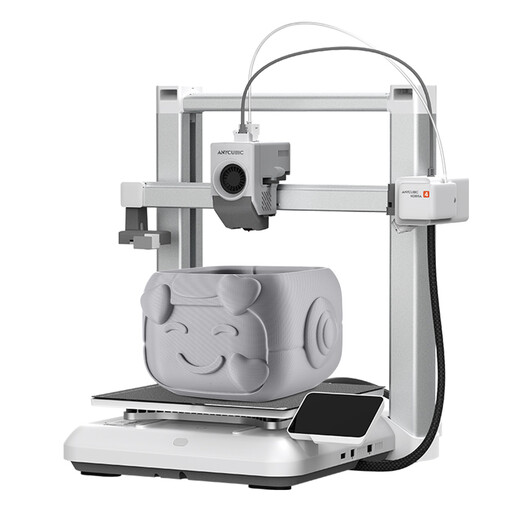
Why It Stands Out The ANYCUBIC Kobra 4 combines a large build volume with high speeds and smart features. The printer is designed for efficiency and can be optionally equipped with active chamber heating, making it highly versatile for various materials.
Pros
Who Is It For? For makers who regularly print larger objects or batches and value an integrated ecosystem for managing their prints. The option for a heated chamber makes it a flexible choice for future experiments with engineering filaments.
View the ANYCUBIC Kobra 4 on Joybuy.nl
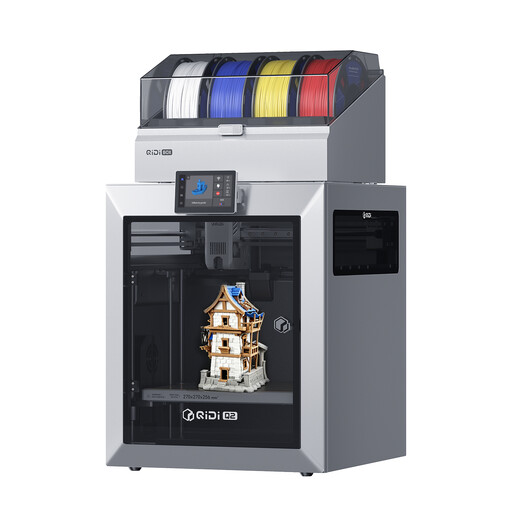
Why It Stands Out The QIDI Q2 positions itself as a professional 3D printer with its focus on printing demanding materials. Its most distinctive feature is the actively heated chamber up to 65°C, which is crucial for successfully printing materials like ABS and ASA with minimal warping.
Pros
Who Is It For? For engineers, small R&D departments, and serious hobbyists who primarily focus on producing functional, dimensionally accurate parts with temperature-sensitive materials. The heated chamber is the deciding factor here.
View the QIDI Q2 Combo on Joybuy.nl
The world of 3D printing is broad and diverse. If the models above don't perfectly match your requirements, or if you are looking for printers with different specifications, we invite you to explore our full collection.
Discover more printers in the auto prints category
A CoreXY 3D printer uses a specific belt system to move the printhead across the X and Y axes, while the print bed remains stationary or only moves vertically. This lighter, faster movement of the printhead means there is less mass to move, allowing for higher accelerations and print speeds while maintaining precision.
No, an enclosed chamber is generally not necessary for PLA. PLA is a forgiving material that prints well at room temperature. An enclosed 3D printer is primarily important for materials that print at higher temperatures and are sensitive to warping due to temperature fluctuations, such as ABS, ASA, and nylon.
No, this is strongly discouraged. Carbon fiber filaments are highly abrasive and will wear out a standard brass nozzle in a short time. For a carbon fiber 3D printer, you need a wear-resistant nozzle, such as one made of hardened steel or a ruby-tipped one. Additionally, a direct drive extruder and a high-temperature hotend are recommended for the best results.
