
Vandaag of morgen in huis

Kwaliteit gegarandeerd

Welkomstaanbiedingen ontgrendelen: GRATIS bezorging | Tot 80% korting | Gratis 30 dagen JoyPlus-proefperiode
Download de app
By the Joybuy Product Recommendation Officer, July 19, 2026
Meal prepping is a smart way to save time and control what you eat. But the right storage is crucial. You don't want a lunch that leaks in your bag or containers that stain after just a few uses. That's why more and more people are switching to glass meal prep containers. They are durable, don't absorb odours or colours, and are a conscious choice for those looking to avoid plastic.
In this article, we'll help you make the right choice. We'll discuss what to look for and highlight several popular glass food storage containers, based on their specifications and potential uses.
The market offers many options. To help you narrow it down, here are three practical points to consider before purchasing a glass food storage container set.
Not all glass is created equal. For meal prep, borosilicate glass is a widely used material. This type of glass is specially designed to withstand temperature fluctuations. This is important if you're looking for freezer and microwave-safe containers. Some borosilicate glass containers are even suitable as oven-safe meal prep containers. Always check the product information to see if a container is suitable for the freezer, microwave, AND oven. The lid is almost never oven-safe.
A securely fitting lid is essential, especially if you're carrying soups or sauces. Look for leak-proof food containers with a lid that has a silicone seal and snaps shut on all four sides. This creates an airtight seal, keeping your food fresher for longer and preventing leaks. Since lids are often made of plastic, it's a good idea to check if they are BPA-free.
Think about what you'll be using the containers for. A large container is useful for a dinner, while a smaller glass lunch box is sufficient for a salad or some yoghurt. A set with various sizes offers the most flexibility. Also, consider the shape: rectangular glass food containers are often more efficient to stack in the fridge, freezer, or kitchen cabinet than round ones.
Below is a selection of glass food storage containers that stand out for their specifications and functionality.
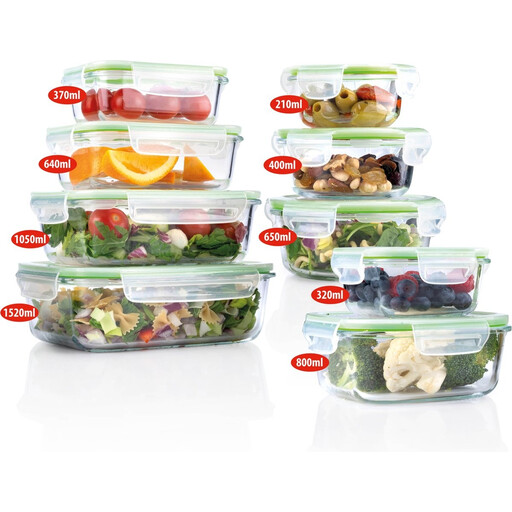
Why it stands out: This comprehensive set from Alpina is a complete starter kit for anyone serious about meal prepping. With nine different sizes, you'll have a suitable container for every meal, from soup to salads or snacks.
Advantages:
Note: According to the manufacturer, these containers are not suitable for use in the oven.
Who is this for? For the meal prepper looking for a versatile and complete set for storing and reheating meals in the microwave.
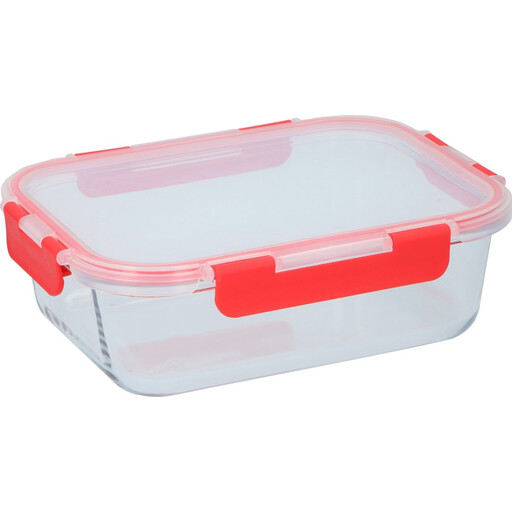
Why it stands out: This individual container from Alpina is specifically designed for high temperatures. According to the manufacturer, the borosilicate glass is heat-resistant up to 400 degrees Celsius, making it suitable for preparing or reheating meals directly in the oven.
Advantages:
Note: The lid is not heat-resistant and must always be removed before placing the container in the oven or microwave.
Who is this for? Ideal for those who enjoy preparing casseroles, lasagne, or other dishes and want to be able to place them directly in the oven from the freezer or fridge.
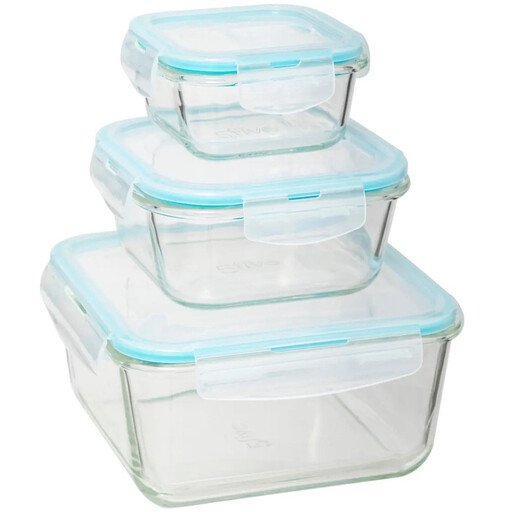
Why it stands out: This set from 5five combines functionality with versatility. The containers are made of borosilicate glass and, according to the specifications, are suitable for the oven, microwave, freezer, and dishwasher, making them a true all-rounder.
Advantages:
Note: As with most containers, it is advisable to remove the lid when using it in the oven.
Who is this for? For those looking for a compact yet highly versatile set that is suitable for every application, from freezing to baking in the oven.
The right choice depends on your specific routine. Do you need a large set, or just a few specific containers that can go in the oven? If the options above don't quite meet your needs, there are more possibilities.
? Explore more freezer-safe glass storage jars
Glass and plastic both have their own characteristics. Glass is non-porous, which means it doesn't absorb food odours, flavours, or colours. It is often BPA-free and can typically withstand higher temperatures, sometimes allowing it to be used in the oven. Plastic containers are lighter in weight and less breakable, which can be convenient for on-the-go. The choice depends on your personal preference and what you intend to use the containers for.
No, definitely not. Only glass food containers made from borosilicate glass are generally oven-safe. Normal, tempered glass can crack with rapid or extreme temperature changes. Always read the manufacturer's instructions before placing a glass container in the oven. The lid is almost never oven-safe.
Most glass containers and lids are dishwasher-safe, which makes cleaning easy. For stubborn, caked-on residue, you can soak the container in warm water with a little dish soap. A paste of baking soda and water can also help remove stains without scratching the glass.
