
Vandaag of morgen in huis

Kwaliteit gegarandeerd

Welkomstaanbiedingen ontgrendelen: GRATIS bezorging | Tot 80% korting | Gratis 30 dagen JoyPlus-proefperiode
Download de app
Perfectly even slices of homemade bread, paper-thin carpaccio, or a fresh block of cheese for your charcuterie board. The promise of a home food slicer is clear: precision and freshness. But the search for the right appliance can feel like a minefield of exaggerated claims and impractical designs. Many models look good at first glance but prove to be a source of frustration in practice.
As a Joybuy Product Recommendation Officer, I've sifted through the market for you. Let's skip the marketing hype and focus on what truly matters, ensuring you make a purchase you'll enjoy for years to come.
Before we look at specifications, it's important to recognise the common problems that can make a food slicer unusable.
A good purchase avoids these three problems. Let's see how.
Don't focus on glossy brochures; focus on the technical fundamentals. These three points determine whether an electric food slicer is an asset or a waste of money.
Power (expressed in Watts) doesn't tell the whole story. A motor with a gear drive delivers more consistent and powerful performance than a simpler direct drive, even at a lower wattage. For an all-round slicer that can handle both bread and meat, a motor of at least 100W with a solid drive system is a good starting point.
The blade is the heart of the machine. Most home-use models come with a serrated blade made of stainless steel. This is a great all-rounder, ideal as a bread slicer and for harder cured meats. For paper-thin, smooth slices of meat or cheese, a smooth blade performs better. Some higher-end models offer both. Always check if the blade can be removed easily and safely for cleaning.
A home food slicer must be stable. A heavier, metal housing often has an advantage over lightweight plastic. Look for non-slip feet to keep the appliance in place. Essential safety features include a food holder (to protect your fingers with the last piece) and a switch that prevents accidental activation, sometimes referred to as a child-safe switch.
Based on these objective criteria, we have selected a number of models that suit different users.

Why This Fits Their Persona: Ideal for those with limited storage space. Its foldable design makes it a practical choice for the modern kitchen. It's a versatile entry-level model for bread, cheese, and cold cuts without a major investment.
Tackles the cleaning pitfall with a removable stainless steel blade. The child-safe switch and included food holder enhance safety, a significant plus compared to the most basic models.
Advantage: Foldable design for ultra-compact storage. Pro: Gear-driven motor for consistent power.

Why This Fits Their Persona: For those who demand professional results and durability. Its German engineering and all-metal construction appeal to the user willing to invest in an appliance built to last a lifetime.
The all-metal construction completely eliminates the pitfall of a wobbly base. Its powerful DC motor and the inclusion of both a smooth and a serrated blade avoid the compromises found in cheaper all-in-one models.
Advantage: All-metal, tilted construction for maximum stability and precision. Pro: Includes both smooth and serrated blades for specialised slicing.
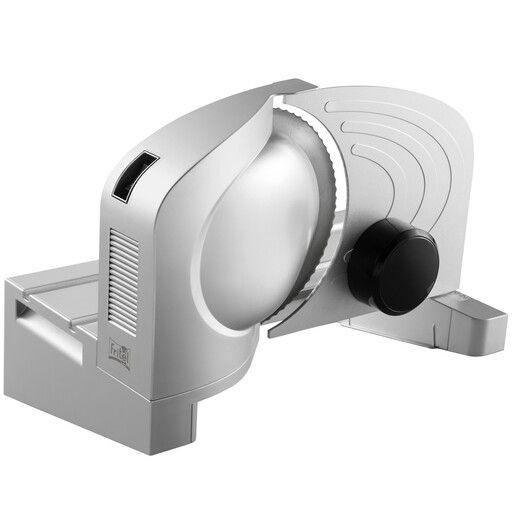
Why This Fits Their Persona: This user slices everything several times a week, from bread to large cuts of meat. Efficiency, power, and durability are essential. This model is a workhorse that can handle intensive use.
The metal housing and gear-driven motor provide the necessary power and stability, avoiding the first two pitfalls. The 15° tilted carriage is a smart design detail that makes slicing more efficient.
Advantage: Tilted carriage (15°) for ergonomic and efficient slicing. Pro: Robust metal housing and continuously adjustable slice thickness up to 20 mm.
We have compiled a complete, up-to-date list of products that meet these strict selection criteria and safety standards.
How do I safely clean a food slicer? Always unplug the appliance before you begin. Turn the slice thickness to '0' so the blade's cutting edge is covered. If the model allows, remove the carriage and the blade to clean them separately with soapy water and a brush. Never use your fingers to wipe the blade directly.
Can I slice frozen products with a home food slicer? This is strongly discouraged for most standard models. It can overload the motor and damage the blade. Some specialised appliances or blades (like an electric knife with a specific frozen food blade) may indicate this is possible. Always check the manufacturer's manual.
What is the advantage of a tilted food slicer? With a tilted model, gravity does some of the work for you. The food naturally rests against the blade, meaning you need to apply less pressure. This results in more even slices with less effort, especially with larger or heavier items like a large cut of meat or a round loaf of bread.
