
Vandaag of morgen in huis

Kwaliteit gegarandeerd
Download de app
Categorieën

A foldable wagon whose wheels buckle after a single trip to the beach, or a frame that bends under the weight of your camping gear. It's a common disappointment. A quality wagon is an investment in convenience, but a bad purchase only leads to frustration. The right choice depends on facts: load capacity, wheel type, and material. This guide helps you find a model that fits your needs, without the marketing fluff.
Before choosing a model, it's wise to align your needs with the specifications. A camping wagon requires different features than a garden cart on wheels. Pay attention to the following parameters.
The load capacity, expressed in kilograms (kg), indicates how much weight the wagon can handle. For light items like groceries or beach bags, 70-80 kg is often sufficient. If you're transporting heavy camping equipment, tents, or garden soil, look for models with a load capacity of 100 kg or more.
The capacity, expressed in litres (L), tells you how much volume the container can hold. A larger capacity is useful for bulky but light items, such as sleeping bags or chairs for a festival.
The type of wheels determines where you can use the wagon.
The frame is typically made of steel or aluminium. A steel frame is generally more robust and can support more weight, but it is also heavier. The fabric of the container is often polyester, which is durable and relatively easy to clean. Pay attention to the finish of the seams and the attachment to the frame.
A collapsible wagon should be compact and easy to store. Check the folded dimensions to ensure it fits in your car boot or shed. Some models have an 'accordion-style' fold, while others fold flat. A model that can be folded and unfolded without tools saves time and effort.
Based on the criteria above, we have selected a range of models with different features, suitable for various purposes.
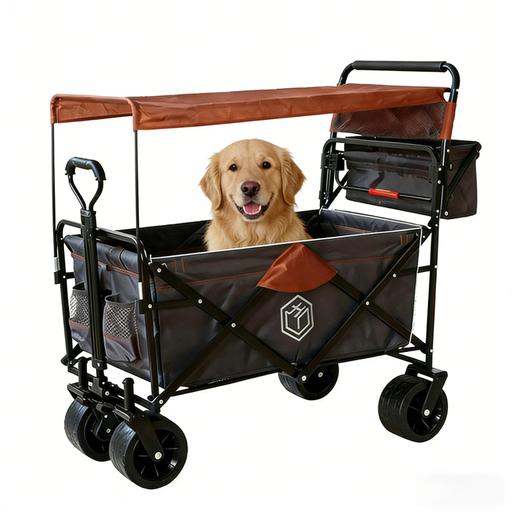
Why this product This model is designed for heavy-duty tasks and rough terrain. With a load capacity of 260 kg and a reinforced carbon steel frame, this foldable utility cart is both exceptionally robust and practical. The 'tank wheels' are wide and puncture-proof, providing stability on sand, grass, and gravel. The dual brakes, detachable canopy, and safety belt make it a very comprehensive option.
Pros
Who is this for? For the serious camper, mover, or on-site vendor who needs a reliable solution for transporting very heavy and large loads over challenging surfaces.
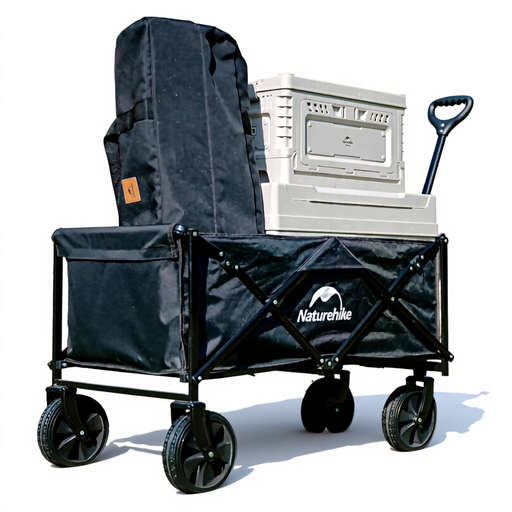
Why this product The NatureHike HW is a practical all-rounder. With a capacity of 113 litres and a load capacity of 100 kg, it offers a great balance between size and strength. The alloy steel frame is durable, while the total weight of 7.5 kg is relatively low. The adjustable handle provides extra comfort.
Pros
Who is this for? Ideal for family outings, gardening, or as a festival trolley. A reliable choice for anyone looking for a versatile and not-too-heavy wagon for general use.
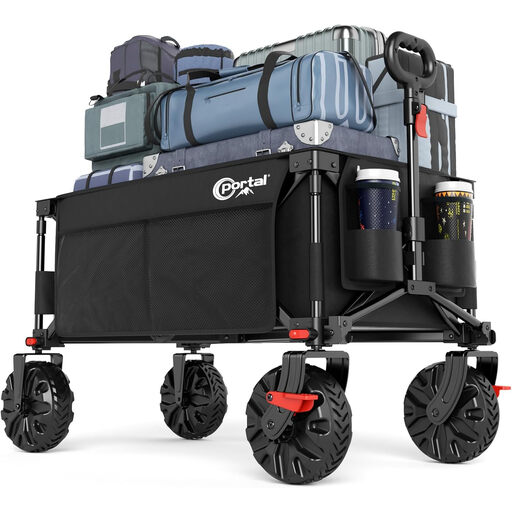
Why this product This wagon from Portal stands out with its massive 300-litre capacity (with the tailgate open) and smart design details. The PU wheels with bearings roll smoothly, and the dual brakes offer safety on slopes. A unique feature is the drop-down tailgate, allowing you to transport extra-long items like beach umbrellas or tent poles. The wheels can be removed with a quick-release mechanism for easy cleaning.
Pros
Who is this for? Perfect for beachgoers and campers who carry a lot of gear or awkwardly shaped items. The large capacity and drop-down tailgate make this collapsible wagon extremely flexible.
The models listed above represent specific use cases. If your ideal combination of load capacity, wheel type, and price isn't here, there are more possibilities. Every transport problem requires its own solution.
Check out our full range of wagons for more transport solutions that might better suit your specific needs.
1. Can a foldable wagon really be used on the beach? Yes, but pay close attention to the wheel type. A wagon with wide wheels (broad and made of PU or rubber) performs significantly better on loose sand than a model with narrow, hard plastic wheels. The wide wheels distribute the weight over a larger surface area, preventing them from sinking.
2. What is the difference between a wagon and a festival trolley? The terms are often used interchangeably, but there is a functional difference. A classic festival trolley is often a simple, lightweight metal frame to which you can secure a crate or bag with straps. A foldable wagon is an integrated system with a fabric container, more like a wheelbarrow. Wagons typically offer more stability, a higher capacity, and are better suited for loose items.
3. How much weight can an average collapsible wagon carry? The load capacity varies greatly by model. Entry-level models for light use (groceries, day trips) often have a limit of around 60-80 kg. Models for more intensive use, such as for camping or gardening, are usually in the 90 to 120 kg range. There are also heavy-duty models that can carry well over 200 kg. Always check the manufacturer's specifications.
Written by: Joybuy Product Recommendation Officer