
Vandaag of morgen in huis

Kwaliteit gegarandeerd

Welkomstaanbiedingen ontgrendelen: GRATIS bezorging | Tot 80% korting | Gratis 30 dagen JoyPlus-proefperiode
Download de app
If you love paper crafting, you know how a well-chosen detail can make all the difference. A beautiful flower cutting die can elevate a handmade card, scrapbook page, or other DIY project. But with so many options, it can be tough to find the right one. You need a die that not only has a beautiful design but also delivers sharp, clean cuts.
As a Joybuy Product Recommendation Officer, I'm here to guide you. I sift through the options and provide practical information to help you make a choice that suits your project. In this article, we'll explore what to look for when buying a cutting die and highlight some popular options.
Before we look at the products, here are a few practical tips to help you choose.
Most metal dies are made from carbon steel. This material is durable and retains its sharpness, which is essential for cutting intricate patterns like a delicate rose die or fine leaf dies. A high-quality die ensures you get a clean result time after time, without frayed edges. Pay close attention to the intricacy of the design; the more detailed the die, the more crucial its sharpness becomes.
Not every cutting die fits every die-cutting machine. Always check the die's dimensions and compare them to the maximum width your machine can handle. Whether you're looking for dies for card making or larger scrapbooking dies, it's a shame if your new purchase doesn't fit. The product information usually lists the dimensions, so take a moment to verify them.
Consider the purpose of your project. Are you looking for an elegant Art Deco die for a chic invitation, or a playful floral border for a birthday card? Some dies are designed to be a focal point, while others are perfect as a background or subtle accent. Additionally, certain thin cutting dies can also function as embossing stencils when paired with an embossing mat. This adds extra texture and depth to your creations.
Below is a selection of cutting dies that stand out for their design and application.
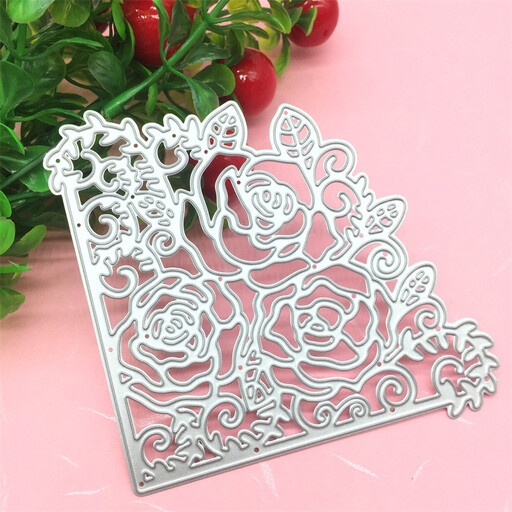
Why It Stands Out This design combines floral elements with the clean, symmetrical lines of the Art Deco style. It's not a standard flower die, but a set of corner pieces that allow you to create an elegant frame.
Benefits
Who Is It For? For the crafter looking for a sophisticated finish. Ideal for making wedding cards, anniversary cards, or other projects with a formal and elegant look.

Why It Stands Out The rose is a timeless classic in the world of DIY craft supplies. This rose die stands out for its detailed and realistic design, allowing you to create beautiful, layered flowers.
Benefits
Who Is It For? An excellent choice for anyone who loves romantic and classic themes. Perfect for Valentine's cards, Mother's Day projects, or as a decoration on a scrapbook page about a special event.
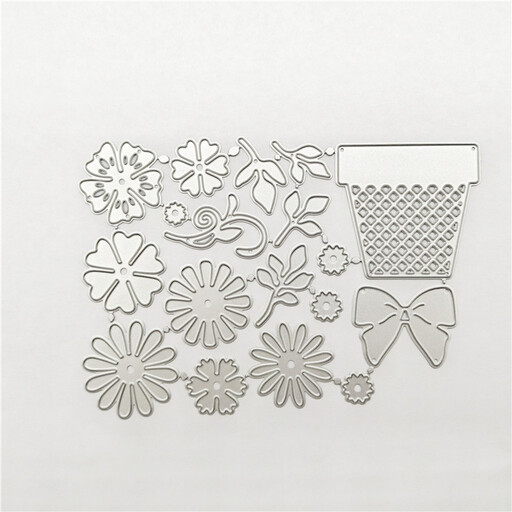
Why It Stands Out This cutting die is designed to create a complete, detailed background in a single pass. The pattern of flowers and leaf dies fills a standard card size, which saves a lot of time.
Benefits
Who Is It For? Ideal for card makers who want to quickly lay down an impressive foundation. Also useful for scrapbookers who want to add a consistent and refined background pattern to a page.
Didn't find the perfect cutting die for your next project here? Every creation is unique and calls for its own style. Fortunately, many more designs are available, from minimalist flowers to lavish bouquets.
Check out our full range of Flower Metal Cutting Dies for more inspiration and find the die that will let your creativity blossom.
What is the difference between a cutting die and an embossing stencil? A cutting die is a metal shape with a sharp edge used to cut paper or other thin materials. An embossing stencil (or embossing folder) is typically a plastic folder with a raised pattern. When you place paper inside it and run it through a die-cutting machine, the pattern is pressed into the paper. Some thin cutting dies can also leave a slight embossed impression when used with a special embossing mat.
What is the best paper to use for metal dies? For most detailed metal dies, paper with a weight between 160 and 250 gsm works well. This is sturdy enough to get a clean cut without tearing, but not so thick that the machine struggles with it. For very intricate designs, it can help to run the paper through the machine a few times.
How do I clean a cutting die after use? Small paper scraps can get stuck in the die. You can easily remove them with a special brush or a piercing tool. By cleaning the die immediately after use, you ensure it's ready for your next project and that no residue dries and gets stuck. Store your dies flat, for example on a magnetic sheet, to prevent them from bending.
