
Vandaag of morgen in huis

Kwaliteit gegarandeerd
Download de app
Categorieën

An electric screwdriver might seem like a simple purchase, but differences in torque, battery capacity, and included bits determine whether it becomes a handy assistant or a source of frustration. The wrong choice can lead to screws that aren't tight enough, a battery that dies mid-project, or missing the right bit for one specific screw. This guide helps you make an informed decision based on factual specifications that suit your projects.
Before we look at specific models, it's helpful to understand the key parameters. These specifications determine the performance and intended use of a cordless screwdriver.
Torque, expressed in Newton-metres (N.m), indicates the screwdriver's rotational force.
Many models offer both electric and manual torque. The manual torque is significantly higher, allowing you to give a screw that final, firm turn by hand or to loosen a very tight screw. Adjustable torque is a valuable feature that gives you more control over different materials.
The capacity of a rechargeable screwdriver is expressed in milliampere-hours (mAh). A higher mAh value typically means a longer runtime. Also, pay attention to the charging time. A fast charge via a modern USB-C port ensures you can get back to your project quickly.
An electric screwdriver set is only as versatile as the bits it comes with. Check if the set includes the bits you frequently need (such as Phillips, Slotted, Torx, and Pentalobe). A magnetic storage case and extra tools like tweezers or a pry tool are practical additions, especially for electronics.
Below is a selection of electric screwdrivers, analyzed based on their specifications and intended use.
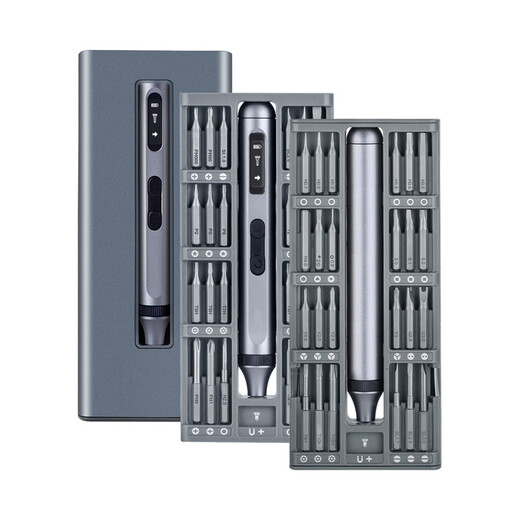
Why We Chose It This set is designed for precision work. With a slim aluminum body and an extensive collection of 48 bits, this is a tool for detailed tasks. The low electric torque is specifically designed to prevent damage to small, fragile components.
Pros
Who is this for? This is a precision screwdriver for the tech enthusiast, model builder, or anyone who regularly repairs smartphones, laptops, drones, or other small electronics. It is less suitable for assembling large furniture.
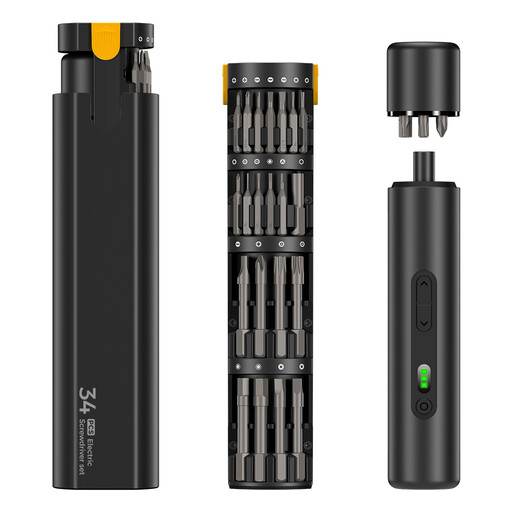
Why We Chose It This set offers a balance of power and versatility, with an adjustable torque suitable for a wide range of jobs. The sturdy, magnetic storage case and powerful battery make it a reliable all-rounder for the home.
Pros
Who is this for? The DIYer looking for a versatile tool for furniture assembly, hanging shelves, and general repairs. The adjustable torque makes it flexible for various applications. Also a practical gift for a handyman.
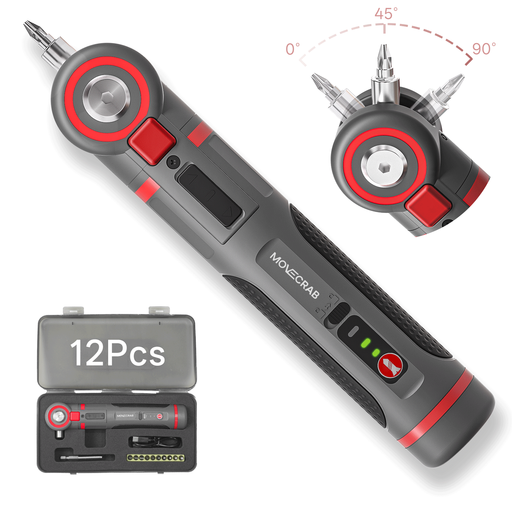
Why We Chose It The unique feature of this model is its adjustable head, which can be set to 0°, 45°, and 90°. This allows you to work in tight or awkward corners where a straight screwdriver can't reach. Its powerful battery and high torque make it suitable for more demanding tasks.
Pros
Who is this for? Ideal for DIYers who often work in awkward positions, such as when installing kitchen cabinets, making repairs under a dashboard, or tackling other complex projects. The combination of the adjustable angle and high torque provides a solution for challenging situations.
Sometimes a standalone mini electric screwdriver isn't the complete solution. For larger projects or if you're looking for a complete starter kit, a more comprehensive set with additional hand tools might be a better investment. These sets often combine an electric screwdriver with pliers, hammers, and other essential tools.
View our full range of tool kits.
1. What is the difference between an electric screwdriver and a cordless drill? An electric screwdriver is primarily designed for driving and removing screws. It has a lower speed and a lower, more controlled torque. A cordless drill has a much higher speed and torque, and is designed to drill holes and drive large screws into tough materials. For furniture assembly and electronics repair, an electric screwdriver is the better choice.
2. How important is adjustable torque on an electric screwdriver? Very important for versatility. With adjustable torque, you can adapt the turning force to the material. Low torque prevents you from driving screws too deep into soft wood or stripping the head of a small screw. High torque ensures that screws are securely fastened in harder materials. It gives you the control to use the right amount of force for every task.
3. Can I use a mini electric screwdriver for larger jobs? It's not recommended. A mini electric screwdriver or precision screwdriver has low torque (usually under 1 N.m) and is specifically designed for delicate tasks like electronics repair. If you use it to assemble a cabinet, the motor will likely not be powerful enough, and you risk overloading and damaging the tool. Choose the right tool with the right specifications for each job.
Written by: Joybuy Product Recommendation Officer