
Vandaag of morgen in huis

Kwaliteit gegarandeerd

Welkomstaanbiedingen ontgrendelen: GRATIS bezorging | Tot 80% korting | Gratis 30 dagen JoyPlus-proefperiode
Download de app
When the temperature drops, an electric heater is a practical solution for quickly and comfortably heating a specific room. But the market is flooded with models making lofty promises. In practice, many heaters turn out to be energy hogs, unsafe, or simply not powerful enough. Before you make a choice, it's important to recognise the common pitfalls.
Many consumers fall for these three traps:
As a Joybuy Product Recommendation Officer, I'll help you cut through the marketing hype and make a choice based on facts.
To avoid a bad purchase, it's essential to pay attention to a few technical features. These determine the effectiveness, safety, and consumption of your supplemental heater.
The wattage, expressed in Watts, determines how much heat a heater can generate. A mismatch leads to inefficiency. As a rule of thumb, for a reasonably insulated space in the UK, you can use the following guidelines:
A higher wattage doesn't automatically mean a higher energy bill. A more powerful heater brings the room to the set temperature faster, after which a good thermostat minimises consumption.
The technology behind the heater affects heat distribution and comfort. The most popular option for supplemental heating is the ceramic heater.
electric supplemental heating.For most situations, such as a home office or bedroom, a ceramic heater offers the best balance of speed, efficiency, and compactness.
Safety is non-negotiable. A safe supplemental heater must be equipped with at least:
An electric heater with a thermostat is also crucial for both comfort and efficiency. It allows you to set the desired temperature. The heater automatically switches off when this temperature is reached and on again when it cools down. This prevents unnecessary power consumption and makes it an energy-efficient electric heater.
Based on the criteria above, we have selected a number of models that suit specific needs.
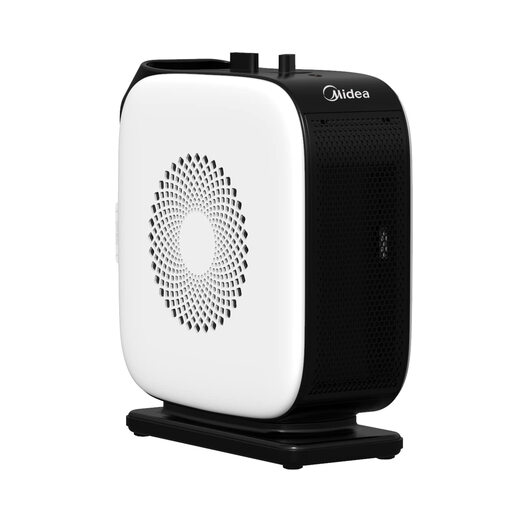
Why This Fits Their Persona: Ideal for those seeking a simple, effective, and compact solution for a home office or study (up to 10 m?). No unnecessary features, just fast and targeted heat.
This model is specifically designed for small spaces, so you don't pay for unused power. It includes essential overheat protection, which is missing from many budget models.
Compact and portable: Easy to move thanks to the handle. Oscillation function: Distributes heat evenly throughout the room.
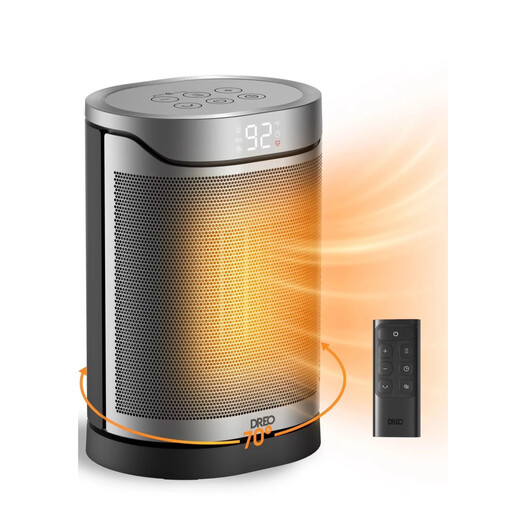
Why This Fits Their Persona: Perfect for those looking for a quiet heater for the bedroom. Its low noise level, precise thermostat, and comprehensive safety features ensure an undisturbed and safe night's sleep.
This model tackles the "energy-efficient" myth with a thermostat adjustable by degree (5-35°C). According to the manufacturer, this can save up to 40% on energy. The 8-layer safety protection, including tip-over and overheat sensors, makes it a very safe choice.
Quiet operation: With a noise level starting at 25 dB, it's quieter than a normal conversation. Precise control: Digital thermostat, timer, and remote control for optimal convenience.
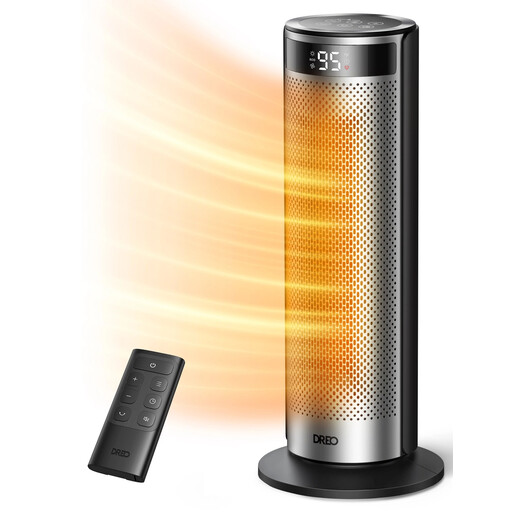
Why This Fits Their Persona: Suitable for those who want to efficiently heat a larger space (up to 25 m?). The high 2000W output combined with a smart thermostat and oscillation provides fast, even heat in a living room or larger office.
This model solves the problem of underperformance with a powerful 2000W element and a large PTC surface. The precise thermostat and smart power regulation ensure that the high wattage is only used when needed, limiting energy consumption.
Powerful and fast heating: According to the manufacturer, the device heats up within 2 seconds. Large coverage: Suitable for rooms up to 25 m? with even heat distribution.
We have compiled a complete, up-to-date list of products that fully meet these strict selection criteria and UK safety regulations.
Power consumption depends on the wattage (Watts) and how long the heater is on. A 1500-Watt heater uses 1.5 kilowatt-hours (kWh) per hour at full power. A model with a precise thermostat consumes significantly less because it only turns on to maintain the set temperature.
For fast, targeted supplemental heating in small to medium-sized rooms, a ceramic heater is often an excellent choice. They are efficient at quickly warming up a specific zone. For very quiet, even heating of an entire room, a convector heater can be a good alternative, although it takes longer to warm up.
Yes, provided you choose a model with the right safety features. Pay special attention to tip-over protection and overheat protection. A quiet heater with a low noise level and an adjustable thermostat is ideal for bedroom heater use, as this ensures a comfortable and undisturbed night's sleep. Always place the heater on a flat, stable surface and keep it clear of bedding and curtains.
