
Vandaag of morgen in huis

Kwaliteit gegarandeerd

Welkomstaanbiedingen ontgrendelen: GRATIS bezorging | Tot 80% korting | Gratis 30 dagen JoyPlus-proefperiode
Download de app
Finding the right dog harness can be a daunting task. The market is flooded with options, all promising comfort and control. Yet, many dog owners end up with a harness that chafes, breaks quickly, or even worsens their dog's pulling. Before you make a purchase, it's crucial to understand the common pitfalls.
Much of the marketing focuses on quick fixes, ignoring the fundamental principles of fit and material. Two common problems are:
A good dog harness is an investment in your dog's safety and comfort. By paying attention to a few key points, you can avoid making a bad purchase.
To avoid wasting money on an unsuitable product, focus on a few objective specifications. These determine whether a harness is truly functional and durable.
The right size is crucial. Measure your dog's chest girth at its widest point, right behind the front legs. But don't focus solely on this measurement. A good adjustable harness will have multiple points to customise the fit, typically around the neck and chest.
The lifespan of a dog harness depends on the materials used.
There are various models, each with its own purpose. A step-in harness, for example, is easy to put on dogs that dislike having things pulled over their head. A Y-harness is often recommended because it distributes pressure evenly across the breastbone and spares the neck. A so-called no-pull harness often has an additional attachment point on the chest. Its effectiveness largely depends on the dog and the training.
Based on functionality and design, we have selected a few products that suit the diverse needs of dog owners.
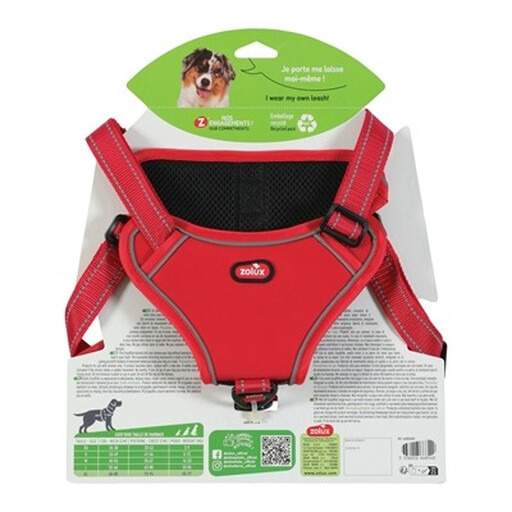
Why This Fits Their Persona: For daily strolls in the park or around the neighbourhood, a reliable and comfortable harness is essential. This model is designed for practical, everyday use without unnecessary frills.
The adjustable straps ensure a snug fit around the chest, avoiding the "one-size-fits-most" trap. The soft inner lining helps prevent chafing.
Made from durable materials with a sturdy D-ring and an easy-to-use buckle. The bright colour provides extra visibility.
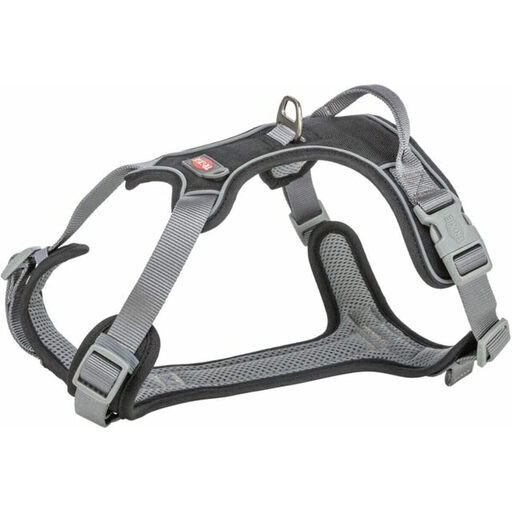
Why This Fits Their Persona: For large, active dogs that love to take the lead, a robust harness isn't a luxury—it's a necessity. This harness is engineered to handle the force of large breeds during active walks.
This harness tackles the pitfall of weak materials. It features extra-wide straps (2.5 cm) and an ergonomic chest plate that distributes pulling force, reducing pressure on the neck and spine.
Specifically designed for large dogs (chest girth 69-87 cm). The padded, breathable chest plate offers comfort, and the adjustable straps ensure a secure fit.
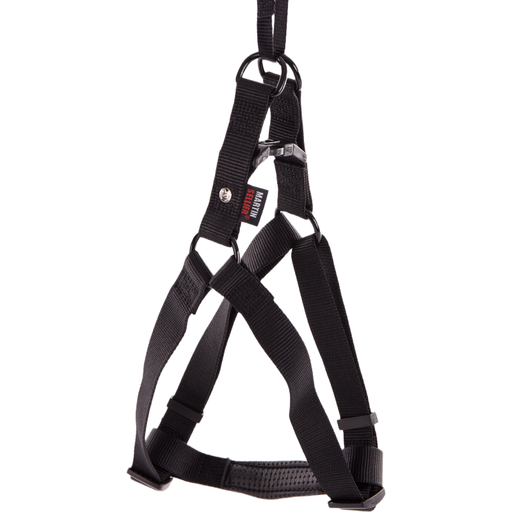
Why This Fits Their Persona: Ideal for dogs (and owners) who dislike fuss. A step-in harness is perfect for quick walk preparations, as nothing needs to be pulled over the head.
This harness solves the problem of a complicated fitting process. The dog steps in with its front paws, and the harness is then easily buckled on the back. This reduces stress for both the dog and the owner.
Made of robust nylon and adjustable for a chest girth of 70 to 90 cm. The quick-release buckle makes fastening and unfastening effortless.
Besides a good harness, a reliable dog leash is just as important. For those who like to give their dog more freedom to roam, a retractable leash is a popular choice. Brands like Flexi offer models with various lengths and for different weight classes. With a retractable leash, always pay attention to the braking system and visibility, especially during walks in the dark. A model with reflective elements, like the Flexi New Neon, can significantly increase safety.
A collar can also be a good choice in certain situations, such as for training or identification. We have compiled a list of products that meet strict selection criteria.
How do I measure the correct size for a dog harness? Use a flexible measuring tape to measure your dog's chest girth at its widest point, just behind the front legs. Also, measure the neck circumference. Compare these measurements with the manufacturer's size chart. Ensure you can still fit two fingers between the harness and the dog after fastening it.
Is a harness better than a collar? This depends on the dog and the situation. A harness distributes pressure across the chest and back, which spares the neck and throat. This is often more comfortable and safer for dogs that pull, small breeds, and dogs with respiratory issues. A dog collar is useful for identification (with a tag) and can be suitable for dogs that already walk nicely on a leash.
How do I safely clean a retractable leash like a Flexi? If the leash's tape or cord gets wet or dirty, extend it fully and let it dry. Clean the tape/cord with a damp cloth. Never submerge the mechanism in water. Regularly check the leash and the snap hook for signs of wear to ensure safety.
