
Vandaag of morgen in huis

Kwaliteit gegarandeerd

Welkomstaanbiedingen ontgrendelen: GRATIS bezorging | Tot 80% korting | Gratis 30 dagen JoyPlus-proefperiode
Download de app
A spilled glass, sticky children's fingers on the table, or your pet's paw prints: in a busy household, moments like these are an everyday occurrence. You want to solve it quickly and hygienically, without having to pull out an entire arsenal of cleaning supplies. Disinfecting wipes offer a practical solution here.
But the selection is vast. Which wipes are right for your situation? Should you pay attention to ingredients, sustainability, or the type of surface? In this overview, we'll help you get started. We highlight a number of popular choices based on their specifications, so you can make an informed decision that suits your household.
Before you make a choice, it's helpful to consider a few points. The specifications on the packaging often provide a lot of useful information.
Not all disinfecting wipes use the same active ingredients. Some people prefer products without alcohol or chlorine, especially for surfaces that come into contact with food, or for cleaning children's toys. Products based on lactic acid, for example, can be a good alternative. Always check the label for the ingredient list and recommended applications.
The environmental impact is an increasingly important factor for more and more people. Therefore, look for terms like biodegradable cleaning wipes or plastic-free cleaning wipes. These wipes are often made from plant-based fibres and break down more quickly after use. Recyclable packaging also contributes to a more sustainable choice.
Are you looking for all-purpose cleaning wipes for various jobs, or do you need a product with a specific antibacterial effect? Manufacturers often state on the packaging which surfaces the wipes are suitable for and what effectiveness you can expect. Claims like "kills 99.9% of bacteria" are based on the manufacturer's own research and give an indication of the disinfecting power.
Based on the criteria above, we have highlighted a number of products that stand out for their specific properties.
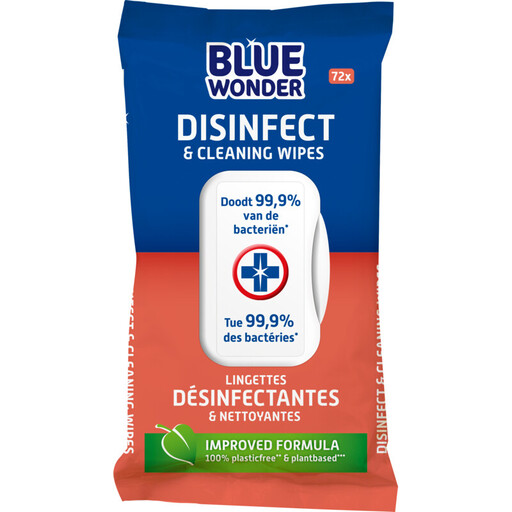
Why it stands out: Blue Wonder positions these wipes as a powerful solution for cleaning and disinfecting in one. According to the manufacturer, the wipes kill 99.9% of bacteria and fungi. What is immediately noticeable is that they are 100% plastic-free and plant-based. The formula is also chlorine- and alcohol-free, making them suitable for a wide range of surfaces, from the countertop to toys.
Pros:
Who is it for? For households looking for an effective disinfecting product but who also prefer a formula without harsh chemicals like chlorine and alcohol. Ideal for families with young children or pets.

Why it stands out: Dettol is a well-known name in hygiene. These antibacterial wipes are designed for a thorough clean. According to Dettol, they remove 99.9% of bacteria and are effective against allergens and dust mites. A key advantage is that the wipes themselves are biodegradable and the packaging is recyclable, which is a step in a sustainable direction.
Pros:
Who is it for? For users who trust an established brand and want to have a large supply of convenient all-purpose wipes on hand. The combination of cleaning power and attention to sustainability (biodegradable wipes) makes this a practical choice for daily use.

Why it stands out: Marcel's Green Soap focuses heavily on sustainability. These hygienic wipes are 100% biodegradable and made with 99% natural ingredients. The product is vegan and the packaging is recyclable. Although they are described as "hygienic" and not explicitly as "disinfecting," they are intended for a quick and responsible clean-up.
Pros:
Who is it for? For the eco-conscious consumer looking for a product for quick, daily cleaning tasks. If your priority is natural ingredients and a minimal ecological footprint, this is an excellent choice.
The right choice depends on your personal preferences and needs. Perhaps you're looking for a different scent, a different pack size, or wipes for a specific application. There are many more options available that might be a better fit for you.
Check out our full range of heavy-duty household wipes for more choices.
Regular cleaning wipes are primarily designed to remove visible dirt, dust, and grease. Disinfecting wipes also contain active ingredients, such as lactic acid or other disinfectants, which, according to the manufacturer, are intended to kill bacteria, fungi, or viruses on a surface.
Yes, in most cases. Wipes made of plastic can remain in the environment for years. Biodegradable versions, often made from plant-based fibres like viscose or cellulose, break down significantly faster. However, be aware: never flush cleaning wipes, even biodegradable ones, down the toilet. They belong in the bin to prevent sewer blockages.
No, that is not always advisable. Always read the instructions on the packaging. Some disinfectants can damage sensitive materials such as untreated wood, natural stone, or certain types of plastic. To be safe, you can first test a wipe on a small, inconspicuous area of the surface.
