A dish rack that rusts, wobbles, or is constantly full of water is a common source of kitchen frustration. Choosing a new dish rack seems simple, until you discover the model doesn't fit, the material deteriorates quickly, or it's just impractical. An informed decision not only saves counter space but also contributes to an organised and hygienic kitchen. This guide will help you select a dish drainer based on factual specifications, ensuring you make a purchase that fits your needs.
What to Consider When Buying a Dish Rack?
Before making a choice, it's helpful to consider a few key aspects. The functionality of a kitchen drying rack is determined by its material, dimensions, water drainage, and layout.
Material: Stainless Steel, Plastic, or a Combination?
The material determines the durability and maintenance of your dish rack.
- Stainless Steel: A popular material for its robust and hygienic properties. A
stainless steel dish rack is typically strong and has a modern aesthetic. Pay attention to the quality of the stainless steel to minimise rust in the long run.
- Plastic (like Polypropylene - PP): Lightweight, often more affordable, and available in various colours. Plastic is completely rust-proof but can discolour or become brittle over time.
- Combination: Many models combine a metal frame with plastic components, such as a drainboard or cutlery holder. This offers a balance between sturdiness and practical maintenance.
Size and Capacity: From Large to Space-Saving
The available space on your countertop is the primary factor. Measure the area where the rack will be placed.
- Large Dish Rack: Suitable for families or households without a dishwasher. These offer ample space for plates, pans, and cutlery.
- Space-Saving Dish Rack: Ideal for smaller kitchens, studios, or as a supplement to a dishwasher. Compact, single-tier models or foldable racks are excellent options here.
- 2-Tier Dish Rack: A
2-tier dish rack makes optimal use of vertical space. This is an efficient solution for drying a large number of dishes on a limited surface area.
Water Drainage: A Drip Tray or Direct Drain?
A dish rack with a drip tray is the most common type. The tray collects water, which you then empty manually. Some models feature a more advanced system:
- Removable Drip Tray: Easy to detach and clean.
- Drainage Spout or Pipe: A smart feature that directs water straight into the sink. This prevents standing water and reduces the need to empty the tray.
Layout and Extras
The internal organisation of the rack is crucial for user-friendliness. Look for specific compartments for plates, bowls, a separate cutlery holder, and possibly holders for glasses or cutting boards. A logical layout ensures dishes are stable and allows for good air circulation for faster drying.
Our Selection of Dish Racks for 2026
Below is a selection of dish racks, analysed based on their specifications and functionalities.
1. Maxcook Dish Drying Rack 2 Tier Large
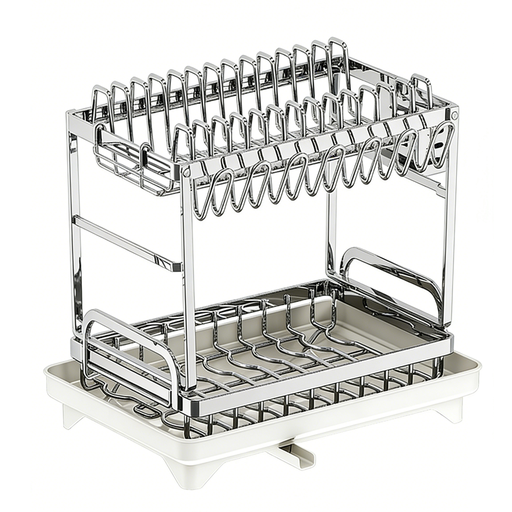
- Why this product: This model stands out with its built-in drainage pipe at the bottom. Water is channelled directly into the sink, making emptying a drip tray a thing of the past. The two-tier structure provides significant storage capacity on a relatively small footprint.
- Advantages:
- Material: Made from stainless steel and polypropylene (PP), designed for durability in a humid environment.
- Capacity: The two tiers with designated compartments offer ample space for plates, bowls, and other dinnerware.
- Dimensions: At 42 x 32 x 30 cm, it's a
large dish rack that utilises vertical space.
- Water Management: The drainage pipe at the bottom ensures continuous water runoff.
- Who is this for: Households that do a lot of handwashing and are looking for an efficient, organised solution without the hassle of a full drip tray.
2. 5five Metal & Plastic Dish Rack - Grey
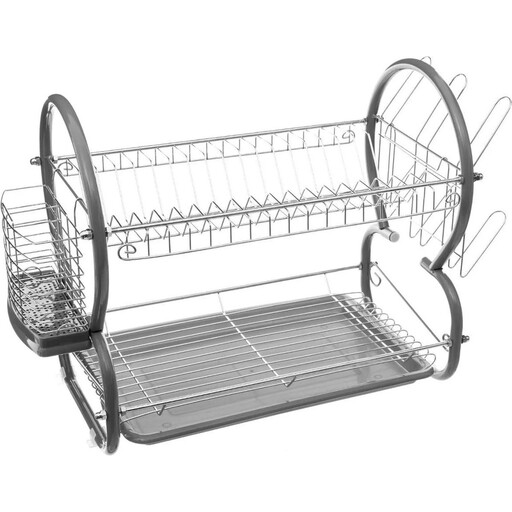
- Why this product: This dish rack combines a sleek design with specific storage options, such as separate holders for glasses. It's a practical
2-tier dish rack for those who value an organised layout.
- Advantages:
- Material: A combination of powder-coated chrome-plated steel and a polypropylene drip tray.
- Layout: Offers space for 17 plates and includes a separate cutlery basket and glass holders.
- Dimensions: At 44 x 24 x 38 cm, it is relatively narrow and tall.
- Load Capacity: The product weighs 1 kg and has a specified maximum load of 1.3 kg.
- Who is this for: Users looking for a stylish rack with a clear layout for different types of dishes and who have a lighter dishwashing load. Self-assembly is required.
3. Maxcook Stainless Steel Dish Drying Rack Single Layer

- Why this product: This model's main advantage is its ease of use. The rack has an integrated structure and requires no assembly. It's ready to use right out of the box, making it ideal for anyone seeking a quick and simple solution.
- Advantages:
- Material: A combination of stainless steel and a removable PP drip tray.
- Ease of Use: No assembly required. The separate drip tray is easy to remove and clean.
- Design: A compact, single-tier
space-saving dish rack with functional compartments for plates, bowls, and cutlery.
- Dimensions: At 42 x 29 x 12.7 cm, it fits well on most countertops without taking up too much space.
- Who is this for: Small households, students, or anyone looking for a no-fuss, ready-to-use, and easy-to-maintain
dish drying rack.
Didn't Find the Right Dish Rack? Consider Other Kitchen Organizers
A tidy countertop is a great start, but kitchen organisation doesn't end there. If you find you need smarter storage solutions for your cabinets or drawers in addition to drying space, it can help to take a broader view. Products like drawer dividers, pan racks, or cabinet inserts can further enhance your kitchen's efficiency.
For more inspiration and solutions, browse our range of kitchen cabinet organizers.
Frequently Asked Questions About Dish Racks
How do I prevent rust on a stainless steel dish rack?
Although stainless steel is highly rust-resistant, it can still develop spots or rust under certain conditions (like prolonged contact with salts or acids from food residue). Clean the rack regularly with a soft cloth and a mild detergent. Dry it thoroughly after cleaning. Avoid using abrasive sponges or harsh chemicals.
What is the advantage of a 2-tier dish rack?
A 2-tier dish rack utilises vertical space, which is ideal for kitchens with limited countertop area. You can fit twice as many dishes in the same square footage. The top tier is often designed for plates, while the bottom tier provides space for bowls, cups, and glasses.
What is the best way to clean a dish rack with a drip tray?
Empty the drip tray daily to prevent the build-up of limescale and bacteria. Clean the tray and the rack thoroughly at least once a week. Most plastic drip trays can be cleaned with warm water and dish soap. For stubborn limescale deposits, you can use a solution of water and vinegar. Rinse everything well and dry it before using it again.
Written by the Joybuy Product Recommendation Officer. Our recommendations are based on an analysis of product parameters and specifications to help you make an informed choice.