
If you want the filling to shine
For a crumb base beneath cheesecake, fruit or chocolate, a plain, uncoated digestive is an obvious choice. Compare the ingredients and nutritional information per 100 g when making your choice.


Choose a plain, uncoated digestive if you want the filling to define the flavour of your tart. A wholemeal digestive is another option if you want to compare fibre per 100 g. If you’re considering a gluten-free-labelled variety, also check the other allergens and whether it has a chocolate coating. Choose speculoos only if its flavour suits your recipe.
For a crumb base beneath cheesecake, fruit or chocolate, a plain, uncoated digestive is an obvious choice. Compare the ingredients and nutritional information per 100 g when making your choice.
Before baking, check the packaging for ingredients and allergens that are relevant to you. A plain digestive may contain wheat; even with a gluten-free-labelled variety, it’s important to check the other ingredients and allergens.
If you want the base itself to add a speculoos and cinnamon flavour, you could consider Lotus Biscoff. It will give your recipe a different flavour from a plain digestive.
Start with the flavour you want the base to bring to your recipe. Then check how much you need and, where relevant, the allergens and nutritional information.
| What to consider | What to check | Who it matters to |
|---|---|---|
| Neutral base | Check that you’re buying an uncoated digestive, without a chocolate or caramel layer. | If the filling should be the main flavour, I want a biscuit that doesn’t have a strong taste of its own. For around 36% of consumers, a neutral base comes first. |
| Quantity needed | Compare the weight of biscuit crumbs in your recipe with the pack size; AH Digestive and Jumbo Krokante Digestive are available in 400 g packs. | For a whole tart base, I want to have enough biscuits without running short while baking. Around 29% of consumers give this the highest priority. |
| Speculoos flavour | Check whether the cinnamon and caramel syrup in the ingredients will suit the filling. | When I want the base itself to add flavour, I specifically look for the speculoos taste of Lotus Biscoff. This flavour choice matters most to around 21% of consumers. |
| Allergens and nutritional information | Read the current allergen list and compare sugars, fats and fibre per 100 g across suitable products. | If I need to avoid certain ingredients or compare nutritional values, I start with the label. For around 14% of consumers, this is the first thing they consider. |
A chocolate coating changes the flavour and may add other allergens. According to Jumbo, Jumbo Lekker Vrij van Gluten Digestives Melkchocolade contains milk, oats and soya.
Read the ingredients list and choose this kind of variety only if the chocolate flavour and ingredients suit your recipe.
Standard digestives from Albert Heijn, Jumbo and McVitie's contain wheat. A different flavour or composition doesn’t automatically make a biscuit gluten-free.
If you need to avoid gluten, check the gluten-free label on the current packaging. When baking, keep gluten-free ingredients separate from crumbs containing gluten.
The pack size alone won’t tell you how many crumbs your tin and recipe require.
Check the quantity in the recipe and compare it with the pack size before you start.
A description such as ‘wholemeal’ doesn’t tell you by itself how much fibre, sugar or fat the product contains per 100 g.
Read the ingredients list and nutritional information. The Netherlands Nutrition Centre recommends comparing products per 100 g.
AH Digestive is a plain digestive in a 400 g pack. It’s worth considering for a base where the filling provides the main flavour.
Jumbo sells separate plain, wholemeal and gluten-free-labelled digestive varieties, so check the full product name.
Digestive Original is McVitie's plain digestive variety. It suits recipes where you don’t want a chocolate or speculoos layer.
Lotus Biscoff is a speculoos option if you want the biscuits’ flavour to be part of the tart base.
This plain digestive is a good fit for a biscuit base when you want the filling to provide most of the flavour.
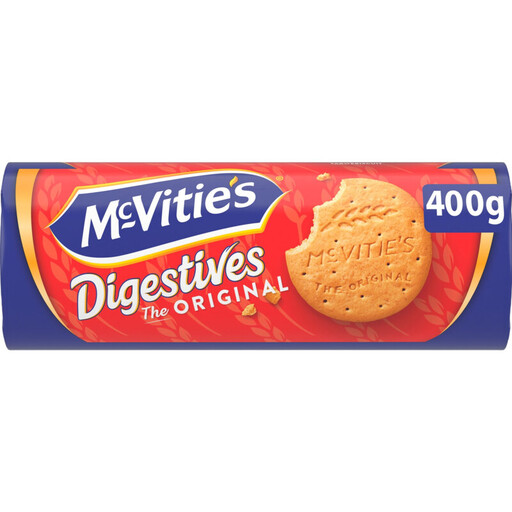 No image available
A plain digestive to consider if you want the filling to be the main flavour of your tart.
400 g pack. Contains wheat and gluten; may contain milk. Check the current packaging if allergens are a concern for you.
Choose a plain, uncoated digestive if you want the filling’s flavour to take centre stage. A chocolate variety is suitable only if its flavour and ingredients work with your recipe; Jumbo’s gluten-free-labelled chocolate digestive, for example, contains milk chocolate and milk.
Don’t assume a plain digestive is suitable: the standard varieties mentioned contain wheat. Look for a suitable gluten-free-labelled product, check the packaging for other allergens too, and avoid contact with crumbs containing gluten while baking.
Compare the same nutritional values per 100 g. The Netherlands Nutrition Centre recommends this basis for comparison; Jumbo, for example, lists 5.8 g of fibre per 100 g for Digestive Volkoren and 3.1 g per 100 g for Krokante Digestive. Also check the ingredients that matter for your recipe.
Yes, if you want a speculoos flavour in the base. Lotus uses Biscoff biscuit crumbs in its own recipe for baked cheesecake, but the flavour and ingredients differ from those of a plain digestive. Follow the recipe you’re making for the quantities of crumbs and butter.