For a packed office lunch, crispbread made with wholemeal rye is a sensible choice if wholegrains and fibre are your priorities. If your colleagues have different tastes, you could also consider a wheat-and-rye mix, a combination of white and wholemeal flour, or a thinner cracker. Don’t judge by colour or product name alone: compare the ingredients, fibre and salt per 100 g, and check the allergens on the packaging.
Who is this choice relevant to?
Lunch planners who pay attention to the grains
If you regularly take crispbread with you and want a clearly wholemeal product, start by checking the ingredients and fibre per 100 g. According to the Netherlands Nutrition Centre, wholegrain products contain more fibre than white varieties; whether you like the taste of rye is a separate consideration.
Teams with different tastes
If you’re choosing for several colleagues, compare rye with a wheat-and-rye mix or a thinner cracker. The grains listed on the label won’t tell you whether everyone will enjoy the flavour and texture.
Lunch planners catering for colleagues with allergies
If you’re sharing crispbread, check the allergens and any possible traces listed on each pack. Rye and wheat are not suitable substitutes for a gluten-free option; some varieties also list milk or sesame.
What should you look for when choosing?
First decide whether wholegrains, the team’s eating experience or checking the ingredients will guide your choice. Then compare the relevant labels per 100 g.
| What to consider |
What to check before buying |
Who it matters to |
| Wholegrains and fibre |
Check which flours appear first in the ingredients list and compare the fibre per 100 g in the nutrition information. |
If I regularly use crispbread as the basis of my lunch, I want to know which grains it contains and how much fibre the packaging lists. Around 42% of consumers prioritise this choice of grains and fibre. |
| Flavour and texture |
Compare the grains and the shape, such as a regular or thin cracker. If you’re unsure, try one pack first. |
For a team of fussy eaters, I want to avoid buying something with a strong flavour or firm bite that gets left uneaten. Around 33% of consumers prioritise how well the flavour and texture go down. |
| Ingredients and allergens |
Check the current label for allergens and possible traces. Also compare salt per 100 g if that matters for your lunch choice. |
When I share food with colleagues, I need to know whether the variety I’ve chosen is suitable for their allergy requirements. Checking the ingredients is the top priority for around 25% of consumers. |
Common mistakes
-
Assuming a brown colour means it’s entirely wholemeal
The colour or a description such as ‘multigrain’ doesn’t tell you which flours have been used. According to the Netherlands Nutrition Centre, the nutritional value of wholegrain and white grain products differs.
Read the ingredients list and compare the fibre per 100 g on the packs you’re considering.
-
Assuming all rye crackers contain the same allergens
Rye contains gluten, but the other ingredients and warnings about possible traces vary from product to product. Wasa lists possible traces of ingredients including milk and sesame for Wholegrain; Wasa Lightweight also lists milk ingredients.
If you’re sharing lunch, check the current packaging of the exact variety you’re buying.
-
Using a foreign pack as a guide to Dutch product information
The product information for Ryvita Original used here for comparison relates to a British pack. Check the ingredients and labelling on any Dutch retail pack separately.
When buying for the office, base your decision on the packaging of the product you can actually buy.
-
Buying a large stock for the team straight away
Wholemeal rye, a grain mix and a thin cracker can all taste and feel different. The flours alone won’t predict what your colleagues will enjoy.
Try one pack with the toppings that will go in the lunchboxes, then decide whether to buy more.
If the team doesn’t eat a pack, it could lead to unnecessary food waste.
Brands and retailers compared
Wasa
Wasa offers a range that includes Wholegrain, a crispbread made with wholemeal rye.
- According to Wasa, Wholegrain contains 20 g of fibre per 100 g; the listed ingredients are wholemeal rye flour, yeast and salt.
- Rye contains gluten. Also check the ingredients and warnings about possible traces for each Wasa variety, as these are not the same across the whole range.
Jumbo
Jumbo Wholemeal Crispbread is a supermarket own-brand option made with wholemeal wheat and rye flour.
- Jumbo lists this product as a 375 g pack containing 10.9 g of fibre per 100 g.
- According to Jumbo, the product contains ingredients including gluten, wheat and rye; the ingredients list also includes palm fat. If you have allergies, check the current label.
Albert Heijn
Albert Heijn’s crispbread range includes own-brand products and varieties from brands such as Wasa, Bolletje and Leksands.
- The range gives you options to compare different grains and product shapes.
- Not every product previously in the range is still available to buy: Albert Heijn marks a spelt crispbread previously sold as no longer part of its range.
Lidl
Lidl Netherlands lists a crispbread product available in sunflower seed and pumpkin seed varieties.
- Lidl lists the product as a 264 g pack.
- Before taking it in for the team, compare the ingredients, nutritional information and allergens on the pack of your chosen variety.
Ryvita
Ryvita Original Crispbread is a rye-based crispbread to compare with others; the available product information relates to the British market.
- For its British Original Crispbread, Ryvita lists 88 g of wholemeal rye flour per 100 g of product and 13.4 g of fibre per 100 g.
- Don’t use those British figures and ingredients as label information for a Dutch pack, if one is available.
Crispbread for office lunches at Joybuy
These products offer different options for office lunches: a wholemeal base, a different choice of grains or a thinner cracker. Check the packaging of your chosen variety, and if tastes differ, try a small amount first.
 Image unavailable
Bolletje wholemeal crispbread, 265 g
An option to compare with varieties made from other grains when choosing wholemeal crispbread for a team lunch. If fibre or allergens are a priority, check the nutrition information and ingredients on this pack.
View at Joybuy
 Image unavailable
Wasa High-Fiber crackers, 300 g
A cracker worth considering if fibre is an important factor in your choice. Compare the value per 100 g and check the grains and allergens on the packaging before choosing it for your colleagues.
View at Joybuy
 Image unavailable
g'woon wholemeal crispbread, 375 g
A pack to consider if you’re looking for wholemeal crispbread for several lunchboxes. If you specifically want a combination of white and wholemeal flour, check the types of flour and their proportions on the current label.
View at Joybuy
 Image unavailable
Wasa Lightweight crackers, 300 g
The thin, crisp texture is worth considering if a firm bite of crispbread doesn’t suit everyone in the team. Joybuy’s product information lists rye and milk ingredients; check the current pack if allergens are a concern.
View at Joybuy
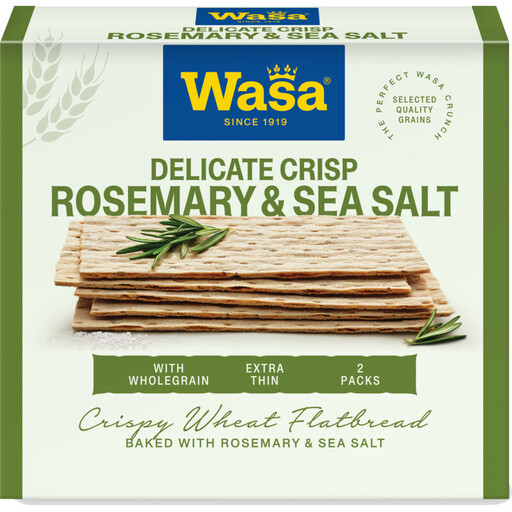 Image unavailable
Wasa Thin Crisp Rosemary & Salt, 190 g
A thin cracker with rosemary and salt for anyone looking for a seasoned variety. If your team prefers a more neutral flavour, it’s a good idea to try it first and check the salt content and allergens on the pack.
View at Joybuy
Frequently asked questions
Is brown or multigrain crispbread automatically wholemeal?
No. Read the ingredients list to see which flours have been used; the colour or the word ‘multigrain’ won’t tell you. For example, Jumbo Wholemeal Crispbread lists both wholemeal wheat flour and wholemeal rye flour.
What should I check if colleagues have food allergies?
Check the allergens and warnings about possible traces on the current pack of each variety. Rye and wheat contain gluten, while some specific products may also contain milk or have possible traces of sesame.
How can I keep crispbread crisp in the office?
Store it in a dry place and seal the pack tightly after opening. Jumbo says its Wholemeal Crispbread should be stored in a cool, dry place; for other varieties, follow the instructions on the pack.
Does the Dutch rule on baker’s salt mean all crispbread contains iodine?
No. That rule doesn’t mean that all crispbread is made with iodised baker’s salt. The Netherlands Food and Consumer Product Safety Authority outlines the conditions for using iodine compounds via baker’s salt in bread, bread substitutes and other bakery products. If the type of salt used matters to your choice, check the ingredients of the specific product.


