
Vandaag of morgen in huis

Kwaliteit gegarandeerd
Download de app
Categorieën

Choosing a new coffee machine can be a challenge. The market is vast, and specifications aren't always clear. Should you opt for the convenience of a fully automatic machine, the control of a portafilter machine, or the speed of a capsule machine? The wrong choice can lead to an appliance that doesn't meet your needs or sits unused in your kitchen.
This guide will help you make an informed decision. We'll discuss the different types of machines and the key parameters to consider, ensuring you find an appliance that fits your coffee preferences and lifestyle.
The first step is to determine the right type of machine. Your choice depends on the balance between convenience, taste, control, and maintenance.
A fully automatic coffee machine, also known as a bean-to-cup machine, grinds fresh coffee beans for every cup. You can prepare an espresso or lungo at the touch of a button.
A portafilter machine, or semi-automatic espresso machine, gives you complete control over the brewing process. You grind the beans yourself (or use pre-ground coffee), fill the portafilter, tamp the coffee, and manually start and stop the extraction.
A capsule coffee machine works with pre-dosed capsules. This type of machine is designed for maximum speed and consistency.
Below is a selection of three models, each representing one of the categories discussed. The selection is based on product parameters and functionalities.
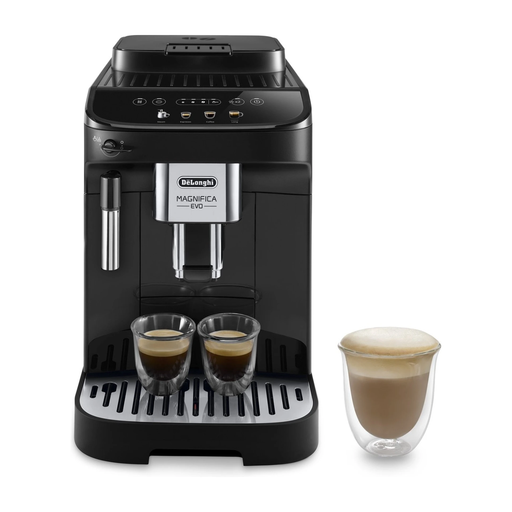
Why This Product The De'Longhi Magnifica S is a fully automatic coffee machine that bridges the gap between convenience and the taste of freshly ground beans. The appliance is designed for users who want to prepare a consistent espresso or coffee at the touch of a button. The touch panel operation is straightforward, and the settings for aroma and grind size allow for personalization.
Pros
Who is this for? This model is a great choice for households looking to upgrade from filter or pod coffee to a bean-to-cup coffee machine. It offers the quality of fresh beans without the complexity of a portafilter machine.
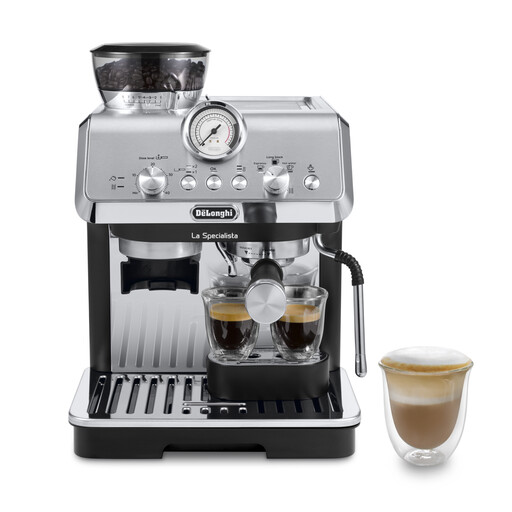
Why This Product The La Specialista Arte is a compact portafilter machine that gives the user control over the brewing process. The appliance combines an integrated bean grinder with manual operation, making it a suitable machine for those who want to learn how to make a barista-quality espresso. The 'Active Temperature Control' system ensures a stable water temperature during extraction.
Pros
Who is this for? This De'Longhi coffee machine is intended for the coffee enthusiast who appreciates the process of brewing and wants control over variables like grind size and extraction time. It's a great entry point into the world of semi-automatic espresso machines.
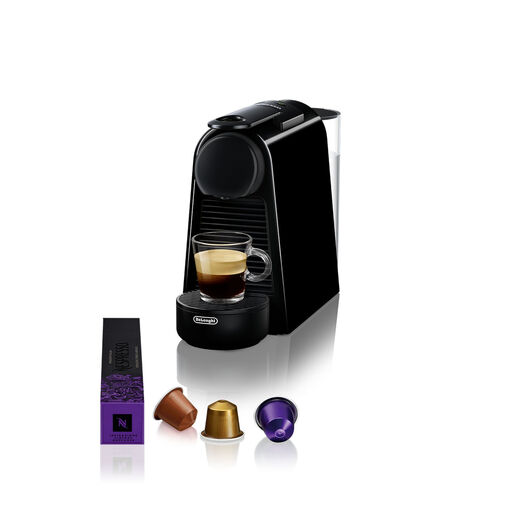
Why This Product The Nespresso Essenza Mini focuses on one thing: quickly and easily brewing a cup of coffee with consistent flavour. Thanks to its compact size, this capsule coffee machine fits in almost any kitchen, student room, or office. Operation is limited to two buttons for espresso and lungo, which makes it extremely user-friendly.
Pros
Who is this for? This Nespresso machine is ideal for people with limited space or for those looking for maximum simplicity and speed. It's a practical solution for a quick espresso in the morning or as a secondary machine alongside, for example, a drip coffee maker.
The models above represent three popular categories, each with its own strengths. However, are you looking for a specific colour or a model with slightly different features? Black espresso machines remain a popular choice that fits well in many modern and classic kitchens. They offer a sleek and timeless aesthetic.
Check out our full range of black espresso machine options that may better suit your interior and preferences.
1. What is the difference between a fully automatic machine and a portafilter machine? The main difference is the degree of automation and control. A fully automatic machine does everything for you: grinding, dosing, and brewing at the touch of a button. A portafilter machine requires manual steps: you grind the beans, fill and tamp the portafilter, and start/stop the extraction yourself. This provides more control but also requires more practice.
2. How important is the pump pressure (bar) of a coffee machine? The pump pressure is the maximum pressure the machine's pump can generate. To brew a good espresso, a pressure of about 9 bar on the coffee itself (the 'extraction pressure') is ideal. Most modern machines have a pump pressure of 15 to 19 bar, which is more than enough to achieve and maintain the required 9 bar during the brewing process. A higher pump pressure is not necessarily better, as long as it falls within the 15-19 bar range.
3. Can I also use pre-ground coffee in a machine with a bean grinder? Some fully automatic coffee machines, like the De'Longhi Magnifica S mentioned above, have a separate compartment for pre-ground coffee. This can be useful if, for example, you occasionally want to make a cup of decaf while the bean hopper is filled with regular coffee beans. Always check the specifications of the specific model to see if this feature is available.