
Vandaag of morgen in huis

Kwaliteit gegarandeerd

Welkomstaanbiedingen ontgrendelen: GRATIS bezorging | Tot 80% korting | Gratis 30 dagen JoyPlus-proefperiode
Download de app
For many, the aroma of freshly ground coffee is the start of a great day. But the search for the perfect coffee grinder can quickly devolve into a maze of technical specifications and marketing promises. Many models promise the world but leave you with an inconsistent grind and a disappointing cup of coffee. Before you invest, it's crucial to recognise the most common pitfalls.
Many buyers fall into one of these three traps:
A good coffee bean grinder doesn't have to be complex or expensive. It's about performing one task consistently and reliably: grinding coffee beans evenly.
To avoid buyer's remorse, focus on the specifications that truly matter. These are the three most important factors that determine the quality of your grind.
The heart of any coffee grinder is its grinding mechanism. Here, the choice is simple: always opt for a model with burrs.
Every brewing method requires a specific grind size. An espresso grinder must be able to grind extremely fine and precisely, whereas a French press needs a very coarse grind. Pay attention to the number and range of the settings. A grinder with 30 settings isn't necessarily better than one with 15, as long as the steps between settings are logical and the grinder is consistent at the chosen setting. Check if the range suits your favourite brewing method.
The choice between an electric coffee grinder and a manual coffee grinder depends on your budget, lifestyle, and how much control you want.
Based on these criteria, we have selected a number of models that suit different user profiles.
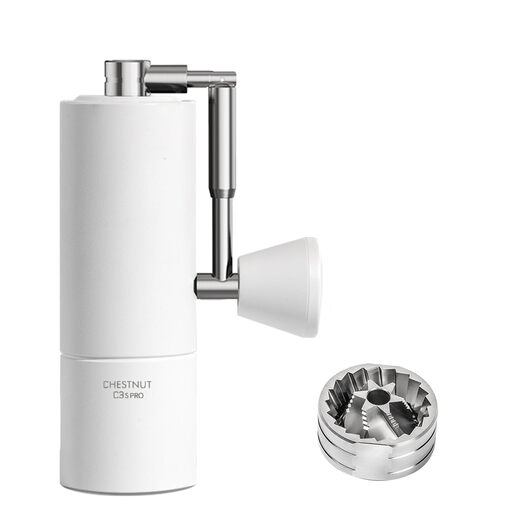
Why This Fits Their Persona: This is an excellent first step away from pre-ground coffee. This manual grinder offers the consistency of a much more expensive model, is compact, and gives you full control over the grind size for methods like filter, AeroPress, or French press. Ideal for those who want to master the basics.
This grinder completely avoids the "blade-masquerading-as-burr" trap. It is equipped with stainless steel S2C conical burrs that produce a very consistent grind, something rarely found in this price range.
The build quality is solid, and the foldable handle makes it practical for storage or travel. The adjustable grind setting is clear and gives you the precision needed to experiment.
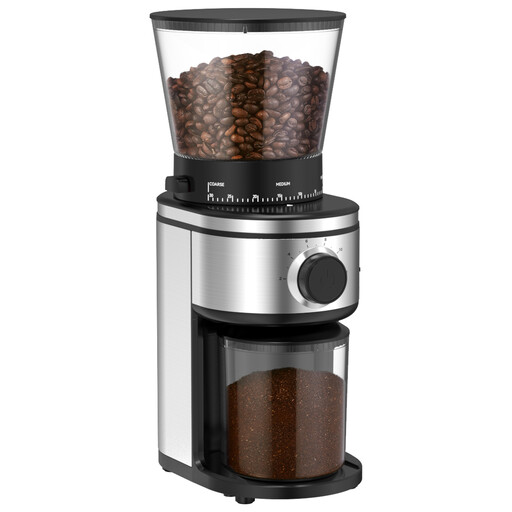
Why This Fits Their Persona: For those who enjoy different types of coffee daily and want the convenience of an electric grinder. This model offers a wide range of settings at a reasonable price, allowing you to easily switch from a coarse grind for your morning French press to a finer grind for a V60 in the afternoon.
This model avoids the "jack-of-all-trades" trap by offering a broad yet functional range. With 30 grind settings and conical burrs, it delivers a consistent grind that is genuinely suitable for various brewing methods, rather than being a compromise.
The stainless steel conical burrs minimise heat during grinding, which protects the coffee bean's aromas. The operation is intuitive, and the capacity is adjustable from 2 to 12 cups.
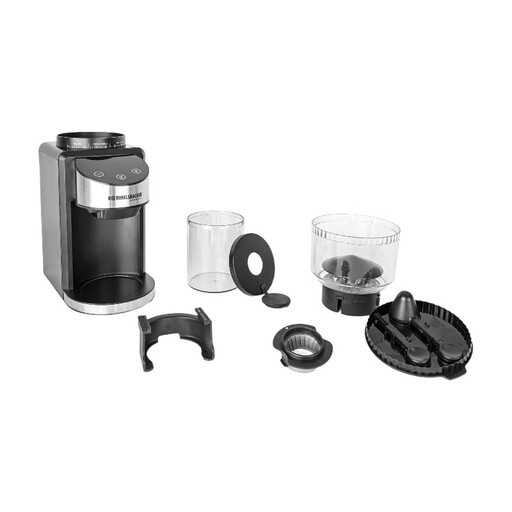
Why This Fits Their Persona: For the home barista who takes their espresso machine seriously. This grinder is designed with espresso in mind. The fine adjustment and the ability to grind directly into a portafilter make it a practical partner for any espresso machine.
This model avoids the feature overload trap by focusing on what is essential for espresso: precision. The 35 grind settings are geared towards the fine spectrum, allowing you to perfectly dial in the grind for your beans and machine.
The high-quality conical burrs and integrated anti-static function ensure a consistent and clean grind. The detachable portafilter holder is a decisive advantage for those who want an efficient workflow.
We have compiled a complete, up-to-date list of coffee grinders that meet these strict selection criteria and safety regulations.
For optimal flavour, it's recommended to briefly clean your grinder weekly with a brush to remove old coffee grounds. A thorough cleaning, where you disassemble the burrs (if possible), is best done monthly. Old coffee oils can become rancid and negatively affect the taste of your fresh coffee.
Both types can produce an excellent, consistent grind. Conical burrs feature a cone-shaped burr that spins inside a ring. They grind at a lower speed, which produces less heat and noise. Flat burrs consist of two identical, horizontal discs. They are known for a very uniform grind, which is especially valued for espresso, but they often generate slightly more heat. For most home users, the difference in practice is small, and the overall build quality of the grinder is more important.
This is strongly discouraged. The oils and strong odours from spices like pepper or cloves will permeate the burrs and are nearly impossible to remove completely. Your next cup of coffee will inevitably taste like spices. Use a separate, dedicated grinder for spices. Some models, like the Rommelsbacher EGK 250, come with separate containers for coffee and spices.
