
Vandaag of morgen in huis

Kwaliteit gegarandeerd
Download de app
Categorieën

Ever find yourself in the aisle, unsure which coconut milk to choose? One is labelled ‘light’, another ‘cream’, and the fat percentages vary widely. The right choice depends entirely on your recipe. A version that's too light can make your curry watery, while a cream that's too heavy can overpower your smoothie. This guide will help you select the perfect canned coconut milk for your dish based on key product features, whether you're seeking an authentic Thai coconut milk or a vegan cooking cream as a dairy alternative.
The ideal coconut milk for your needs is determined by a few clear parameters. By focusing on these, you can avoid a mismatch and guarantee your dish achieves the perfect texture and flavour.
Fat Percentage: This is the most important factor. The fat content determines the creaminess and richness of the coconut milk.
coconut milk for curry or soups. It offers an excellent balance of creaminess and fluidity.Ingredients: The purest coconut milk contains only coconut extract and water. Many brands add stabilisers (like guar gum, E412) to prevent the fat and water from separating in the can. Products without stabilisers, such as Aroy-D coconut milk, may have a solid, white layer of cream on top with the coconut water underneath. This is a natural process and not a sign of spoilage; you can simply stir to recombine it.
Application: Consider what you'll be using the coconut milk for. For a creamy Thai green curry, you'll need a full-fat variety. For whipping into a vegan cream, coconut cream is essential. When cooking with coconut milk in a light soup or marinade, a light coconut milk will suffice.
Below is a selection of different types of coconut milk, each with its own specific properties and applications.
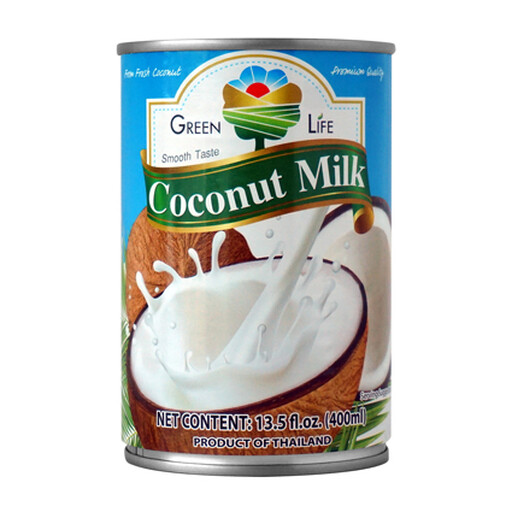
light coconut milk. With a fat content of 5-7%, it's a lighter option for those who want the creaminess of coconut milk without the high calorie count of the full-fat version.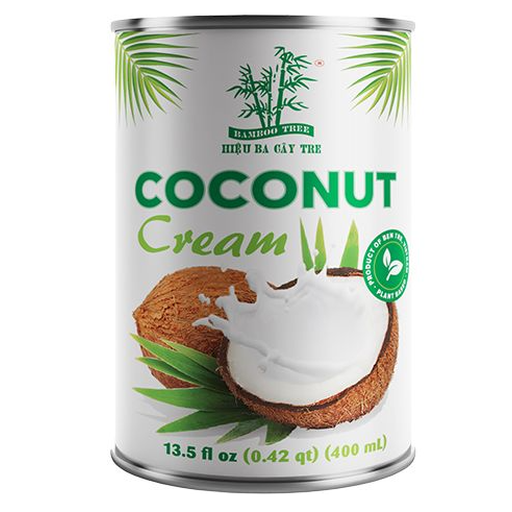
coconut cream, the most concentrated and luscious variety. Its high fat content of 20-22% delivers a velvety texture and rich flavour.![AROY-D Coconut Milk [A] 19% Fat 400ml](https://images4.joy-sourcing.com/product/s512x512_jfsintlpro-000-com/t1/4294967296/5963776/61098360103644/802144/68d908b1Ef711473b/4c765c6ab87a3a67.png)
Aroy-D coconut milk is renowned for its pure composition. This product contains no stabilisers or other additives—only coconut extract and water. The 19% fat content makes it an authentic, full-fat Thai coconut milk.coconut milk for curry, where the natural separation of cream and water can be desirable.Our selection covers several common uses, but the range of options is much broader. Are you looking for a specific brand, a different package size, or organic varieties? Every recipe has its perfect match.
Explore our full range of Coconut Milk and Coconut Cream for more options.
1. What is the difference between coconut milk and coconut cream? The main difference is the fat percentage. Coconut cream (approx. 20-24% fat) is thicker and creamier because it contains more coconut extract and less water. Full-fat coconut milk (approx. 15-19% fat) is more liquid and is the standard for most soups and curries. Light coconut milk (approx. 5-9% fat) is the most diluted version.
2. Can I use light coconut milk for a curry? Technically, you can, but the result will be significantly different. A curry made with light coconut milk will be much thinner and less rich in flavour. For an authentic, creamy Thai or Indian curry, a full-fat coconut milk with at least 15% fat is recommended.
3. Why is there a hard, white layer at the top of my can of coconut milk? This is completely normal, especially with coconut milk that contains no stabilisers (like Aroy-D). The thick coconut cream naturally separates from the thinner coconut water. You can empty the contents into a bowl and stir or whisk until smooth. Gently warming the contents will also help the solid cream melt and reintegrate.