
Vandaag of morgen in huis

Kwaliteit gegarandeerd

Welkomstaanbiedingen ontgrendelen: GRATIS bezorging | Tot 80% korting | Gratis 30 dagen JoyPlus-proefperiode
Download de app
A cleaver can be an impressive tool in the kitchen. Its large, rectangular blade evokes images of professional chefs processing ingredients with speed and precision. But not all cleavers are the same. One is designed for slicing vegetables paper-thin, while another is built for heavy-duty work, like chopping through bones.
The choice can be overwhelming. Which type suits your cooking style? What should you look for to avoid a bad purchase? This guide will help you understand the differences and find the right cleaver for your kitchen, without the marketing jargon. We'll focus purely on specifications and application.
Before you make a choice, it's helpful to know a few basic principles. This will help you better understand a product's specifications.
Although they look similar, there is a fundamental difference.
The quality of a cleaver is largely determined by its steel and build. A professional cleaver often features a blade made of high-carbon stainless steel. This offers a good balance between edge retention, durability, and rust resistance. Also, pay attention to the construction: a full tang design, where the steel of the blade runs all the way through the handle, provides better balance and sturdiness.
The ideal weight depends on the purpose. For fine slicing with a Chinese chef's knife, you want a lighter, well-balanced knife that feels like an extension of your hand. For a meat cleaver, a higher weight is an advantage; the mass helps you get through bones and tough meat with less effort.
Based on specifications and intended use, we have selected a number of models that meet different needs in the kitchen.
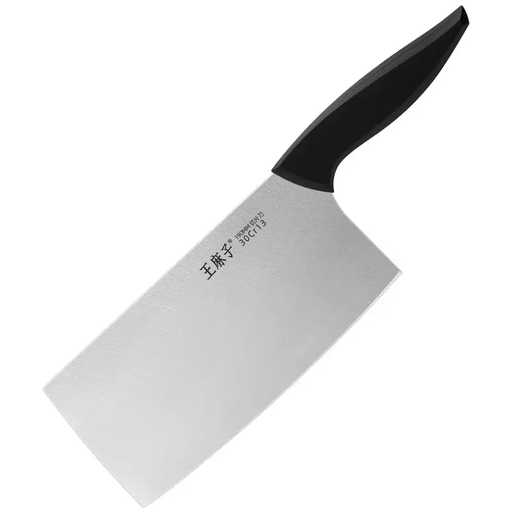
Why It Stands Out This knife from the WANGMAZI Shenmo series is a classic example of a Chinese chef's knife, designed for precision. The 190 mm blade is forged from high-carbon stainless steel, which, according to the manufacturer, ensures exceptional sharpness and durability. The full tang construction contributes to a solid feel and good balance.
Pros
Who It's For For the home cook who wants to take their cutting technique to the next level. If you enjoy slicing ultra-thin pieces for stir-fries or salads, this is a very suitable choice.
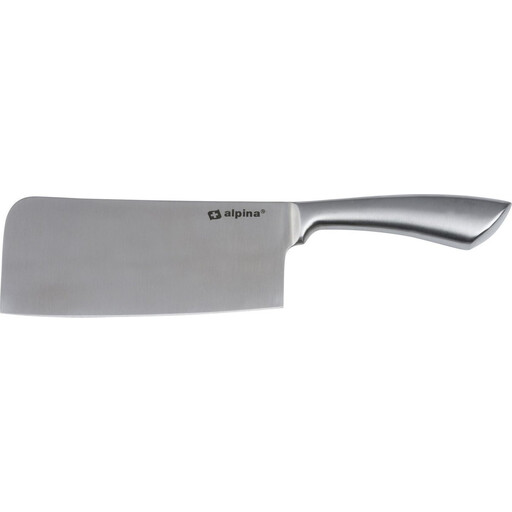
Why It Stands Out The Alpina kitchen cleaver is a functional and accessible choice for the everyday kitchen. The knife is made entirely of stainless steel, including the handle. With a total length of 31 cm and an 18 cm blade, it is a versatile tool for general chopping and cutting. A practical advantage is that it is dishwasher-safe.
Pros
Who It's For For the novice cook or anyone looking for a no-nonsense, affordable, and low-maintenance cleaver for everyday tasks. This kitchen cleaver is a practical addition to any knife set.
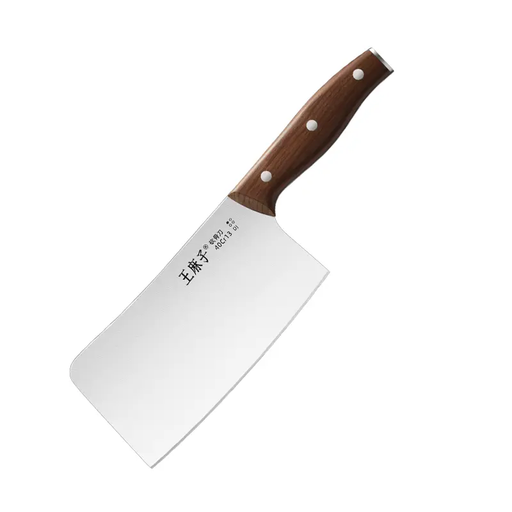
Why It Stands Out This model from WANGMAZI is not a subtle slicing knife, but a true powerhouse. It is specifically designed as a cleaver for bones. The robust, forged construction and heavier weight are intended to powerfully cut through spareribs, joints, and bones. The hardened steel blade is made to withstand impact.
Pros
Who It's For For the serious home cook, the at-home butcher, or anyone who regularly processes whole chickens or prepares spareribs. If you need a knife that can handle the most demanding tasks, this meat cleaver is the right tool.
A cleaver is a personal choice. Perhaps you're looking for a different size, a specific material, or another type of handle. No worries. For more options, you can browse our full range.
? Explore all our chef gadgets for more choices
1. What is the difference between a Chinese chef's knife and a Western meat cleaver? The main difference lies in the thickness and weight of the blade. A Chinese chef's knife is thin and relatively light, intended for slicing vegetables and boneless meat. A Western meat cleaver is thick, heavy, and robust, specifically made for chopping through bones and joints.
2. Can I use a cleaver for everything in the kitchen? Not really. A Chinese chef's knife is very versatile for slicing, but unsuitable for bones (the blade can chip). A meat cleaver is too heavy and clumsy for fine slicing. It is important to use the right type of knife for the right task for both safety and the longevity of your knives.
3. How do I maintain my cleaver? For most cleavers, especially those made of carbon steel, hand-washing is recommended. Dry the knife thoroughly immediately after washing to prevent rust. Keep the blade sharp with a honing steel or a knife sharpener. A sharp knife is safer and more effective than a dull one.
Best regards,
Joybuy Product Recommendation Officer
