
Vandaag of morgen in huis

Kwaliteit gegarandeerd

Welkomstaanbiedingen ontgrendelen: GRATIS bezorging | Tot 80% korting | Gratis 30 dagen JoyPlus-proefperiode
Download de app
As a Joybuy Product Recommendation Officer, I see people struggle with purchasing new pans every day. You invest in a shiny new pan that promises to be healthy and scratch-free, but after a few months, everything starts to stick. Sound familiar? The ceramic pan market is filled with marketing claims that often fall short in practice.
Before you make a decision, it's crucial to understand the most common pitfalls that lead to buyer's remorse.
To find a pan that performs well and lasts a long time, focus on the specifications rather than the packaging. Here are the three most important points.
A pan's performance starts with its core. Most ceramic pans have an aluminium base. Pay attention to two things here:
Not all ceramic coatings are created equal. A healthy frying pan is free of PFAS and PFOA, but the durability of the non-stick layer varies enormously. Pans with a multi-layer ceramic coating are often more resistant to wear and tear. This means the non-stick function is preserved longer, allowing you to continue cooking with less oil or butter.
A pan is only truly versatile if it can do more than just cook on the stovetop.
Based on these objective criteria, we have selected a number of pans that suit different cooking styles and needs.
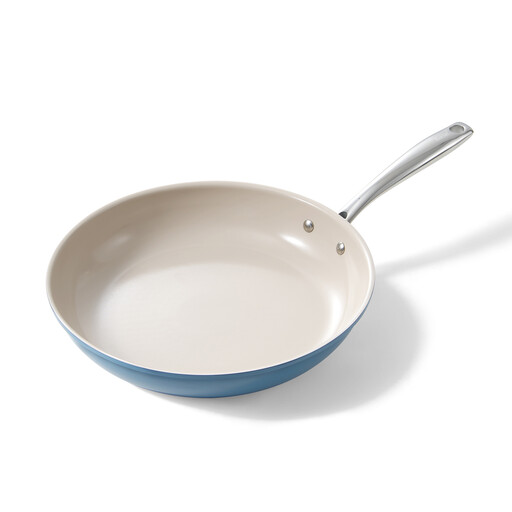
Why This Fits Their Persona: Ideal for someone looking for their first, high-quality all-round pan. Perfect for an egg, pancake, or a piece of meat. A reliable choice without having to immediately invest in a whole set.
The forged aluminium core and thick base ensure excellent heat distribution on induction, avoiding the 'hotspot' pitfall.
The stainless steel handle makes the pan oven-safe up to 450°C, which makes it exceptionally versatile for finishing or slow-cooking dishes.
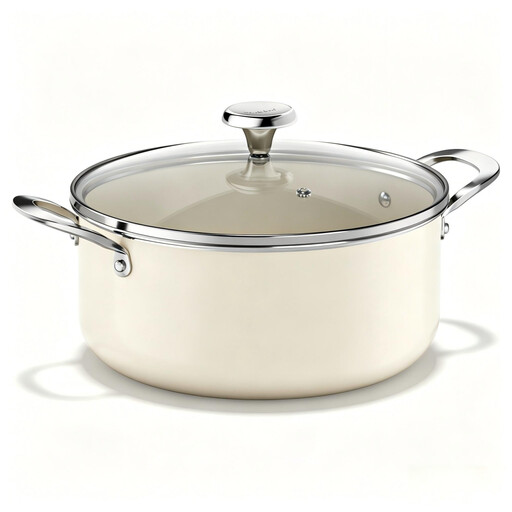
Why This Fits Their Persona: For those who regularly cook larger portions, like soups, stews, or pasta. This spacious stock pot is designed for dishes that require even, prolonged heating.
This pan focuses on pure functionality. The ceramic coating is explicitly free of PFAS, PFOA, lead, and cadmium, and the thick base guarantees stable heat, which is essential for stews.
The large 4.7-litre capacity and oven safety up to 450°C make it possible to start a dish on the stovetop and finish it in the oven.
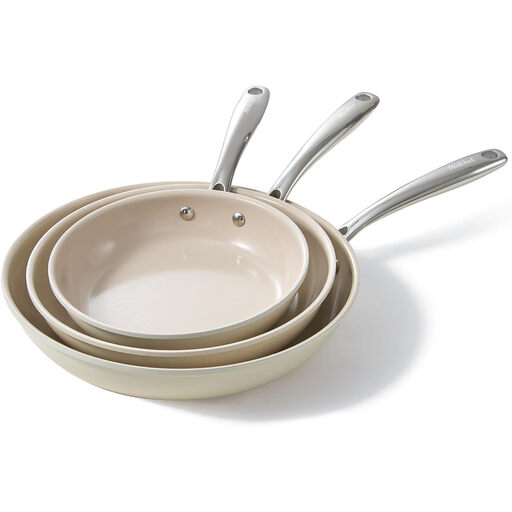
Why This Fits Their Persona: For those looking to replace old, worn-out pans with a complete, durable, and aesthetically pleasing set. This set offers consistent quality for every cooking task.
This is a complete PFAS-free pan set that invests in solid construction. The triple-layer ceramic coating and forged aluminium base are designed for a longer lifespan.
The set includes three sizes (20, 24, and 28 cm), giving you the right pan for any dish. All pans are oven-safe and suitable for all heat sources.
We've compiled a complete, up-to-date list of products that fully meet these strict selection criteria and local regulations.
The lifespan of a ceramic pan depends heavily on use and maintenance, but it typically ranges from 1 to 5 years. To maximize its lifespan, it's best to use wooden or silicone utensils, avoid heating the pan while empty on high heat, let it cool completely before cleaning, and preferably wash it by hand.
Ceramic pans are often considered a healthy choice because the non-stick coating is made without PFAS and PFOA. These substances, used in some traditional non-stick pans, can release potentially harmful fumes when overheated. With a ceramic pan, you don't have that risk.
This issue is usually caused by a base that is too thin, not perfectly flat, or not fully magnetic. For good performance on an induction hob, a thick, ferromagnetic base is essential. Also, ensure the pan's diameter matches the size of the cooking zone on your hob for efficient and even heat transfer.
