
Vandaag of morgen in huis

Kwaliteit gegarandeerd

Welkomstaanbiedingen ontgrendelen: GRATIS bezorging | Tot 80% korting | Gratis 30 dagen JoyPlus-proefperiode
Download de app
As a cat owner, you know it: a good litter box is the foundation for a clean home and a happy cat. Yet, the search is often frustrating. The market is flooded with options that promise the world. As a Joybuy Product Recommendation Officer, I'm here to help you see through the marketing hype and make a choice that suits both you and your cat. Let's avoid the most common pitfalls.
The wrong litter box not only leads to unwanted odors but also causes stress for your cat, potentially resulting in inappropriate elimination. Avoid a bad purchase by paying attention to the following points:
To avoid these problems, it's important to look beyond the packaging. Pay attention to a few key specifications that make the difference between daily frustration and years of convenience.
The most important rule for size is simple: the litter box should be at least 1.5 times the length of your cat, measured from its nose to the base of its tail. This gives your cat enough room to turn and dig. For larger breeds, a large litter box or a jumbo model is not a luxury, but a necessity.
Additionally, opt for a box made of non-porous, smooth plastic. This material is easier to clean and absorbs odors less quickly than cheaper, rougher plastic. A smooth surface prevents urine and bacteria from seeping into the material.
The litter box and the cat litter work as a team. The effectiveness of your box heavily depends on the litter you use.
Considering a self-cleaning litter box? Then take a critical look at the technology. Reliable models are distinguished by:
Based on these criteria, we have selected a number of products that cater to different needs and lifestyles.
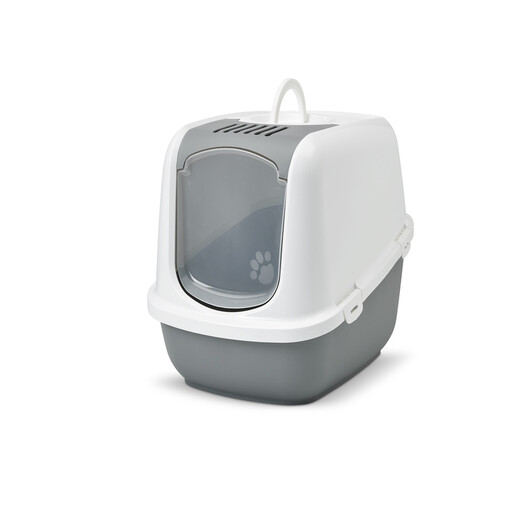
Why This Fits Their Persona: This model is specifically designed for larger cat breeds or multi-cat households. Its spacious size provides the comfort needed to prevent inappropriate elimination due to a cramped space.
This box tackles the 'one-size-fits-all' pitfall. Its dimensions (66.5 x 48.5 x 46.5 cm) are calculated to provide ample freedom of movement, which is essential for a cat's well-being.
The fold-up front makes daily scooping easy without removing the entire hood. The high back prevents leaks, and the carbon filter helps neutralize odors.
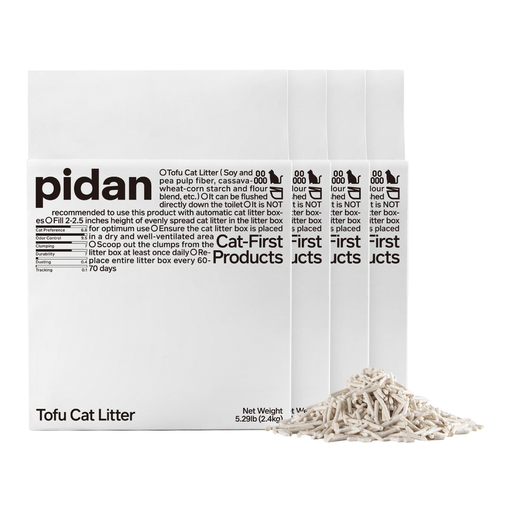
Why This Fits Their Persona: For those who prioritize sustainability, this plant-based litter is a logical choice. Made from renewable resources like soy and pea fibers, it offers an eco-friendly alternative to traditional clay granules.
This product tackles the 'odor-free myth' at its source. The plant-based fibers have naturally high absorbency and strong clumping action, effectively trapping odors without heavy perfumes.
The formula is low-dust, which is better for the respiratory systems of both humans and animals. The strong clumping action makes cleaning quick and efficient, and the litter is suitable for use in automatic litter boxes.
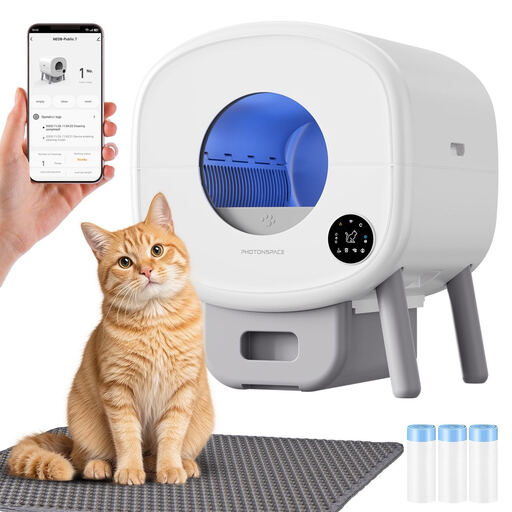
Why This Fits Their Persona: For those who lead a busy life and value convenience and technology, this model offers a 'hands-free' solution. Its large capacity means you don't have to tend to the litter box for up to 15 days.
This model bypasses the 'cheap automated model' trap with concrete specs: a very low noise level (≤35 dB), smart safety sensors, and built-in odor removal technology.
The XXL capacity (95L drum, 15L waste bin) is a major advantage for busy owners or multi-cat households. The system is also compatible with almost all types of cat litter.
We have compiled a complete, up-to-date list of products that fully meet these strict selection criteria and comply with current safety regulations.
For a standard litter box with clumping litter, it is recommended to remove clumps and solid waste daily. Ideally, you should replace the entire box of litter every 2 to 4 weeks. At that time, wash the box thoroughly with water and a mild, unscented soap before refilling it. With an automatic litter box, you only need to replace the waste bag, typically once every 1 to 2 weeks, depending on the model and the number of cats.
For kittens, a non-clumping litter or a litter with larger granules, such as those made from paper or tofu, is often recommended. Young kittens are curious and may have a tendency to eat the litter. Clumping litter can expand in their stomachs and cause problems. Once the kitten is a bit older (around 4-6 months), you can switch to a clumping variety.
This depends entirely on your lifestyle and budget. For people with a busy schedule, physical limitations, or a dislike for the daily scooping chore, a reliable automatic litter box can be a game-changer. It saves time and reduces odors. The initial investment is higher, but the convenience and constant hygiene can justify it for many owners. However, pay close attention to the quality of the sensors and the ease of cleaning the device itself.
