
Vandaag of morgen in huis

Kwaliteit gegarandeerd

Welkomstaanbiedingen ontgrendelen: GRATIS bezorging | Tot 80% korting | Gratis 30 dagen JoyPlus-proefperiode
Download de app
Slicing your own bread is a simple pleasure. The aroma of a fresh loaf, the crunchy crust... until you try to cut it with the wrong knife. The result is a crushed loaf, uneven slices, and a counter full of crumbs. However, the search for a good bread knife or a convenient slicer can be unnecessarily complex, filled with marketing claims that say little about real-world performance.
As a Joybuy Product Recommendation Officer, I'm here to help you make the right choice. We won't look at empty promises, but at what really matters. First, let's discuss the most common pitfalls that cause you to waste money.
To avoid the pitfalls above, focus on a few key specifications. These determine whether a product is worth your money and fits your kitchen.
For a bread knife, length is crucial. A blade of at least 20 cm (approx. 8 inches) is recommended. This allows you to effortlessly slice through most loaves, from a narrow baguette to a large sourdough, without needing to "saw" back and forth.
The material is just as important. Stainless steel is the standard, but the quality varies enormously. High-carbon German steel, such as the X50CrMoV15 often used in a professional bread knife from brands like Wüsthof, is renowned for its ability to retain its edge and its resistance to rust.
The shape of the serrated knife's edge determines how it cuts through the crust and the soft interior of the bread.
Considering an electric slicer? Pay attention to these two points:
Below is a selection of products that score well on the above criteria, matched to different user profiles.
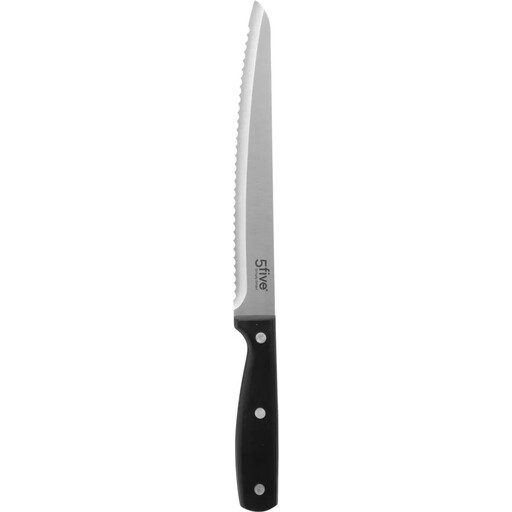
Why This Fits Their Persona: Ideal for those seeking a reliable and affordable knife for daily use. It's a no-frills, functional knife that does what it's supposed to do: slice bread without crushing it.
This knife avoids the "dull after three loaves" pitfall by using stainless steel and a 33 cm blade, long enough for most breads. It's a simple, durable choice.
Long blade (33 cm): Suitable for large loaves. Dishwasher-safe: Easy to maintain for daily convenience.

Why This Fits Their Persona: Perfect for those who want consistency and speed. Ideal for busy mornings, slicing bread for the whole family, or prepping cold cuts and cheese for a charcuterie board.
This machine directly tackles the "storage nightmare." Thanks to its foldable design, it fits easily into a cabinet. The removable parts make cleaning much simpler than with bulky, fixed models.
Foldable: Stores very compactly. Adjustable thickness (0-15 mm): Versatile for bread, cheese, and meat. Child-safety switch: Added safety in a family kitchen.
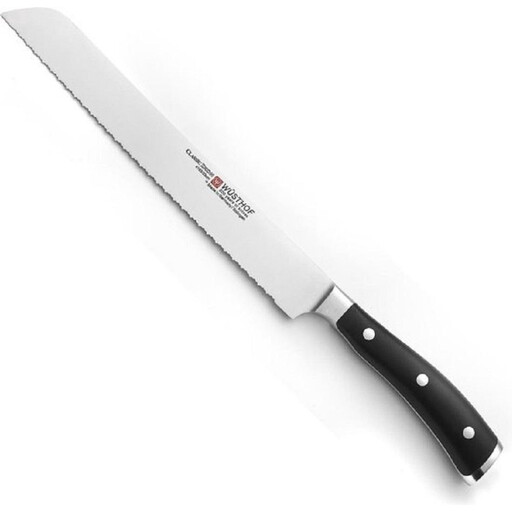
Why This Fits Their Persona: For those who bake their own bread and want to slice the fruits of their labor with precision. This knife is an investment in quality, balance, and durability, made for those who take their cookware seriously.
This knife is the antithesis of the "one-size-fits-all" myth. It is specifically designed for superior performance. The forged steel and double serration aren't marketing gimmicks, but functional features that make a noticeable difference.
Precision double serration: Slices exceptionally smoothly through hard and soft crusts. Forged from a single piece of steel: Ensures superior balance and durability. Ergonomic handle: Comfortable and safe to use.
Sharpening a serrated knife is more difficult than a straight-edged blade and requires a special tool (a ceramic honing rod). For most home users, it's not practical. That's why it's wise to invest in a knife made from high-quality steel that retains its sharpness for a long time.
That depends on your needs. If you slice bread daily for several people, love perfectly uniform slices, or also want to use the machine for cold cuts and cheese, then an electric slicer is an excellent investment in convenience and consistency. Be sure to choose a model that is easy to store and clean, such as a foldable version.
A dedicated bread knife typically has a longer blade (20-26 cm) and a specially designed serration optimized to cut through a hard crust without crushing the soft interior. A general-purpose serrated knife (often called a utility or tomato knife) is shorter and usually has finer serrations, making it less suitable for a large, sturdy loaf of bread.
