
Vandaag of morgen in huis

Kwaliteit gegarandeerd

Welkomstaanbiedingen ontgrendelen: GRATIS bezorging | Tot 80% korting | Gratis 30 dagen JoyPlus-proefperiode
Download de app
A blender seems like a simple purchase—until you start looking online. You're immediately overwhelmed by specifications, features, and marketing promises. Many people fall into the same traps, ending up with an expensive appliance that just gathers dust in the cupboard. Before you make a choice, it's wise to understand the most common missteps.
By recognising these points, you can search more effectively for a model that truly fits your lifestyle, without wasting money on superfluous features.
To avoid buyer's remorse, you can focus on a few concrete specifications. These determine whether a blender will be a useful addition to your kitchen or a source of annoyance.
High wattage isn't always a guarantee of good results. A blender's effectiveness depends on the combination of power, jar shape, and blade design. For a standard smoothie maker, a power of 500-700 watts is often more than enough to puree soft fruits and vegetables. If you plan to regularly process ice cubes, nuts, or frozen ingredients, a model with higher power (from 900 watts) and robust, serrated blades is a better choice. So, don't just look at the number, but also at the quality and design of the blades.
A blender's jar is usually made of glass or plastic. Both materials have their pros and cons.
This is perhaps the most underrated, yet most important, aspect for daily use. You'll use a blender much more often if you can clean it in under a minute. Pay attention to the following points:
baby food.An immersion blender is often even easier to clean but is less suitable for hard ingredients. For juicing fruit without fibre, a centrifugal juicer or citrus press is a separate appliance that serves a different function. A food processor often offers more functions but also takes up more space.
Based on objective specifications and various use cases, we have selected a few popular choices.
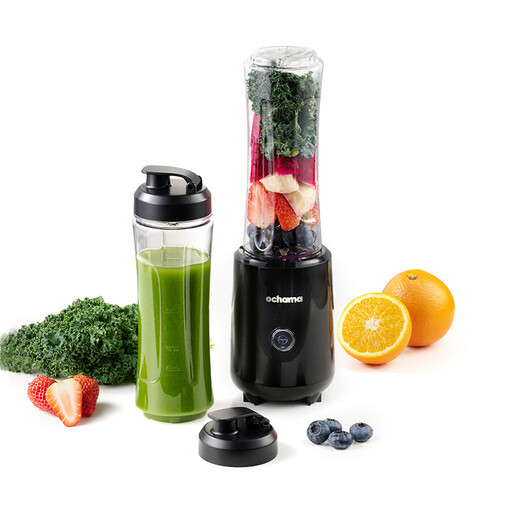
Why This Fits Their Persona: Ideal for those who want to make a quick, healthy smoothie on their way to work or after a workout. This 'on-the-go blender' is compact, the blending cup doubles as a drinking cup, and the whole thing fits easily in a bag.
This model specialises in one task: making personal smoothies. It avoids the 'jack-of-all-trades' pitfall by focusing on ease of use and portability.
Compact size and simple one-button operation. The detachable parts make cleaning quick and easy.
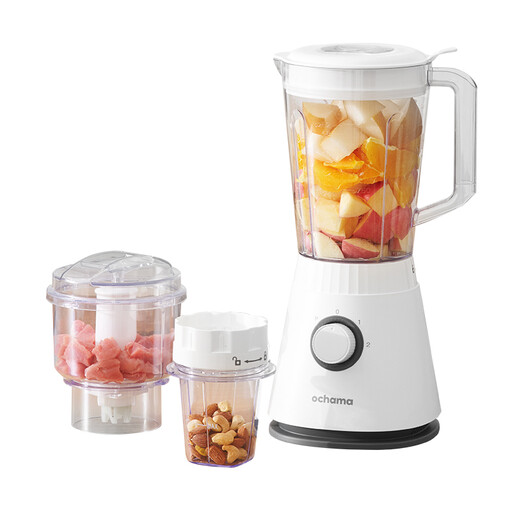
Why This Fits Their Persona: This model offers the versatility a family needs. From morning smoothies for everyone to quickly preparing fresh baby food. The different speeds make it suitable for various ingredients.
The design is focused on easy cleaning thanks to its removable parts. This directly addresses the frustration of a hard-to-clean blender, which is crucial for daily use.
Offers multiple functions (blending, grinding, making baby food) in one device. The 600W power is a good balance between strength and energy consumption for family tasks.

Why This Fits Their Persona: For the chef who wants to do more than just blend. This full-featured kitchen machine can knead heavy dough, grind meat, and slice vegetables. It's a central workhorse for the serious kitchen.
This is a true 'jack-of-all-trades', not a blender with weak attachments. The 900-watt power is functional and necessary for heavy tasks, not just an empty marketing claim.
A complete food processor with a large stainless steel mixing bowl (3.9 litres) and various accessories for complex recipes, from dough to minced meat.
We have compiled a complete, up-to-date list of products that fully meet these strict selection criteria and Dutch safety regulations.
This depends on your usage. For pureeing soft fruits and liquids, 500-700 watts is often sufficient. For regularly crushing ice, grinding nuts, or blending hard, fibrous vegetables, a model with 900 watts or more is recommended. However, don't get fixated on the wattage; the quality of the blades and the shape of the jar are at least as important for the final result.
This varies by model. Most modern jars made of glass or BPA-free plastic are dishwasher-safe, as are the lids. The motor base, of course, should never come into contact with water. The blade assembly often needs to be washed by hand to maintain its sharpness and protect the mechanism. Always check the manufacturer's product information for specific cleaning instructions.
Although they can all process food, they serve different purposes:
