
Vandaag of morgen in huis

Kwaliteit gegarandeerd

Welkomstaanbiedingen ontgrendelen: GRATIS bezorging | Tot 80% korting | Gratis 30 dagen JoyPlus-proefperiode
Download de app
A blender seems like a simple purchase—until you start looking online. You're bombarded with jargon like thousands of watts, cyclonic action, and countless features. Many of these specs are designed to impress, not necessarily to help you make a better smoothie. The result? You pay for features you don't use or end up with an appliance that gets relegated to a cupboard after a few months.
As a Joybuy Product Recommendation Officer, I see the challenges consumers face every day. Let's avoid the most common pitfalls so you can choose a blender that truly fits your needs.
food processor with a blender attachment sounds efficient, but often the blender function is a weak add-on. You're buying a compromise that's a master of none.To avoid buyer's remorse, it's better to focus on a few core specifications that truly matter. These are the factors that determine whether your blender becomes a joy or a chore.
A powerful blender isn't defined by its wattage alone. It's the combination of power, blade design, and rotational speed (RPM) that counts.
personal blender or smoothie maker in this category is perfect for daily use.ice-crushing blender feature is a clear indicator of its power.to-go blender.Think carefully about how you'll use the blender and how much space you have.
to-go blender): Compact, often with a drinking cup that doubles as the jar. Ideal for one person, quick post-workout shakes, or use on the go. The capacity is usually limited to 300-700 ml.To help you translate specifications into a concrete choice, we've matched some popular models to different user profiles.
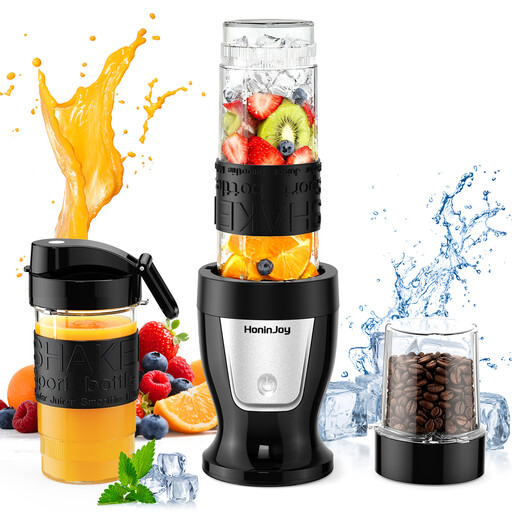
Why This Fits Their Persona: Perfect for those who want to quickly make and take a smoothie in the morning. The two sizes of to-go cups fit an active lifestyle, whether you're heading to the office or the gym.
This model focuses on a single task: making personal smoothies. The 650W power is more than sufficient without being overkill. The dishwasher-safe parts tackle the cleaning problem head-on.
Comes with two leak-proof, BPA-free sport cups (590ml + 410ml) and a separate grinding cup for things like coffee beans or spices. Highly practical for its price point.
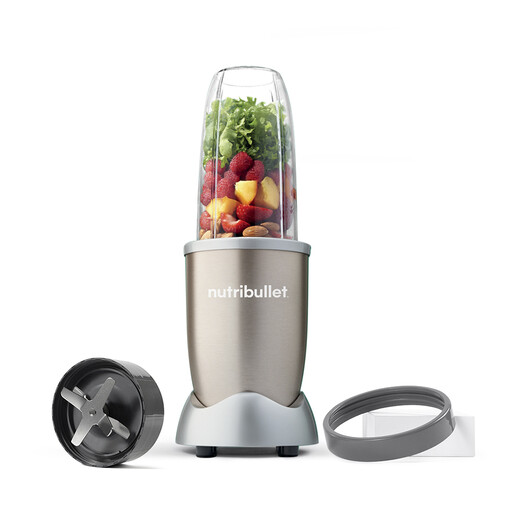
Why This Fits Their Persona: For those who make daily smoothies with fibrous vegetables, seeds, nuts, or frozen fruit. This powerful blender is designed to pulverise even the toughest ingredients for a smooth result.
The 900W motor here isn't a marketing gimmick; it's functional power needed to pulverise tough ingredients. It's a specialised, high-power blender, not a vague all-rounder.
According to Nutribullet, the combination of the powerful motor and the special extractor blade is effective at unlocking nutrients from seeds and skins. The cup is made of durable, BPA-free Tritan.

Why This Fits Their Persona: Ideal for families and home cooks who want more than just blending. This appliance combines a food processor for dough and batter with a blender, meat grinder, and citrus press.
This is a full-fledged food processor from a reputable brand, not a cheap jack-of-all-trades. The 900W motor is designed for heavy-duty tasks like kneading, which means the blender function also benefits from ample power.
Saves a tremendous amount of counter space by combining multiple appliances. The large 3.9-litre stainless steel mixing bowl is suitable for processing large quantities.
We've compiled a complete, up-to-date list of products that meet these selection criteria and safety standards.
This depends entirely on your use case. For soft fruits and liquids, 300-600 watts is fine. If you plan to regularly blend frozen fruit, ice cubes, or nuts, look for models with 900 watts or more. Don't just fixate on the number; consider it in combination with the build quality and blade system.
No, definitely not. Hot liquids expand and can build up steam pressure, which can cause the lid to fly off. This is dangerous. Only use a blender if the manufacturer explicitly states that the jar is heat-resistant, such as a jar made of borosilicate glass. Always let soups cool to a lukewarm temperature before blending them in a standard plastic jar.
The easiest way is to clean it immediately after use. Rinse the jar, fill it halfway with warm water and a drop of dish soap, and run the blender for a few seconds. Then, rinse the jar and lid thoroughly. Always check if the parts (especially the jar and lid, rarely the blade unit or base) are dishwasher-safe. This information will be listed in the product details.
