
Vandaag of morgen in huis

Kwaliteit gegarandeerd

Welkomstaanbiedingen ontgrendelen: GRATIS bezorging | Tot 80% korting | Gratis 30 dagen JoyPlus-proefperiode
Download de app
A dark wardrobe, an unlit hallway, or that one corner of the shed where an outlet was never installed. It's a common problem. A battery-powered motion sensor light seems like the perfect, quick solution. No messy wires, no electrician needed. But the market is flooded with options, and not every wireless sensor light is worth your money.
Before you make a purchase, it's wise to know the pitfalls. Many models suffer from a few persistent issues that only become apparent after a few weeks of use.
By paying attention to a few key specifications, you can easily avoid these problems and choose a product that truly works for your situation.
To avoid a bad purchase, you don't need to become a technical expert. Focus on three concrete features that make the difference between a handy gadget and a source of frustration.
The choice of power source determines the convenience and long-term cost.
The quality of the PIR (Passive Infrared) sensor is crucial. This sensor responds to body heat. Two settings are important here:
Not all light is the same. The right combination of brightness and colour is essential for its function.
With this knowledge, you can search more effectively for the right LED motion sensor light for indoor use. Below are some recommendations for different user profiles.

Why it's a match for this profile: Perfect for anyone needing light in wardrobes, drawers, or under kitchen cabinets. The ultra-slim design is unobtrusive, and the adhesive strip installation is genuinely simple. The set of two is practical for multiple locations.
The built-in 1100mAh battery is USB-rechargeable, which bypasses the pitfall of expensive disposable batteries. With three adjustable colour temperatures, you can always choose the right light and prevent it from being too bright or too dim.
The combination of a slim profile, rechargeability, and adjustable light colours makes this a highly versatile solution for wardrobe lighting.
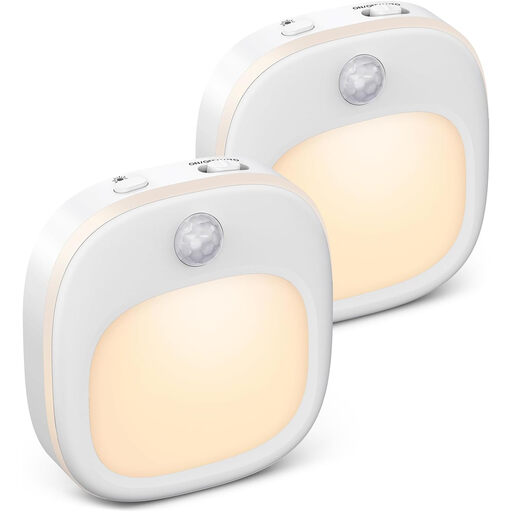
Why it's a match for this profile: Ideal for those who want to navigate their home safely at night without turning on bright lights. The dimming function and adjustable colour temperature provide soft, non-glaring light on the stairs or in the hallway.
This model directly tackles the 'impractical lighting' pitfall. With 5 dimming levels and 3 colour temperatures, you can adjust the light precisely to your needs, from soft orientation light to something brighter if required.
The extensive settings for brightness and colour make this an excellent choice as a night light or for sensor-activated stair lighting.
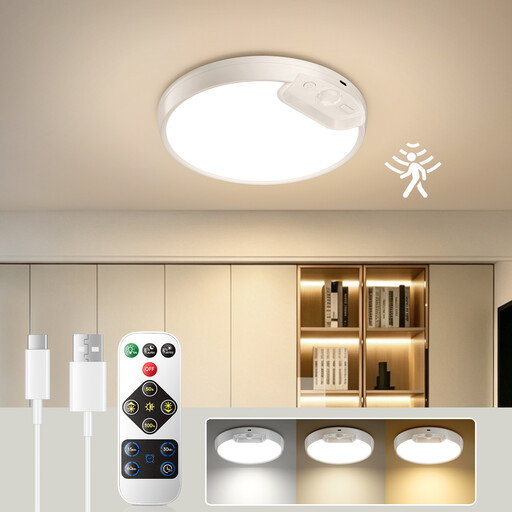
Why it's a match for this profile: For larger, functional spaces like a shed, garage, attic, or basement where there's no power outlet. This light delivers a serious amount of light at 500 lumens, and its massive battery means you won't have to charge it constantly.
The 8000mAh battery is a direct solution to the poor battery life pitfall. According to the manufacturer, the light lasts up to 90 days in automatic mode. The remote control gives you full control and prevents frustrations with the sensor.
The combination of a very large battery capacity, high light output (500 lumens), and a remote control makes this a powerful, wireless lighting solution.
We have compiled a complete, up-to-date list of products that meet these selection criteria and comply with current safety regulations.
This depends heavily on two factors: the battery capacity (expressed in mAh) and how often the light is activated. A model with a large capacity (e.g., 8000 mAh) can, according to the manufacturer, last up to 90 days with average use (10 activations per day). Smaller models for wardrobes (e.g., 800-1100 mAh) typically last several weeks to a month before needing to be recharged.
For optimal performance, place the light so that the sensor can 'see' the path of travel. Avoid placing it directly opposite a heat source (like a radiator) or a window with direct sunlight, as this can interfere with the PIR sensor and cause unwanted activation. For stair lighting, placing it at the top or bottom of the stairs, aimed at the steps, is effective.
Yes, definitely, but it's important to look at the brightness (lumens). A small 20-lumen night light won't be sufficient. For a shed or garage, choose a model with a higher light output, for example, 400-500 lumens or more. The ceiling light we recommend above for the 'Practical DIYer' is a good example of a battery-powered light that provides enough light for these types of spaces.
