
Vandaag of morgen in huis

Kwaliteit gegarandeerd

Welkomstaanbiedingen ontgrendelen: GRATIS bezorging | Tot 80% korting | Gratis 30 dagen JoyPlus-proefperiode
Download de app
A baby's skin is delicate. Choosing the right sunscreen can therefore feel like a daunting responsibility. The market is vast, and marketing claims aren't always clear. As a Product Recommendation Officer at Joybuy, I'm here to help you separate fact from fiction, so you can make an informed choice to protect your child.
Before you make a purchase, it's wise to be aware of a few common pitfalls:
To ensure you make the right choice, there are a few specifications you should always check. These will help you find a product that is genuinely suitable as a sunscreen for sensitive baby skin.
Sunscreens use two types of filters to protect the skin:
Many modern formulas for children combine both types of filters for broad and effective protection.
For a sunscreen for baby eczema or sensitive skin, a short and clear ingredient list is a good sign. A fragrance-free sunscreen is the standard choice. Fragrance is one of the most common causes of skin irritation. Also, check for the absence of drying alcohol (alcohol denat.), which can sometimes appear high on the ingredient list. Products specifically approved by paediatricians often provide extra peace of mind.
The Sun Protection Factor (SPF) indicates the level of protection against UVB radiation, which causes sunburn. For babies and children, SPF 50+ is the recommended standard. Equally important is protection against UVA radiation, which penetrates deeper into the skin and can cause long-term damage. A product offers broad-spectrum protection if the UVA logo (a circle with "UVA" inside) is displayed on the packaging.
Based on these criteria, we have selected several products that cater to the different needs of parents.
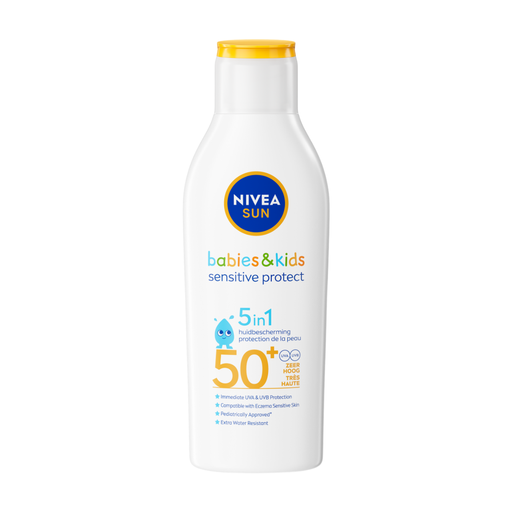
Why This Fits Their Persona: This sun lotion is specially formulated for the most delicate skin. If your child has sensitive skin or is prone to eczema, this formula offers peace of mind.
The formula is fragrance-free and contains no colourants or preservatives, avoiding the pitfall of irritating "natural" additives. The focus is on what's left out.
According to the manufacturer, the formula is suitable for eczema-prone skin, and its skin compatibility is paediatrician-approved. It contains organic chamomile.
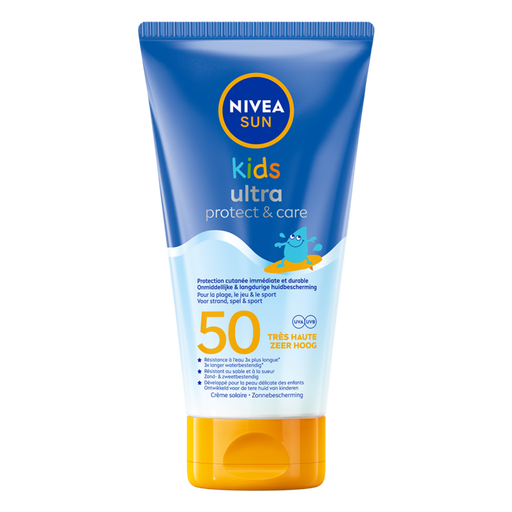
Why This Fits Their Persona: For kids who can't get enough of the water or love playing in the sand. This formula is designed to stay on better during active play.
This product addresses the "waterproof" confusion. The manufacturer states the formula has extra-long-lasting water resistance compared to regular water-resistant products, but still emphasizes the need for reapplication.
According to NIVEA, the formula is not only extra water-resistant but also sweat- and sand-resistant. It is ideal for a day at the beach or playing outdoors.
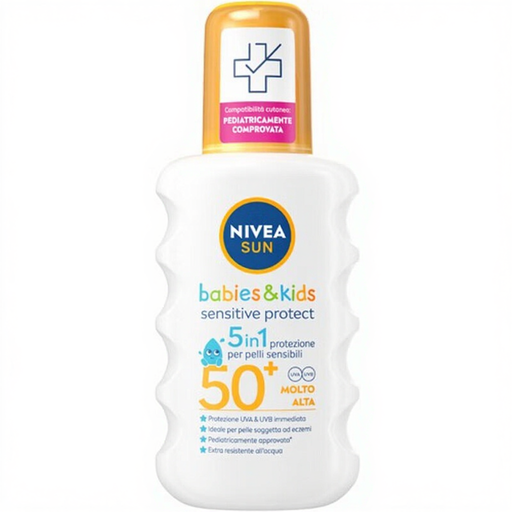
Why This Fits Their Persona: For parents looking for a quick and easy way to apply sunscreen to a wriggly child. A spray can significantly speed up the process without compromising on protection.
This spray combines convenience with a formula for sensitive skin. It's fragrance-free, so you aren't choosing speed at the expense of gentleness.
The spray bottle makes application fast and efficient. The formula is extra water-resistant, and its skin compatibility is paediatrician-approved, according to the manufacturer.
We have compiled a complete, up-to-date list of products that meet these rigorous selection criteria and safety standards.
The general guideline is to keep babies under 6 months completely out of direct sunlight. Their skin is still too vulnerable. From 6 months onwards, you can use a baby sunscreen specifically developed for sensitive baby skin. Always choose a product with SPF 50+ and apply it generously to all exposed skin.
A mineral sunscreen (with zinc oxide or titanium dioxide) acts like a mirror, reflecting UV rays. It is often recommended for the very youngest and most sensitive skin types. A chemical sunscreen is absorbed into the skin and absorbs UV radiation there. Many products for children use a combination of both for an effective and pleasant, easy-to-spread texture.
Reapply sunscreen on your child every two hours. Also, reapply immediately after swimming, heavy sweating, or towel drying. This also applies to a waterproof kids sunscreen (water-resistant formula). Protection diminishes due to friction and water. Be consistent, even on cloudy days.
