
Vandaag of morgen in huis

Kwaliteit gegarandeerd

Welkomstaanbiedingen ontgrendelen: GRATIS bezorging | Tot 80% korting | Gratis 30 dagen JoyPlus-proefperiode
Download de app
As Joybuy's Product Recommendation Officer, I'm here to help you make the right choices. The baby food aisle can be overwhelming. Packaging promises the best for your child, but what's really inside that jar or squeeze pouch? Let's cut through the marketing jargon and look at what you should pay attention to when choosing a fruit puree for your baby.
Before you put anything in your shopping cart, it's wise to know the most common misconceptions. Many parents fall for these, leading to an unsuitable choice for their child.
To make a good choice, focus on a few objective specifications. These tell you more than the front of the package.
The ingredients are always listed in descending order of quantity. The first ingredient is the most abundant.
The texture of the baby fruit food is important for your child's oral motor skills.
The choice between a glass jar and a squeeze pouch depends on the occasion.
Based on the criteria above, we have selected a few products that suit different parental needs.
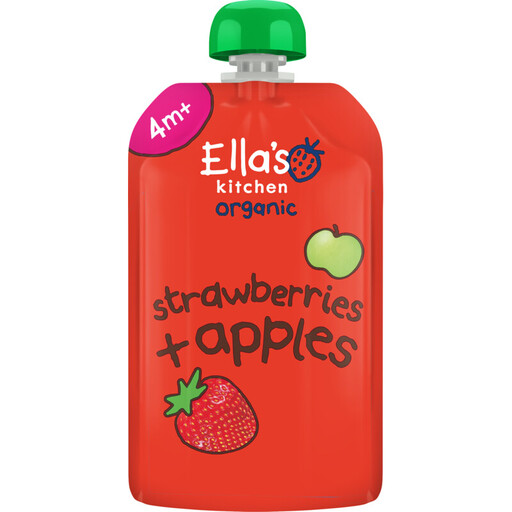
Why This Fits Their Persona: Perfect for first tastes. The ingredients are simple and pure, ideal for letting your baby get used to new flavours without unnecessary additives.
This product is 100% organic fruit, with no added water, sugar, or concentrates. The ingredients list is short and clear: 78% apples, 22% strawberries, and a drop of lemon juice.
100% organic with a smooth texture, suitable as a fruit puree for 4 months. Convenient squeeze pouch.
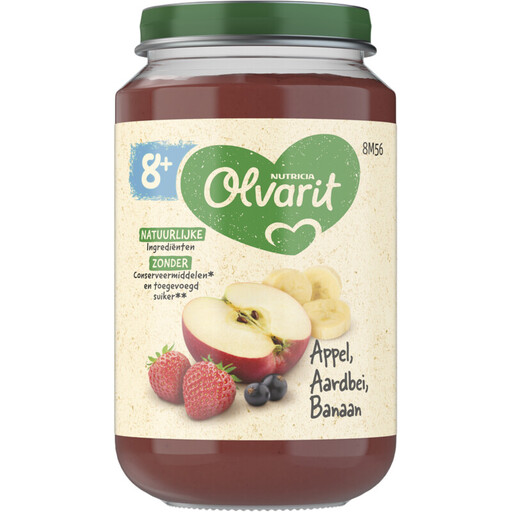
Why This Fits Their Persona: For babies who are ready for the next step. This jar offers a more complex flavour and a texture that further develops oral motor skills, suitable for ages 8 months and up.
This Olvarit fruit puree is specifically tailored to the age group. It contains no added sugars, and the texture is deliberately coarser than a 4-month puree, avoiding the pitfall of an unsuitable texture.
Adapted texture for flavour development. Contains no added sugars. The glass jar is ideal for meals at home.
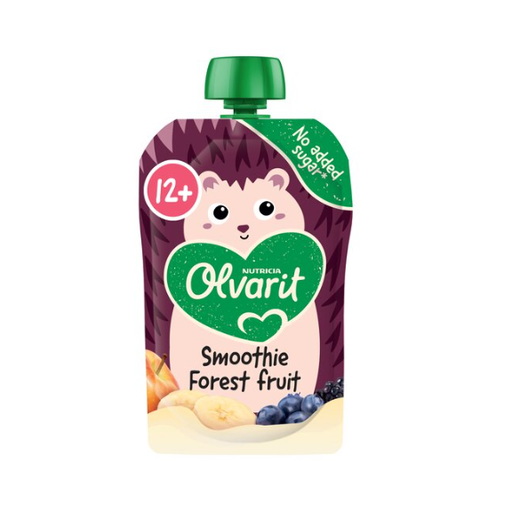
Why This Fits Their Persona: A convenient and healthy snack for when you're out and about. This baby smoothie is easy to take with you and serve without any mess. Suitable for toddlers from 12 months.
This is clearly positioned as a snack, not a full meal. It contains no added sugars, and the ingredients (including fruit, fermented milk, rice flour) are tailored for older babies.
Very convenient squeeze pouch packaging for on the go. Contains no added sugars. A healthy choice for a baby snack.
We have compiled a complete, up-to-date list of products that fully meet these strict selection criteria and regulations.
1. From what age can a baby have a fruit puree? The general advice from pediatricians and child health clinics is to start with the first practice tastes between 4 and 6 months. Begin with a soft, single flavour like banana or pear. A fruit puree for 4 months is specially made with a very fine texture suitable for this stage. Always consult with your child's health advisor before you start.
2. Are squeeze pouches as healthy as jars? The contents of a squeeze pouch can be just as healthy as those of a jar, provided you check the ingredients. The main difference is the method of eating. For the development of oral motor skills, it's good to have your child eat from a spoon. Therefore, it's preferable to squeeze the contents of a pouch onto a spoon rather than letting your child drink directly from it. For on-the-go situations, it remains a practical solution.
3. How can I be sure there are no added sugars? Read the ingredients list on the back of the package. Manufacturers are required to declare this. Look for terms like "sugar," "glucose syrup," "fructose syrup," or "juice concentrate." A trustworthy product will state "no added sugars," and its ingredients list will consist mainly of fruit or vegetable puree.
