
Vandaag of morgen in huis

Kwaliteit gegarandeerd
Download de app
Categorieën

Adding greenery to an interior creates ambiance, but not everyone has the time or the right conditions for real plants. Artificial plants offer the perfect solution. The challenge, however, is finding a model that looks realistic and won't fade or fall apart after a few months. A good choice depends on the material, size, and detailing of the plant. This article provides a practical guide to selecting durable and stylish indoor artificial plants.
Before making a choice, it's helpful to consider a few objective criteria. These factors determine the quality and suitability of an artificial plant for your space.
The most common materials for leaves and flowers are plastic and silk. Modern artificial plants made from high-quality plastic often feature subtle colour variations and a realistic texture, making them nearly indistinguishable from the real thing. The branches typically contain an iron wire core, allowing you to gently bend them into your desired shape for a more natural effect. Pay attention to the details: are the veins visible in the leaves? Is the transition from stem to leaf well-finished?
The dimensions of the plant determine its impact in a room. A large artificial plant of 100 cm or more can fill an empty corner and act as a true statement piece. Smaller models around 45 cm are ideal for a desk, windowsill, or sideboard. Measure the available space beforehand, both in height and width, to ensure the plant will fit.
From tropical palms to colourful flowering plants, the variety of species is vast. An artificial strelitzia (bird of paradise) provides an exotic and trendy look, while an artificial anthurium adds a pop of colour with its striking flowers. The choice of a specific type depends entirely on your personal taste and interior style.
Many fake plants come standard in a simple black plastic pot. This provides a stable base and makes the plant ready to use right out of the box. You can easily place this base pot inside a larger, decorative planter that matches your home decor. This is a practical consideration, as you won't need to search separately for a matching pot size.
Based on the criteria above, we have curated a selection of three different artificial plants. These recommendations are based on their specifications and the variety they offer in size and style.
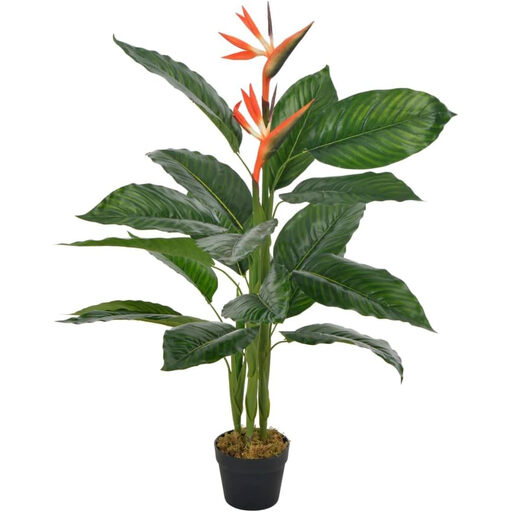
Why this product This artificial Strelitzia stands out with its height of 100 cm, making it a suitable large artificial plant for floor placement. The plant is designed to have a full and realistic appearance, with attention to detail in its leaves and flowers.
Advantages
Who is this for This model is ideal for anyone looking to make a statement in their living room, hallway, or office. It's an excellent choice for filling an empty corner with a maintenance-free, tropical plant.
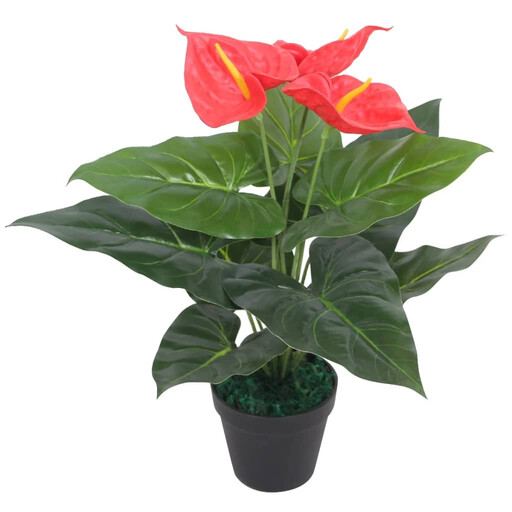
Why this product This artificial anthurium offers a compact and colourful addition to any interior. With a height of 45 cm, it is versatile enough for placement on smaller surfaces.
Advantages
Who is this for Perfect for those who want to add a subtle green and colourful accent without taking up much space. A practical choice for an office or smaller living areas.
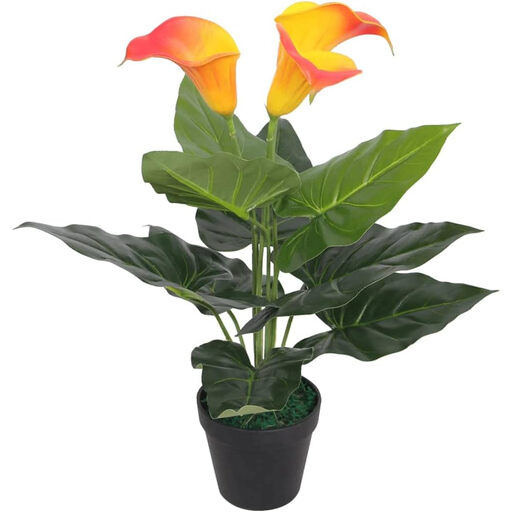
Why this product The artificial Calla lily combines a compact size with an elegant and modern look. Its distinctive cup-shaped flowers add a refined touch.
Advantages
Who is this for This plant is a great option for those looking for a stylish, flowering artificial plant for a side table, a sleek cabinet, or a counter.
The plants shown above stand out with their red and yellow accents. Are you specifically looking for a plant with a red colour, or do you simply want to explore more options? Check out our full collection of red artificial plants for more inspiration.
1. How do you clean artificial plants? Maintenance is straightforward. Regularly dust the leaves with a soft, dry cloth or a feather duster. For more stubborn dirt, you can use a slightly damp cloth. Avoid using harsh cleaning agents, as they can damage the colour and material.
2. Don't fake plants look cheap? The quality of fake plants has improved significantly in recent years. Cheaper models can sometimes have a plastic-like sheen, but high-quality plants, such as those with detailed leaves and subtle colour differences, look very realistic. It's a matter of paying close attention to the materials and finish.
3. Can an artificial plant be placed outside? Most artificial plants are designed for indoor use. Prolonged exposure to direct sunlight can cause the colours to fade. Rain and wind can damage the materials. Unless the manufacturer explicitly states that a plant is UV-resistant and suitable for outdoor use, it is recommended to keep it indoors.
Author: Joybuy Product Recommendation Officer An objective, practical shopping assistant focused on facts and product parameters, without the marketing hype.