
Livraison le jour même et le lendemain

Qualité garantie

Débloquez vos offres de bienvenue: Livraison GRATUITE | Jusqu'à -80 % | 30 jours d'essai gratuits à JoyPlus
Téléchargez l'application
By the Joybuy Product Recommendation Officer
Struggling with spring pollen, pet hair that seems to be everywhere, or the stuffy air in a city apartment? A good air purifier can significantly improve your home's air quality. But with so many models and specifications, making a choice can be tough. Which one is truly right for your situation?
As the Joybuy Product Recommendation Officer, I'm here to help you cut through the marketing jargon. In this guide, we'll explain the most important specifications and highlight several popular choices. This will help you make an informed decision for a fresher, healthier indoor environment.
Before you buy an air purifier, it's helpful to understand a few technical terms. This will help you compare models objectively.
CADR stands for Clean Air Delivery Rate. This figure indicates how much clean air an purifier can deliver per hour, expressed in cubic metres per hour (m?/h). A higher CADR value means the device can purify a larger space more quickly.
A simple rule of thumb: check the manufacturer's recommended room size. Will you be using the air purifier mainly in the bedroom? A model with a lower CADR will suffice. For a large living room, you'll need a more powerful device.
The filter is the heart of the air purifier. Most models effective against fine particles use a HEPA filter. According to specifications, a True HEPA filter can remove 99.97% of particles as small as 0.3 microns from the air. This includes pollen, dust mites, mould spores, and fine dust, making an air purifier for allergies a worthwhile consideration.
For specific problems, there are additional filters:
air purifier for pets to reduce smells, or an air purifier for smoke and cooking odours.Nobody wants a noisy appliance in their home. Pay attention to the noise level, expressed in decibels (dB). A quiet air purifier produces less than 30 dB on its lowest setting (often a sleep mode), which is comparable to a whisper.
A smart air purifier offers extra convenience. Think of control via a smartphone app, voice commands (Google Assistant or Alexa), or an automatic mode that adjusts the fan speed based on the measured air quality.
Based on specifications and features, we've rounded up some interesting models for you.
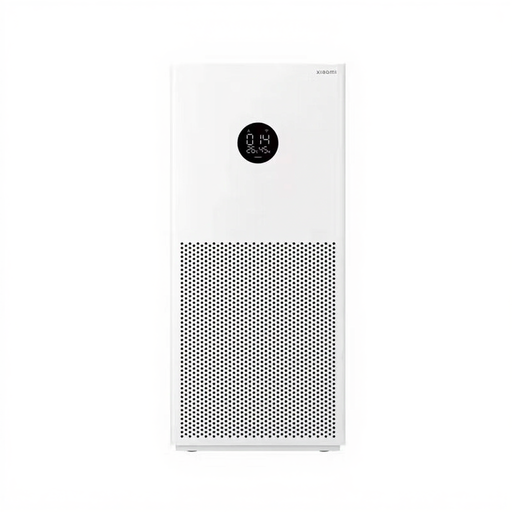
Why this model stands out: The Xiaomi Smart Air Purifier 4 Lite is a compact and intelligent device that combines efficiency with ease of use. With its sleek design and quiet operation, it's a subtle addition to any room.
Key features:
Who is this for? Ideal for those looking for a smart, quiet, and effective air purifier for the bedroom or a medium-sized living room.
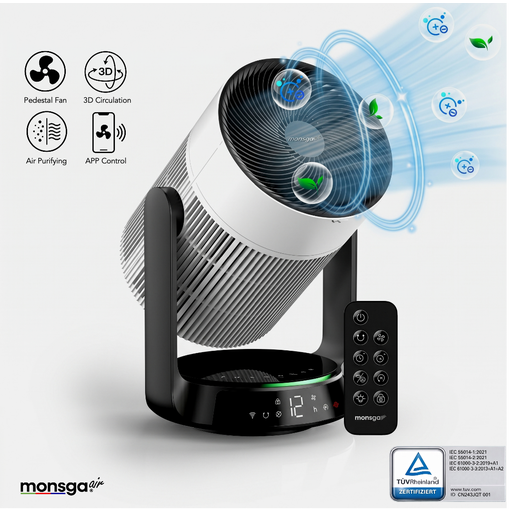
Why this model stands out: This is more than just an air purifier; it's also a fan that circulates air throughout the entire room. Its unique 360° oscillation ensures that purified air reaches every corner, making it a versatile, year-round appliance.
Key features:
Who is this for? Perfect for those seeking an all-in-one solution: cooling in the summer, heat circulation in the winter, and air purification all year round.
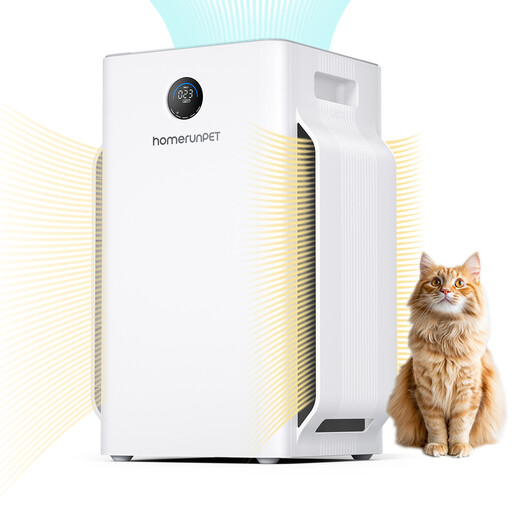
Why this model stands out: The Homerunpet D1 is specifically designed for households with pets. Its focus is on efficiently capturing hair and dander, and neutralising pet odours.
Key features:
Who is this for? The clear choice for cat, dog, or other pet owners specifically looking for a solution for hair and odours.
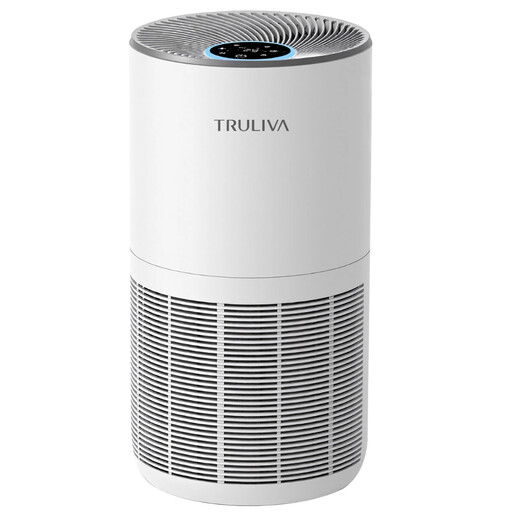
Why this model stands out: With an impressive CADR value, the TRULIVA KJ450 is a powerhouse for larger spaces. Its 360° air intake ensures rapid and efficient purification of the entire room.
Key features:
Who is this for? Excellent for larger living rooms, open-plan offices, or anyone seeking maximum purification power.
These recommendations provide a good overview of what's on the market. Are you specifically looking for a smart air purifier with advanced app features, or do you want to compare more models?
Explore more smart air purifiers here
This depends on the model, usage, and the air quality in your home. Most manufacturers recommend replacing the HEPA and activated carbon filters every 6 to 12 months. Many modern air purifiers have an indicator that lets you know when it's time for a replacement. The pre-filter is often washable and can be cleaned every 2 to 4 weeks.
An air purifier with a True HEPA filter is designed to filter very small particles from the air, including pollen, dust mites, and pet dander. By removing these allergens from the indoor air, the device can help reduce your exposure to them. It is not a medical device, but it does create a cleaner living environment.
For optimal performance, place the air purifier in the room where you spend the most time, such as the living room or bedroom. Ensure there is sufficient space (at least 20-30 cm) around the device to allow air to circulate freely. Do not place it in a corner or directly against a wall. Closing the windows and doors in the room will increase its effectiveness.
