
Vandaag of morgen in huis

Kwaliteit gegarandeerd

Welkomstaanbiedingen ontgrendelen: GRATIS bezorging | Tot 80% korting | Gratis 30 dagen JoyPlus-proefperiode
Download de app
If you're a hobbyist or professional looking to take the next step in 3D printing, you'll quickly find the choices can be overwhelming. The technology is evolving rapidly, with printers that are not only faster but can also print in multiple colors or offer unprecedented detail. You're no longer looking for a beginner's model, but a machine that matches your ambitions.
This guide is designed to help you make an informed choice. We'll highlight several popular models that stand out for their specifications and features, without the marketing jargon. This way, you can decide for yourself which printer best fits your specific projects.
Before we dive into the models, here are a few key considerations to help you choose an advanced 3D printer.
The two most common technologies for home use and small businesses are FDM (Fused Deposition Modeling) and Resin (SLA/DLP).
Print speed, often expressed in mm/s, is a key factor. Printers with a CoreXY structure can achieve speeds of 600 mm/s or more, significantly reducing production time. Additionally, multi-filament systems enable the creation of complex, colorful objects without manual swaps. This is a major step forward for anyone seeking a 3D printer for home use with professional capabilities.
Advanced printers often include features that make the printing process more stable and straightforward. Think of automatic bed leveling, a heated print chamber for working with engineering-grade materials like ABS, and sensors that detect when filament has run out or tangled. These features ensure a higher success rate and less frustration.
Below is a selection of printers that stand out in 2026 for their specific features. These recommendations are based on their technical specifications and the capabilities they offer for advanced users.
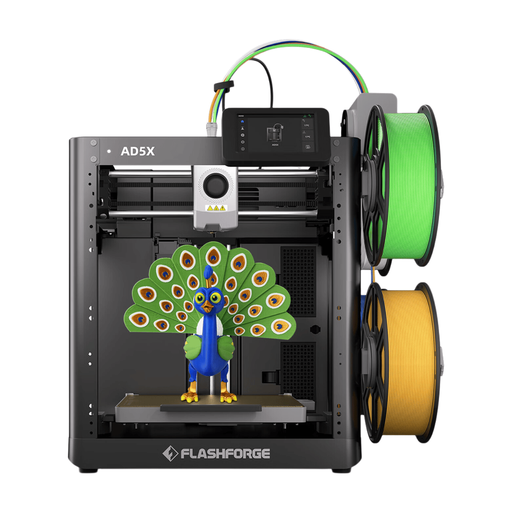
Why It Stands Out The FlashForge AD5X combines two highly sought-after features: high speed and multi-color printing. Its CoreXY structure enables print speeds up to 600 mm/s, while the system can use up to four colors simultaneously. This makes it a powerful tool for creative and rapid production.
Advantages
Who Is It For? For the serious hobbyist looking to upgrade to fast, colorful prints, and for prosumers who need to produce functional prototypes quickly.
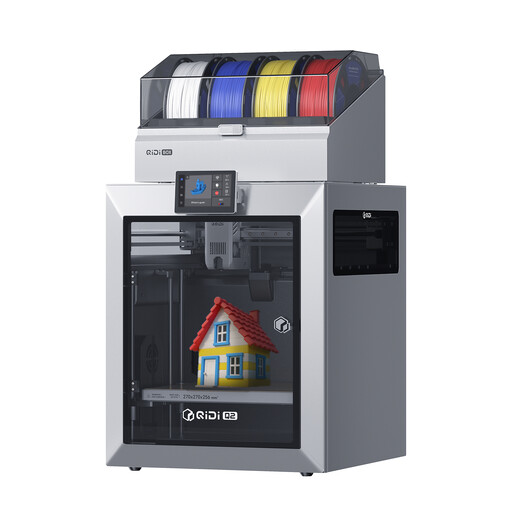
Why It Stands Out The QIDIxJOYBUY Q2 Combo is designed as a professional 3D printer for demanding materials. Its enclosed and actively heated print chamber (65°C) provides a stable environment, which is essential for printing materials like ABS, PA, and carbon fiber composites. The included multi-material unit allows for printing with up to 16 colors or materials and keeps the filament dry.
Advantages
Who Is It For? For small businesses, engineers, and prosumers who need to reliably print with engineering-grade filaments and require a controlled, safe printing environment.
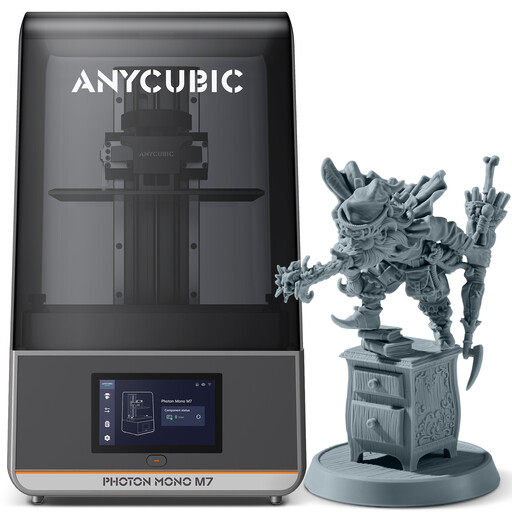
Why It Stands Out This resin 3D printer sets a new standard for detail accuracy. With a 10.1-inch 14K mono screen, the Photon Mono M7 delivers an extremely high resolution (16.8 × 24.8 μm). This makes it possible to print objects with details barely visible to the naked eye, on a relatively large build volume.
Advantages
Who Is It For? For designers, artists, jewelers, and engineers who require the highest possible precision and surface quality for their models, miniatures, and prototypes.
The world of 3D printing is vast, and developments are rapid. If you're looking for other models or specific features not highlighted here, there's much more to discover.
Explore more high-speed printers here and find the machine that perfectly matches your projects.
Simply put: FDM printers are generally better for strength, speed, and larger functional parts, while resin printers excel in fine details and a smooth finish. The choice depends entirely on what you want to create.
Modern FDM printers with a CoreXY system can reach speeds of 600 mm/s. In practice, this means a print that used to take a full day can now be finished in a few hours. However, the actual speed also depends on the model's complexity and the material used.
A multi-color 3D printer opens up a world of creative possibilities. It allows you to directly print functional parts with colored labels or create complex, lifelike models. The trade-off is whether the added functionality outweighs the slightly higher complexity and the investment in a multi-filament system.
