
Vandaag of morgen in huis

Kwaliteit gegarandeerd

Welkomstaanbiedingen ontgrendelen: GRATIS bezorging | Tot 80% korting | Gratis 30 dagen JoyPlus-proefperiode
Download de app
Need a new spool of 3D printer filament? Then you know the choice can be overwhelming. Dozens of brands, various materials, and countless specifications all compete for your attention. Whether you're a beginner starting your first project or a seasoned maker searching for a specific material, making the right choice is crucial for a successful print.
As a Joybuy Product Recommendation Officer, my job is to help you. I filter the information and provide practical advice so you can make an informed decision. In this article, we'll explore what to look for and highlight some popular choices for 1.75mm PLA filament.
Before we dive into the products, here are a few key points to guide your selection.
The material determines the properties of your print. For most hobbyists and for printing visual models, PLA (Polylactic Acid) is an excellent starting point. It's easy to print, less prone to warping, and is made from renewable resources.
Looking for a high-strength 3D print material for functional parts that need to be durable? Then PETG is a great next step. For extreme durability and rigidity, you can even look at materials like PETG carbon fiber, a composite material reinforced with carbon fibres.
Most consumer-grade FDM 3D printers use filament with a diameter of 1.75mm. It is essential that this diameter remains as consistent as possible. A small deviation, or tolerance, can lead to clogging or uneven extrusion. Look for a tolerance of ±0.02mm or less; this indicates a high-quality manufacturing process and contributes to reliable print results.
Standard PLA often has a slightly glossy finish. While this can be perfectly fine, sometimes you might want a more refined look. Matte filament offers a non-reflective, professional-looking surface that also does a better job of concealing layer lines.
In terms of weight, a 1kg filament spool is the industry standard. This provides a good balance between price and quantity, enough for several large projects without constantly needing to change spools.
Based on the criteria above, we've lined up some compelling options for you.
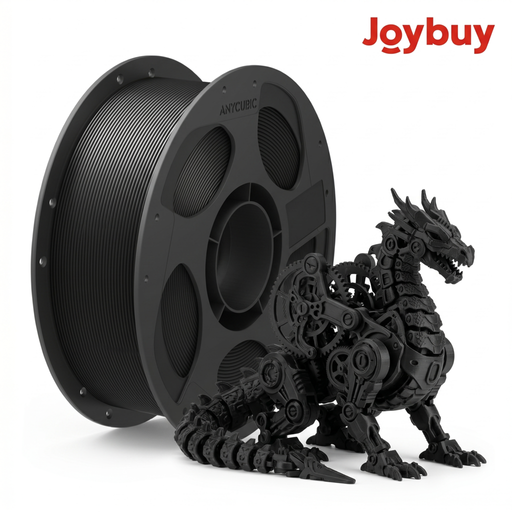
Why it stands out: This black PLA filament is a collaboration between Joybuy and Anycubic filament, a well-known name in the 3D printing world. The focus is on reliability and consistency. With a highly precise diameter of 1.75mm and a tolerance of just ±0.02mm, this filament is designed to minimise clogging and ensure smooth extrusion.
Pros:
Who is it for? For both beginners and advanced users seeking a reliable, no-fuss PLA filament for everyday projects, prototypes, and decorative objects.
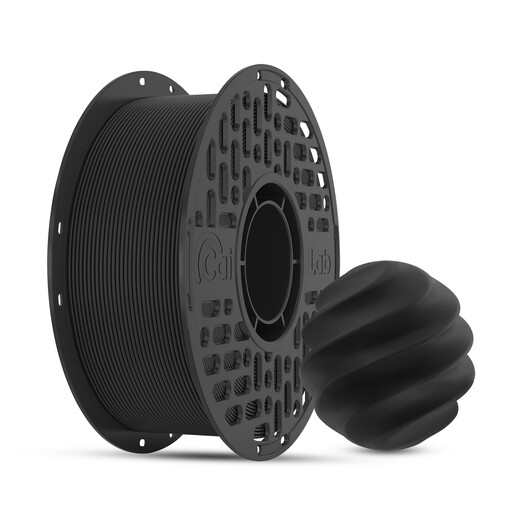
Why it stands out: This matte filament from Cailab filament is developed for makers who want to take the finish of their prints to the next level. According to the manufacturer, its updated formula creates a refined, non-glossy texture that effectively masks layer lines. This gives your creations a more artistic and professional appearance.
Pros:
Who is it for? For hobbyists and professionals who want to print aesthetically high-quality objects, such as architectural models, art projects, or products where the finish is essential.

Why it stands out: This isn't your standard PLA, but a high-strength 3D print material for serious applications. PETG Carbon Fiber combines the user-friendliness and chemical resistance of PETG with the rigidity and strength of carbon fibres. The result is a lightweight yet exceptionally robust material.
Important: Material reinforced with carbon fibre is abrasive. It is strongly recommended to use a hardened steel nozzle, as a standard brass nozzle will wear out quickly.
Pros:
Who is it for? For advanced makers and professionals who need parts that will be subjected to mechanical stress and require a high degree of durability and rigidity.
This selection covers a wide range of applications, from everyday prints to specialised parts. Are you specifically looking for other variants or colours?
? Explore more options for black PLA filament here
PLA is the most commonly used filament for hobbyists. It's easy to print, biodegradable, and ideal for visual models. PETG is stronger, more flexible, and more resistant to chemicals and higher temperatures. It's a good choice for functional parts but often requires slightly higher printing temperatures and can be trickier to print with than PLA.
Filament, especially materials like PETG and nylon, can absorb moisture from the air. This leads to poor print quality (e.g., 'popping' sounds and brittle prints). Therefore, store your filament in a dry, cool, and dark place. An airtight container with desiccants (silica gel) is an effective solution to keep your 1kg filament spool in good condition.
