
The one-pan compote cook
You want to bring a pan of compote to the boil, then let it simmer gently, without permanently giving up extra cooking space.


For one pan of compote, a portable single-zone induction hob is an option if your pan is induction-compatible and its base fits the cooking zone. If you want to prepare a second dish at the same time, compare two-zone hobs and their connection requirements. A traditional electric or ceramic hob may be a better fit if your pan is not induction-compatible. Check the connection and required CE marking for the specific model, and don’t assume that a high maximum power rating or a timer means it will simmer gently.
You want to bring a pan of compote to the boil, then let it simmer gently, without permanently giving up extra cooking space.
You want to prepare the compote alongside another dish, so you need to consider both the available zones and the connection requirements.
You want to check first whether your pan works on induction. If it doesn’t, other heating methods are worth considering.
Choose this if: you’re making compote in one pan, have a suitable induction pan and want to put the hob away after use.
Consider: there’s no second cooking zone, and the settings or a timer alone don’t prove that the hob will simmer compote gently.
Choose this if: you want to prepare the compote alongside a second pan and have a suitable zone for each pan.
Consider: you’ll need more worktop space, and should check how much power the hob can supply to both zones at once and what connection it requires.
Choose this if: you want to use a pan that hasn’t been confirmed as induction-compatible, or prefer to use rotary controls.
Consider: the heating zone gets hot and needs attention during and after cooking.
Choose this if: you’re looking for several cooking zones and have the space and connection required by the model you choose.
Consider: according to ETNA, the ETNA KCV154WIT has four zones and requires a two-phase Perilex connection. That makes it less of an obvious choice as a portable hob just for compote.
| What to consider | What should you check? | Who is this relevant for? |
|---|---|---|
| Gentle simmering | Compare the lower heat settings. A maximum power rating or timer alone doesn’t show how gently the hob will simmer compote. The Consumers’ Association also assesses whether the temperature stays low and consistent in its induction tests. | I want to let the compote simmer gently after heating it and be able to turn the heat down. Around 36% of consumers say gentle simmering is their main concern when choosing. |
| Using your own pan | Check whether the manufacturer says the pan is suitable for induction. AEG suggests using a magnet as a practical check: if it sticks to the base, the pan may be compatible. Also compare the base size with the hob’s instructions. | I want to use my existing saucepan and first check whether it works on induction. Around 29% of consumers prioritise being able to keep using their own pan. |
| Using two pans at once | Check the number and size of the zones, whether there’s room for both pans, and the total connection power or any power limit. | I want to prepare another dish alongside the compote and need a second pan to do so. Around 21% of consumers say cooking two things at once is their main concern when choosing. |
| Connection and marking | Compare the plug, connection power and instructions with your existing connection. According to the Netherlands Food and Consumer Product Safety Authority, CE marking is compulsory for electrical hobs placed on the market in the Netherlands. Check the specific model. | I want to know in advance whether the hob can be connected where I plan to use it and whether it has the required product marking. Around 14% of consumers say the connection is their main concern when choosing. |
Once heated, compote needs to be able to simmer gently. A stated maximum power rating or timer doesn’t, by itself, tell you how a particular hob performs on a low setting.
Compare the lower settings. If gentle simmering is essential, look for a suitable test of the exact model.
The available power may depend on the settings. According to ETNA, the ETNA KCV154WIT requires a two-phase Perilex connection; requirements vary by model.
For the exact model, check the plug, rating plate, power settings and existing connection.
An unsuitable connection may need to be adapted.
Induction requires a suitable pan base. The Inventum KP602B and Severin DK 1014 are traditional electric models with cast-iron zones, not induction hobs.
First identify the heating method, then check the pan base and zone size.
IKEA offers the TILLREDA as a portable induction hob with one zone (model 805.901.55) or two zones (model 705.931.21). These options suit cooking with one pan or cooking two things at once, respectively.
The freestanding IK-6178 induction hob may suit you if you want to set the power and use a timer.
The KP602B is a traditional electric hob with two cast-iron zones. It’s an option if you don’t have an induction pan or want two zones with rotary controls.
The DK 1014 is a traditional two-zone hob with separately adjustable cast-iron heating elements.
The freestanding ceramic KCV154WIT has four zones and is better suited to a permanent cooking area than to being a compact extra hob just for compote.
This selection includes portable single-zone induction hobs, two-zone induction hobs and a freestanding two-zone hob. According to the Netherlands Food and Consumer Product Safety Authority, CE marking is compulsory for electrical hobs placed on the market in the Netherlands. Check the marking on the specific item offered and the connection it requires.
 No image available
A single-zone hob for making compote in one pan and adjusting the heat as needed.
The product name lists 2000 W, touch controls, 10 power settings and six functions. The description requires magnetic cookware and notes that the surface gets hot during use.
 No image available
A single-zone hob for cooking with one pan and adjusting the power as needed.
The description lists adjustable power from 200–2000 W, 10 power settings and a temperature range of 60–240 °C. The cooking zone is Ø 26 cm; the stated pan size is 12–26 cm. Check that your pan’s base falls within the specified size range.
 No image available
A single-zone induction hob for making compote in one pan and adjusting the settings as needed.
The description lists 10 power settings, 10 temperature settings from 60–240 °C and a 180-minute timer. The stated zone size is 12–23 cm; the pan must have a ferromagnetic base. Don’t leave the hob unattended while it’s in use.
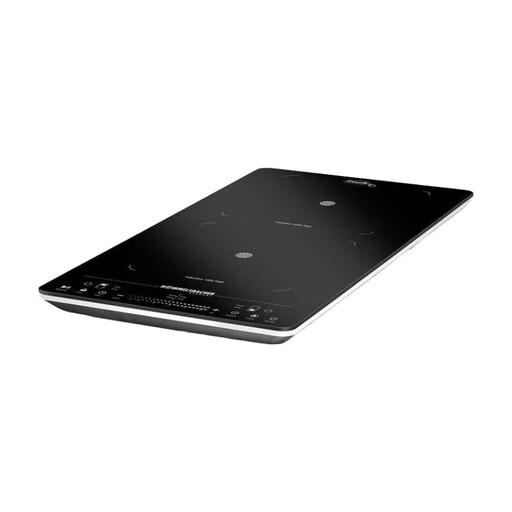 No image available
A portable two-zone hob for making compote alongside a second pan.
The description lists 10 power and 10 temperature settings from 60–240 °C, and a maximum power of 3400 W. It specifies suitable induction pans with magnetic bases measuring 120–260 mm for the zones.
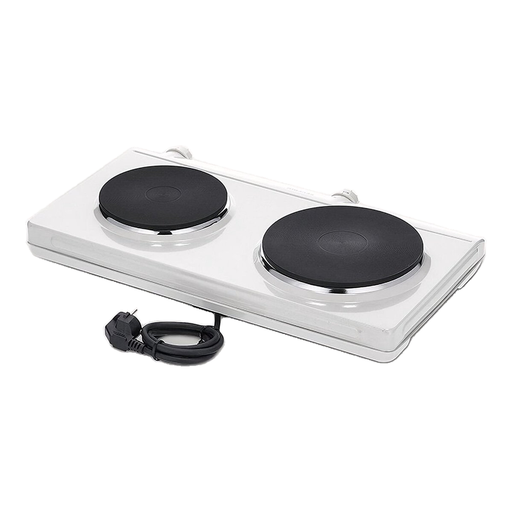 No image available
A freestanding two-zone hob for using two pans at once when preparing a celebratory meal.
The description lists two independently controlled zones, rotary controls with continuously adjustable temperature and 2500 W. The surfaces get hot, so the hob needs to be supervised during use.
Check whether the manufacturer describes the pan as induction-compatible. A magnet sticking to the base is a practical check. Also compare the base diameter with the sizes allowed in the hob’s instructions.
The Fire Service advises plugging high-power appliances directly into a wall socket rather than into an extension lead or cable reel. Also follow the model’s connection instructions and take into account other appliances drawing power from the same circuit.
No. The Fire Service advises staying near the hob while cooking. The Tristar instructions consulted also say to keep the hob attended.
According to the Netherlands Food and Consumer Product Safety Authority, CE marking is compulsory for electrical products placed on the market in the Netherlands. Check the marking on the specific item offered. CE marking doesn’t tell you how well a hob simmers compote.