
Livraison le jour même et le lendemain

Qualité garantie

Débloquez vos offres de bienvenue: Livraison GRATUITE | Jusqu'à -80 % | 30 jours d'essai gratuits à JoyPlus
Téléchargez l'application
Food storage containers may seem straightforward, but small design details can make all the difference to how easy they are to use every day. A lid that no longer closes properly after a few weeks, a container that is too big for your fridge drawer or material that is unsuitable for the microwave can quickly become frustrating.
For households, meal preppers and home bakers, these are the three main pitfalls to watch out for:
Plastic storage containers are lightweight and often suitable for everyday use, taking food with you and stacking. Check the stated temperature range and instructions for microwave use. Product information often mentions BPA-free materials, but this does not automatically tell you about all the product’s other properties.
Glass storage containers are generally less likely to absorb odours or become stained. Borosilicate glass is used in several models designed for the fridge, freezer and microwave. Always check whether the lid needs to be removed and avoid sudden changes in temperature. Glass is also heavier, which can make a difference if you’re carrying a full lunch bag or storing it on a high shelf.
Metal storage containers, such as a bread bin, are mainly intended for dry goods. A metal bread bin is not suitable for the microwave and should be cleaned with a damp cloth, according to the product information.
For leftovers and meal prep, containers of around 0.45 to 1.2 litres are often practical. Smaller meal prep containers are useful for sauces, fruit, yoghurt or individual portions. A set with different sizes means you won’t have to fill half a fridge shelf with one large container.
For dry goods, storage jars with a capacity of 1 to 2.5 litres are more convenient. Think rice, pasta, flour, sugar, nuts or pet food. A consistent shape makes stacking easier and helps you organise your fridge and cupboards.
Pay attention to the dimensions, too. A container measuring 21 × 15 cm may fit neatly on a fridge shelf, but could be too wide for a door shelf. Measure the space available before you buy.
A lid with four locking clips and a silicone seal can help reduce leaks when you’re carrying food. Check whether the seal can be removed, as food residue can build up underneath it.
Stackable storage containers save space, but only if the lids are flat enough and the shapes fit together. Nesting containers take up less room when empty. If you plan to put them in the dishwasher, check that both the container and the lid are dishwasher-safe. Some products recommend washing the lid by hand.
For microwave-safe containers, use only the settings specified and remove or unlock the lid if the product information says to do so. A standard food container is not automatically suitable for the oven.
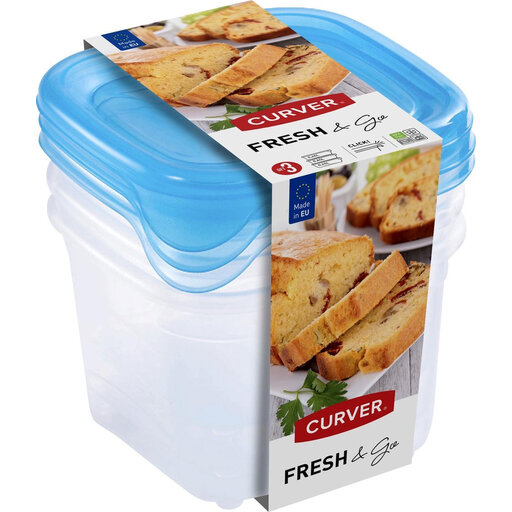
Why it suits this type of shopper: This set contains three 0.45-litre square containers for leftovers, snacks and smaller portions. According to the product information, they’re suitable for the fridge, freezer, microwave and dishwasher. Remove the lid before using them in the microwave.
The transparent design lets you see what’s inside, while the stackable, nestable shape helps prevent wasted space.
Three matching sizes, BPA-free according to the product description, and ideal for everyday portioning.
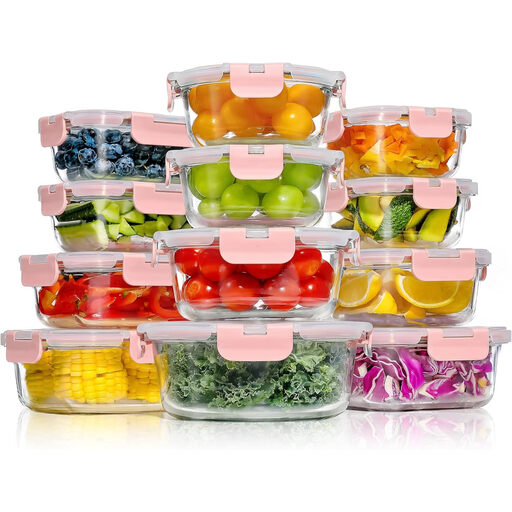
Why it suits this type of shopper: This set combines rectangular, round and square containers, with capacities ranging from 310 to 1,040 ml. According to the product information, the glass containers are suitable for the oven, microwave, freezer and dishwasher, provided you remove the lids.
The range of sizes means you won’t need to use an oversized container for every portion. The clips and silicone seals are clearly described.
Borosilicate glass, 12 containers and a stated total capacity of 6,750 ml.
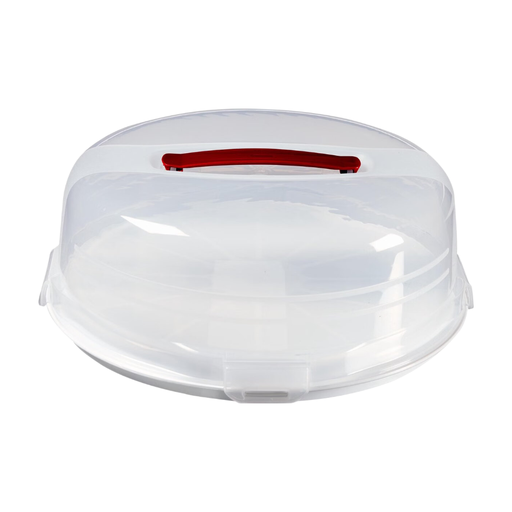
Why it suits this type of shopper: Home bakers get a 13-litre round cake carrier with a transparent lid, a handle and a removable serving plate. According to the product information, the plate helps you cut cakes into 12 or 24 slices.
It’s designed specifically for cakes, so you won’t have to squeeze one into a container that’s too shallow or unsuitable.
13-litre capacity, a carry handle, and dishwasher and freezer use according to the product description.
We’ve put together a complete, up-to-date list of products that meet these strict selection criteria and current European safety regulations.
It depends on the product. Check that it’s explicitly stated as suitable for both freezer and microwave use. You’ll often need to remove or loosen the lid before using a container in the microwave. Also avoid sudden changes in temperature, such as placing a hot glass dish directly onto a cold surface.
Choose a model with a well-fitting silicone seal and locking clips. Don’t fill the container right to the brim, and check that all the clips are fully secured before carrying it. It’s best to store sauces and liquid dishes upright, even if the container is described as leakproof.
Sets with several sizes are practical for meal prep. Containers of around 0.45 to 1 litre often suit individual portions, lunches and leftovers. Choose dishwasher- and freezer-safe options if you want to prepare several meals in advance. Transparent containers also make it easier to identify the contents and portion size at a glance.
